Forgotten Dairies
Duterte’s Trial Puts State Murder in the Dock -By Fransiscus Nanga Roka
This defense of sovereignty by Duterte is also empty. 2019 withdrawal from the Rome Statute did not erase ICC jurisdiction over crimes allegedly committed during the time in which that membership was valid. Withdrawal cannot be a retrospective amnesty self-written by the leader under investigation.

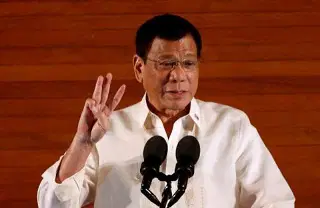
Rodrigo Duterte did not just wield political leverage by turning slaughter into public policy and savagery into a show. Now, former Philippine President sits in The Hague where the “drug-war necessity” language has to meet the crimes against humanity language.
Who? Aged 81, Duterte is the first former Asian leader to face the International Criminal Court. What? Three counts of crimes against humanity—murder and attempted murder—related to a purported campaign against suspected drug users, dealers as well as other alleged criminals. When? The alleged conduct occurred between November 1, 2011, and March 16, 2019. Where? It originated in Davao City and was later implemented nationwide following Duterte’s election as president. How? Prosecutors claim police officers, spurred by orders and rewards in a climate of impunity, were involved in coordinated assassinations along with death squads. Why? Duterte explained extermination as law enforcement; prosecutors claim it was a series of collective or systematic attacks directed against civilians.
Philippine authorities arrested him in Manila after he had returned from Hong Kong on March 11, 2025, and handed him over to ICC custody. All three charges were confirmed by Pre-Trial Chamber I on 23 April 2026 (unanimously), and the case was committed for trial. (ICC case information)
Three operational patterns are cited in the charges: 19 of the killings linked to the Davao Death Squad; attacks on alleged “high-value targets”; and village-level “clearance operations,” with at least 45 killings or attempted killings. What follows is an incomplete account of the human toll of the purported campaign. While Philippine police conceded to over 6,000 deaths in legitimate tasks, rights bunches endorsed the more extensive expense may approach 30,000. Duterte is innocent unless found guilty.
It was not until September 16, 2026 that Duterte finally stepped into the courtroom of Trial Chamber III dated a year and a half after being placed in ICC custody. He stilled, in a dark suit and stood beneath — in an instance when victims relatives could finally gather to know what a former president looks like treated not as an untouchable patriarch but as an accused man subject to law. (Reuters, Associated Press)
His lawyers quote a cognitive decline and claim the amount of evidence against him burdens an effective defense. They need to be subject to medical investigation — not political ridicule. You cannot speak of justice to condemn extrajudicial killing while denying due process to the accused. But mental illness cannot become a get-out-of-jail-free card for powerful defendants who outlived many of their alleged victims.
This defense of sovereignty by Duterte is also empty. 2019 withdrawal from the Rome Statute did not erase ICC jurisdiction over crimes allegedly committed during the time in which that membership was valid. Withdrawal cannot be a retrospective amnesty self-written by the leader under investigation.
The trial begins November 30, 2026, under Trial Chamber III presided by Judge Joanna Korner. You need more than a blockbuster verdict for it to succeed, said the ICC.
The Philippines should: Keep records of police involvement document in the investigations Protect witnesses Identify people carrying out killings against families of victims Execute outstanding ICC warrants Criminalise retaliation against the families of victims (Photo: office-of-the-philippine-presidential-advocate-project-inerop) Prosecutors should eliminate duplicative evidence without constricting the historical truth of the campaign. Judges should mandate ongoing independent health evaluations, provide onsite interpretation and allow for a speedy but not rushed trial. A victim-centered reparations framework with provision for compensation, rehabilitation, memorialization and psychosocial care should be developed in readiness by both the ICC and the Philippine government.
This case goes beyond Duterte. It questions whether an elected leader can turn oppression into policy and law enforcement into executioners, with cheers as cover. If, as it has been said, sovereignty amounts to the protection of organized state killing, then I tell you that this is not sovereignty. It is a bloody license for slaughter.
Fransiscus Nanga Roka
Faculty of Law University 17 August 1945 Surabaya and Managing Partner Law Firm Victorious Indonesia