Global Issues
America Is Teaching Autocrats How to Escape Justice -By Fransiscus Nanga Roka
In tandem, the ICC must hasten its work, issue clear criteria for case selection, broaden the geographical scope of investigation outside Africa and choose its next prosecutor via an independent, victim-sensitive election process. Before blocks to withdrawals come into effect, prosecutors need to act quickly in preserving evidence and seeking judicial approval for extradition requests.

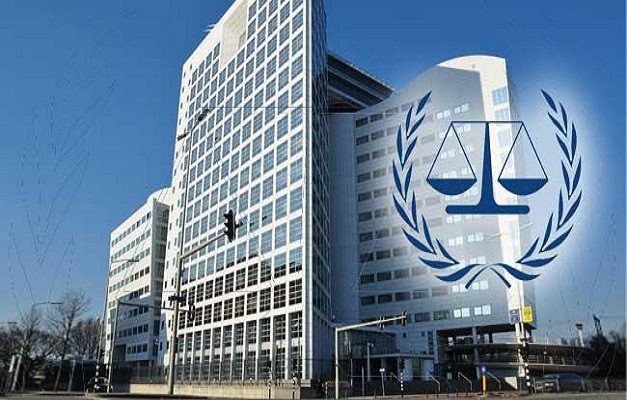
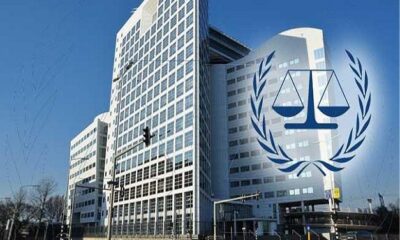
The ICC is in its most perilous crisis of legitimacy not because five governments have now evaded its jurisdiction but thanks to the active efforts of the world’s most prominent non-member at directing other, weaker and authoritarian states on how best to strip-off accountability from outside
Who is leaving? On June 2026, Burkina Faso, Mali and Niger officially notified the United Nations of withdrawal; Venezuela on July 24th and Chad on June 27th. What are they abandoning? The Rome Statute–the treaty that created the only permanent international criminal court with authority to prosecute genocide, crimes against humanity, war crimes and aggression when national systems actually fail to act. Where and when? The exodus is sweeping from the Sahel to Latin America and it accelerated between June and July 2026. Why? Government invokes sovereignty, ineffectiveness and anti-African bias. How? By written notice under Article 127 subject to the following one-year waiting period.
It is an important distinction: these states have agreed or formally committed to withdrawal, yet remain legally obligated until their departure becomes effective in 2027. Withdrawal does not erase ICC jurisdiction over crimes committed by members at some point while they were members or wipe the slate clean in terms of pre-existing obligations to cooperate.
However, law on paper means nothing as government obliterates evidence, intimidate witnesses and desists from making arrests.
The Sahel juntas accuse the ICC of being a neo-colonial tool. This reproach takes advantage of a real institutional scar: African defendants have, for the longest time, dominated ICC courts while powerful states and their allies typically evaded comparable examination. But eliminating justice does not cure selective justice. A government cannot convert impunity into decolonization by altering its vocabulary.
Even more worryingly, you note that the ICC has been investigating claims of crimes against humanity arising from repression since 2017 and refers to Venezuela’s exit. Withdrawal in the context of an ongoing accountability process is not principled sovereignty and it is not institutional reform; it is a defendant seeking to vacate the courtroom.
Then comes Washington’s extraordinary hypocrisy. But even so, the US has never actually ratified the Rome Statute and indeed in recent years, under Donald Trump it has sanctioned ICC officials, threatened states that cooperate with its investigations and openly encouraged other states to withdraw as well. US explicitly praised the departure of Chad.
America is promoting a repulsive principle: International criminal law is acceptable for your enemies, but unacceptable when it threatens Americans or protected friends. That is not sovereignty. It is geopolitical immunity.
The ICC was also complicit in manufacturing its own vulnerability. The slow pace of its proceedings, inconsistent enforcement, reliance on state cooperation and its own internal misconduct crisis (leading to the sacking of chief prosecutor Karim Khan in July 2026 over serious misconduct and dereliction of duty) have tarnished public confidence. We needed institutional accountability, but the leadership failure has given hostile governments important material to work with.
Characterised by a simple pressing need for all remaining states parties: An emergency survival compact to create a sanctions-proof kerneled ta funding-mechanism, protected banks technology vendors and civil-society partners serving the Court, domestic blocking laws countering extra-territorial punitive action and diplomatic costs on those governments weaponizing full withdrawal from active investigations.
In tandem, the ICC must hasten its work, issue clear criteria for case selection, broaden the geographical scope of investigation outside Africa and choose its next prosecutor via an independent, victim-sensitive election process. Before blocks to withdrawals come into effect, prosecutors need to act quickly in preserving evidence and seeking judicial approval for extradition requests.
The Court cannot endure if it deludes itself into believing that it is perfect. Its failures must be remedied rather than used to construct a world in which atrocity only incurs punishment when it is geopolitically convenient.
Fransiscus Nanga Roka
Faculty of Law University 17 August 1945 Surabaya and Managing Partner Law Firm Victorious Indonesia