Economy
Economic Dialogue Forms the Core of BRICS Municipal Conference, by Kestér Kenn Klomegâh

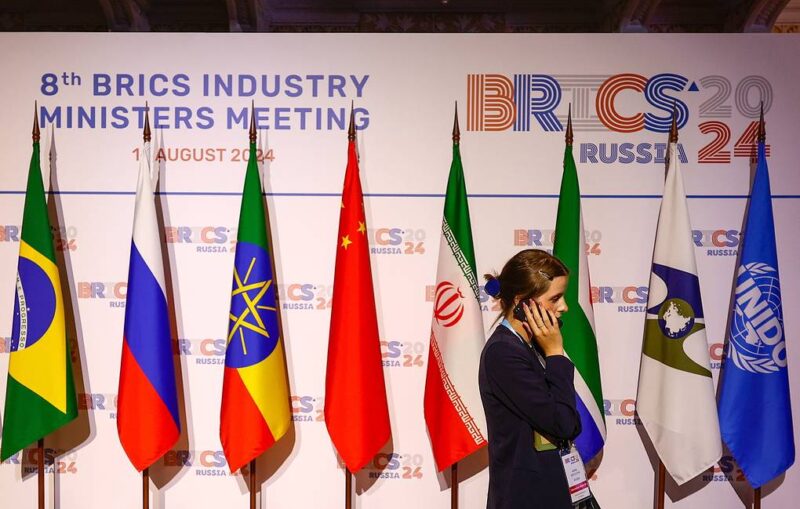
In an anticipation for raising economic questions and possibility of forging further cooperation, Moscow on August 27-28, gathers an estimated 5,000 participants for its largest International Municipal Conference. The 6th International Municipal BRICS Conference, which the press service of the Moscow Department of Foreign Economic and International Relations said it would be “the largest international floor, where representatives of government authorities and the business will share the advance experience and discuss key issues of municipal cooperation.”
According to the brochures made available, the conference aims at discussing municipal modalities of expanding cooperation, identifying potential opportunities for establishing business and exchanging experience between BRICS cities and regions. The conference program promises rich and diverse topics to be reviewed in more than 70 business events and including a large-scale exhibition exposition.
The conference also provides a unique platform for establishing business contacts and finding new partners, especially for representatives of small and medium-sized businesses. Advisor to the President of the Russian Federation Anton Kobyakov noted that “the event will become an economic dialogue between countries at the municipal level, contributing to improving the quality of life of citizens.”
The brochures underlined the fact that politicians, entrepreneurs, public figures and representatives of municipalities are expected from more than 500 cities in 126 countries. Participants will discuss international inter-municipal and inter-parliamentary cooperation, and share best practices in the sustainable development of megacities.
Technology development and environmental concerns are also high on the conference agenda. One of the key topics of the forum will be the development of trade and investment relations with an emphasis on digital technologies, artificial intelligence, and green technologies to create a comfortable living environment. Much attention will be paid to discussing environmental issues, climate change, and the role of BRICS in ensuring the sustainable development of the planet.
A broad agenda of social and humanitarian issues are under serious discussion. Social and humanitarian issues will also not be ignored. Discussions will touch on solutions in the fields of education, healthcare, culture, and tourism aimed at increasing the attractiveness of cities and regions.
As curiously noted this conference enjoys a tremendous support from the highest authorities, particularly with support from leading government agencies and organizations, including the Presidential Executive Office of the Russian Federation and the Ministry of Foreign Affairs of the Russian Federation. The Roscongress Foundation is the main operator with the Moscow Government as the general partner.
In a related development, about 110 representatives from 40 countries will take part in the 6th BRICS Young Diplomats Forum in Ufa on August 27-31, according to the Chairman of the Russian Foreign Ministry’s Council of Young Diplomats Konstantin Kolpakov. As already the 6th BRICS Young Diplomats Forum, it has become an annual tradition. Taking into account the expansion of the number of participants of the association itself, the geography of participants of this event has also expanded, including countries that are originally part of BRICS.
Russian Foreign Ministry repeatedly described, in official documents posted to its website, and in several speeches, that BRICS – “an informal association” – comprises Brazil, Russia, India, China and South Africa. At the beginning of this year, as agreed at the XV BRICS Summit in South Africa, Ethiopia, Egypt, Iran, Saudi Arabia and the United Arab Emirates became full-fledged members.
An estimated 30 countries have indicated interest in ascending unto BRICS, significantly showing the new geopolitical reconfiguration and increasing drift away from old multinational organizations. Membership into BRICS has been been suspended awaiting ‘specific criteria’ by the association. Russian Foreign Ministry explicitly said currently interested countries would be categorized, not as members, but in a group as “partners” of BRICS. The BRICS association was created in 2006 by Brazil, Russia, India and China, with South Africa joining in 2011. Russia has held the BRICS presidency since January 1, 2024.