Africa
Equality Is a Start, Justice Is the Goal -By Abdulsamad Danji Abdulqadir
True progress can only occur when policies are designed to address real challenges faced by citizens while also working to remove the structural barriers that limit opportunity. Equality may provide the foundation of fairness, equity ensures that opportunities are balanced, and justice guarantees that the system itself becomes fair for everyone.

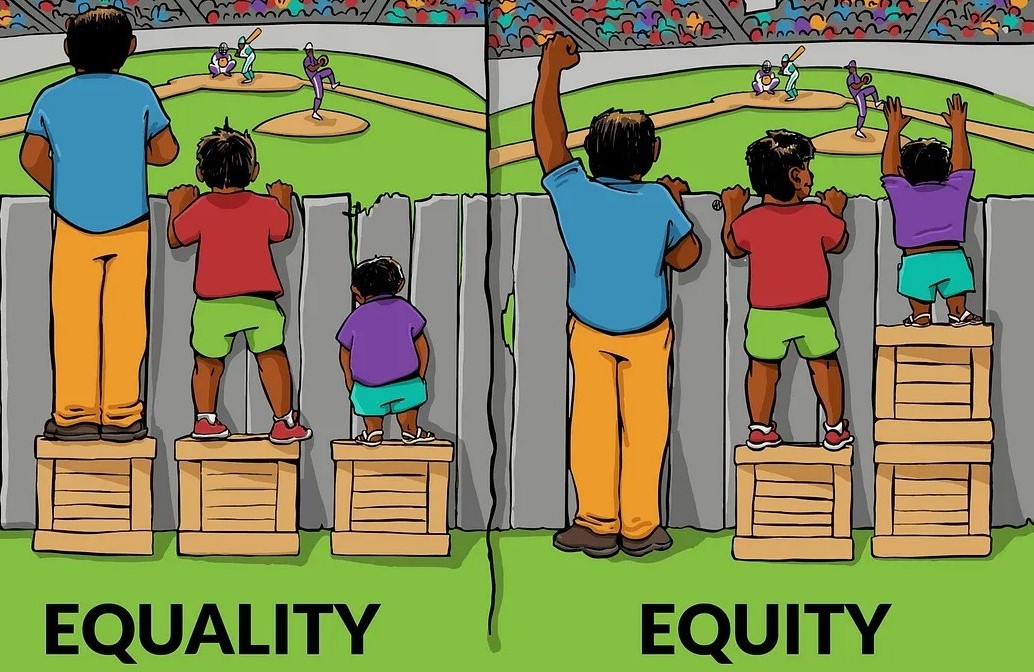
Equality, equity, and justice are three important concepts often discussed when talking about fairness in society, governance, and human rights. Although these terms are frequently used interchangeably, they represent different approaches to addressing inequality. Equality refers to giving everyone the same treatment or the same resources regardless of their circumstances. Equity recognizes that individuals and communities face different challenges and therefore may require different levels of support in order to achieve similar outcomes. Justice goes a step further by addressing and removing the barriers that create inequality in the first place. Understanding the differences between these concepts is essential for building a fair, inclusive, and progressive society, especially in a diverse country like Nigeria.
A widely shared illustration on social media explains these ideas in a simple but powerful way. In the illustration, three people of different heights stand behind a fence trying to watch a football match. In the first scenario, each person is given the same box to stand on. This represents equality. However, because the individuals are of different heights, the shortest person still cannot see the game. Although everyone received the same support, the outcome is not fair.
In the second scenario, the boxes are distributed differently based on need. The shortest person receives more boxes while the tallest person receives fewer. This represents equity. By adjusting the support to fit each person’s situation, everyone is finally able to see the match. In the third scenario, the fence itself is removed completely. Now no one needs a box to watch the game. This represents justice, where the barrier that caused the inequality has been eliminated entirely.
This simple illustration reflects a deeper reality in many societies. Policies that focus only on equality may appear fair on the surface, but they often ignore the social and economic differences that exist among people. When everyone is treated the same without considering their unique circumstances, the result may still be unfair.
In Nigeria, the realities of inequality are visible in many aspects of everyday life. Some regions enjoy better infrastructure, stronger educational institutions, and improved healthcare facilities, while other communities struggle with poor roads, limited schools, and inadequate medical services. Urban areas often receive more development attention compared to rural communities. When resources are distributed equally without considering these disparities, those who are already disadvantaged remain at a disadvantage.
Equity requires leaders and policymakers to recognize these differences and respond accordingly. Instead of applying a one-size-fits-all approach, equitable policies aim to provide more support where it is most needed. For example, improving the quality of education in rural schools, investing in healthcare facilities in underserved communities, and creating economic opportunities for marginalized groups are all ways of promoting equity.
However, equity alone cannot solve every problem. Justice demands that society confront the root causes of inequality. It requires examining why certain communities lack access to opportunities in the first place. In many cases, systemic issues such as corruption, poor governance, weak institutions, discrimination, and lack of accountability contribute to the persistence of inequality.
In Nigeria, corruption has long been identified as one of the major obstacles to development. Resources that could improve education, healthcare, and infrastructure are sometimes diverted for personal or political interests. Weak institutions may also struggle to enforce laws and policies fairly. When systems fail to operate transparently and efficiently, citizens lose trust in governance and opportunities become limited for many people.
Achieving justice therefore involves reforming institutions, strengthening accountability mechanisms, and ensuring that policies are implemented fairly and effectively. Justice also requires protecting the rights of citizens, promoting transparency in governance, and creating an environment where every individual has the opportunity to succeed regardless of their background.
Education also plays a crucial role in promoting equality, equity, and justice. When citizens understand their rights and responsibilities, they are better able to hold leaders accountable and advocate for fair policies. A well-informed society is more capable of identifying injustices and demanding meaningful reforms.
For a nation as large and diverse as Nigeria, understanding the difference between equality, equity, and justice is not merely an academic discussion it is a necessity for national development. Policymakers must move beyond the idea that treating everyone the same is enough. Instead, they must recognize that fairness sometimes requires different levels of support for different communities.
True progress can only occur when policies are designed to address real challenges faced by citizens while also working to remove the structural barriers that limit opportunity. Equality may provide the foundation of fairness, equity ensures that opportunities are balanced, and justice guarantees that the system itself becomes fair for everyone.
A society that truly values justice does not merely distribute resources equally; it ensures that every citizen has the genuine opportunity to thrive. Only through the careful application of equality, equity, and justice can nations build a future that is inclusive, stable, and sustainable for all.