Forgotten Dairies
Osun 2026: Why We Should Be Worried! -By Olutola Arogundade
AMBO represents a glimmer of hope because his vision is rooted in reality. He understands that if we don’t immediately recruit and train qualified teachers, our education system will stay in the morgue. He knows that industrialization isn’t just a campaign buzzword; it’s a necessity that requires stable power, good roads, and a friendly tax system. He understands that the ‘Tourism Sector’ isn’t about just having a festival once a year – it’s about building a year-round economy that creates jobs for our youth.

Osun State is at a crossroads, and frankly, the future looks terrifying. As we approach the August 15, 2026, election, it’s time we stop the political politeness and face the ugly truth: our state is struggling to breathe.
Look around you from the streets of Osogbo to the outskirts of Iwo and the villages in Ife; the signs of decay aren’t just visible, they are screaming. Infrastructure is crumbling, our farms – once the pride of the West – are neglected, and our people are losing hope faster than the currency loses value.
We are at a point where the “dancing” has to stop because the music has turned into a funeral dirge for our collective dreams. The current trajectory suggests that if we don’t make a sharp U-turn, we are heading for a total systemic collapse.
Let’s start with the most painful part: the education system. In the past, Osun was known for its intellectual rigor. We produced giants. But today, our public schools are a shadow of their former selves. Walk into any public secondary school today and you will see a tragedy in motion. Classrooms are overcrowded, roofs are leaking, and the learning environment is more of a warehouse than a school.
But the physical decay isn’t even the worst part. It’s the human element. Our teachers are underpaid, overworked, and treated like an afterthought. How do you expect a hungry, frustrated teacher to inspire a child to be the leader of tomorrow? We are creating a two-tier society where the “privileged few” send their kids to elite private schools or abroad, while the children of the masses are left to fumble in the dark.
We are essentially telling the poor man’s child that his future doesn’t matter. This isn’t just bad governance; it’s a betrayal of the next generation. We are setting up our youth for failure, and by the time we realize the cost, it might be too late.
Agriculture was once the backbone of Osun State. Our fathers didn’t need “white-collar” jobs to send their kids to university; they used the soil. But look at what has happened today. While neighboring states are embracing the “Agro-Revolution” – investing in greenhouse technology, high-yield seedlings, and mechanized farming – Osun is stuck in the 19th century.
We are sitting on some of the most fertile land in Nigeria, yet we are importing food from other states. Our youth are fleeing the rural areas to ride Okada in the cities because there is no support for the modern farmer. We’ve replaced agricultural policy with “Bata and Sekere.” We are dancing away our sorrows while our granaries are empty. This neglect is a crime!
We aren’t just talking about food security anymore; we are talking about our very survival. A state that cannot feed itself is not a sovereign entity; it is a beggar state. Where are the tractors? Where are the subsidized fertilizers? Where is the plan to turn our vast hectares of land into wealth? Silence is the only answer we get.
The gap between the “haves” and the “have-nots” in Osun has become a massive, unbridgeable ocean. There is a total disconnect between the rulers and the ruled. The political elite are living in a bubble of luxury, protecting their interests and those of their kinsmen, while the average civil servant and petty trader are struggling to survive on a “miracle” budget.
We see the “Edenisation” of projects – where the fruits of the state are concentrated in one corner while the rest of the 30 Local Governments, plus one Area Office watch from the sidelines. This isn’t how you build a state. You don’t build a house by only painting the front door while the foundation is rotting. We are living in two different worlds. In one world, there are dualized roads to “special” hometowns; in the other world, the masses are trekking through potholes to get to markets that have no electricity.
In the current administration, we have seen a dangerous trend of prioritizing spectacle over substance. Every day is a performance. There is always a drum beating somewhere, always a camera rolling for a social media clip. But statecraft is not a TikTok video. It requires brains, not just bravado. It requires a leader who can sit in a room for ten hours analyzing data, not one who spends ten hours practicing a dance move.
Governance is a serious business. It’s about making tough, sometimes unpopular decisions that will yield results in five to ten years. It’s about being a “thinking” leader. We need someone who understands that you can’t run a 21st-century economy with an 18th-century mindset. The music is hollow, and the people are finally beginning to realize that the rhythm doesn’t put food on the table or medicine in the hospitals.
Osun is home to the Osun-Osogbo Sacred Grove, a UNESCO World Heritage site. In any other part of the world, that site alone would be a billion-naira revenue generator. But today, our heritage sites are gathering dust. Tourism is dead. Commerce is stifled because the environment for business is hostile and disorganized.
We have gold mines – both literal and metaphorical – but we are letting them waste away. Our heritage is our identity, but we’ve treated it like a burden rather than an asset. When was the last time we saw a genuine, state-led initiative to turn our cultural festivals into a global economic event? Instead, we see the same old patterns: small-scale thinking and “stomach infrastructure” politics.
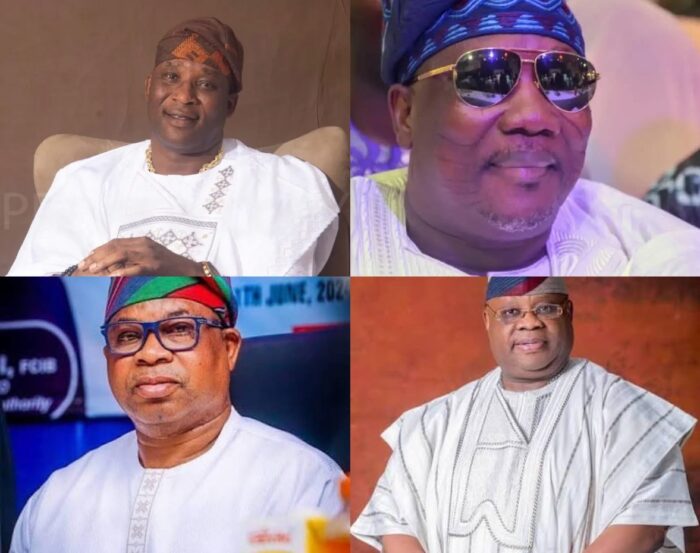
So, who is going to save us? We don’t need another performer. We need a mechanic – someone who knows how to fix the engine of the state. This is where Asiwaju Munirudeen Bola Oyebamiji, aka AMBO, comes in.
Oyebamiji is not your typical “shouting” politician. He is a technocrat with a proven track record. When he served as the Commissioner for Finance, he saw the books. He knows where the leakages are. As the Managing Director of NIWA, he showed that he understands how to manage large-scale federal assets and infrastructure. He is a man driven by data, not by drums.
AMBO represents a glimmer of hope because his vision is rooted in reality. He understands that if we don’t immediately recruit and train qualified teachers, our education system will stay in the morgue. He knows that industrialization isn’t just a campaign buzzword; it’s a necessity that requires stable power, good roads, and a friendly tax system. He understands that the ‘Tourism Sector’ isn’t about just having a festival once a year – it’s about building a year-round economy that creates jobs for our youth.
Osun has a choice. We can continue down this path of ‘Unavailable’, watching our children fall behind while our neighbors soar, or we can choose a path of rigorous, intellectual leadership. We can choose to stay in the past, or we can take a U-turn toward progress.
The clock is ticking. We cannot afford to wait another four years for a “miracle.” The collapse is imminent, but it is not inevitable. With a leader like Oyebamiji – a man who understands the intersection of culture and commerce, a man who values the “First Eleven” over kinsmen – Osun can finally find its way out of the woods. So, let us choose brains over bravado. Let us choose progress over performance. The future of our children depends on it.
▪ Mr Arogundade lives in Owode-Ede, Osun State