Africa
European Commission Accelerating Africa’s Energy Partnership -By Kestér Kenn Klomegâh
In an opinion article published by AllAfricaCom, Kristalina Georgieva, Managing Director of the International Monetary Fund (IMF) has expressed candid views about the economic progress on the continent and the outstanding challenges and the unfolding opportunities there. According to IMF director, Africa is on a new sustainable growth trajectory. But this transition is costly – at least initially – for a region that already strives to finance other Sustainable Development Goals (SDGs), and as a result, some of these development initiatives must be shared by the international community.

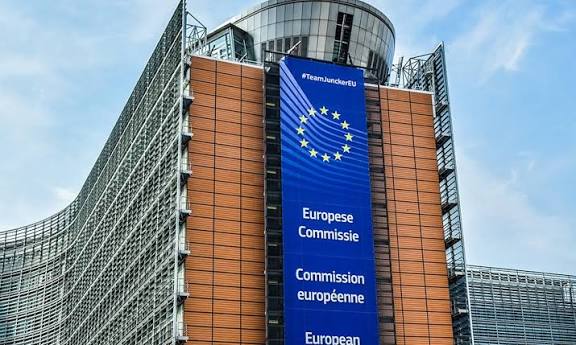
The geopolitical situation is driving the European Commission to step up its investment influence across Africa, making consistent efforts at capitalizing on and exploring several emerging opportunities in the continent. In practical reality to re-enforce its influence, the European Commission has directed its policy focus on promoting sustainable energy development during this last quarter of 2025. Unlocking new business and investment opportunities, including in the areas of manufacturing and agro processing as well as regional and continental value chains development form aspects of raising confidence among a number of African countries.
The European Commission’s report explicitly indicated that this approach mirrors the new strategy, and within the context geopolitical rivalry and competition. Its policy titled “Global Gateway Strategy” primarily aims at refining the dynamic partnerships, and to advance step-by-step for establishing bilateral mutual benefits with Africa. In terms of reciprocity, African leaders and business people must explore available possibilities and windows that have been opened, as European has unveiled €300 billion (US$340 billion) alternative to China’s Belt and Road initiative — an investment programme the bloc claims will create links, not dependencies.
In the latest report, Europe has allocated €618 million for renewable energy projects across Africa, according to the latest reports of the European Commission. The funds are for implementing these projects in eight African countries. In Kenya, €55 million, the project is the green energy system to increase generation of and strengthen the power grid. In Uganda, €60 million, the project will electrify rural areas with a population of over €250,000 people. In Democratic Republic of Congo, funding is for electrifying the city of Kisangani and the surrounding areas, and in Mauritania, €125 million allocated for creating a regional energy transport corridor for a rapidly growing population.
In Nigeria, €20 million is for a planned technical support and for scaling up renewable solutions, particularly for farmers and small businesses, while in Cape Verde €39 million is given the expansion of wind generation and energy storage systems as part of the Cabeolica project. In addition, €30 million is allocated to strengthen the energy system between Zambia and Tanzania, and the largest funding – €199 million for Togo, where a renewable energy and energy storage project are implemented in the city of Kpalime.
In an opinion article published by AllAfricaCom, Kristalina Georgieva, Managing Director of the International Monetary Fund (IMF) has expressed candid views about the economic progress on the continent and the outstanding challenges and the unfolding opportunities there. According to IMF director, Africa is on a new sustainable growth trajectory. But this transition is costly – at least initially – for a region that already strives to finance other Sustainable Development Goals (SDGs), and as a result, some of these development initiatives must be shared by the international community.
Despite the new challenges, it has become important to strengthen dialogues and focus on the search for more effective financial ways to scale-up sustainable development in Africa. The European Commission has to keep in mind and try to incorporate the economic diplomacy with the continent, particularly most aspects of directions that meet the commitments of the 2030 Agenda of the United Nations and Agenda 2063 of the African Union.