Politics
From Ogbuluafor’s PDP’s 60 Years To Gadaka’s APC’s 100 Years: Man Proposes, God Disposes -By Isaac Asabor
In the end, the contrast between the 60-year projection of the past and the 100-year vision of the present serves as a powerful reminder. It underscores the unpredictability of politics and the enduring relevance of a simple yet profound principle: no matter how confidently man proposes, it is ultimately beyond him to decide how events will unfold. And that, perhaps, is the most important lesson of all.

Politics, perhaps more than any other human endeavor, is where ambition most boldly confronts reality. It is a theatre of grand declarations, sweeping projections, and sometimes, astonishing overconfidence. In Nigeria’s political landscape, two statements, separated by years but united in their audacity, capture this tendency vividly: the famous declaration that a ruling party would dominate for 60 years, and a more recent assertion that another could remain in power for a century. These proclamations, though made in different contexts, reflect a deeper pattern in governance and political psychology: the illusion of permanence in a system that is inherently fluid.
At the heart of this discourse lies a timeless truth, no matter how carefully crafted, no political plan is immune to disruption. The phrase “man proposes, God disposes” is not merely a religious or philosophical cliché; it is a sobering reminder of the limits of human control, especially in a democracy as dynamic and unpredictable as Nigeria’s.
When the idea of a 60-year dominance was first floated, it was not entirely without context. At the time, the ruling establishment appeared formidable. It controlled the machinery of government, enjoyed widespread influence across states, and seemed to have mastered the art of political consolidation.
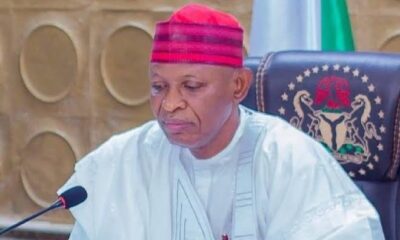
Vincent Ogbulafor, of blessed memory, a former National Secretary of the PDP, who became the party’s National Chairman, after Umaru Yar’ Adua won the 2007 Presidential election, was quoted to have boasted that he did not give a damn if Nigeria became a one-party state even as he bragged that the PDP would govern Nigeria for at least 60 years. That dream was, however, aborted when the party lost power in 2015 to the All-Progressives Congress (APC).
There was a sense, perhaps even among critics then, that dislodging the PDP from power would require more than routine opposition. The party had become synonymous with governance itself, blurring the line between state and party in ways that are often seen in dominant-party systems.
Yet, history unfolded differently. What seemed like an unassailable political fortress began to show cracks. Internal divisions, complacency, governance failures, and a growing disconnect with the electorate gradually eroded its dominance. The opposition, once fragmented and ineffective, found a way to coalesce. Public sentiment shifted. The impossible became possible. And eventually, the once-dominant force was voted out at the national level, a development that many had considered unthinkable just years earlier.
This dramatic turn of events should have served as a cautionary tale, a lesson in humility for those who wield power. But politics has a curious way of repeating itself, often with different actors playing similar roles.
Fast forward to the present, and we hear another bold projection: a ruling party envisioning itself in power for 100 years. On the surface, such a statement may be dismissed as political rhetoric, an attempt to project confidence, energize supporters, or signal long-term vision. But beneath the surface, it raises important questions about how political actors perceive power, accountability, and the will of the people.
The foregoing view cannot be farfetched as the All-Progressives Congress (APC) on Thursday expressed confidence that, undtr the leadership of Hon. Nentawe Yilwatda, the party has the potential to govern Nigeria for 100 years.
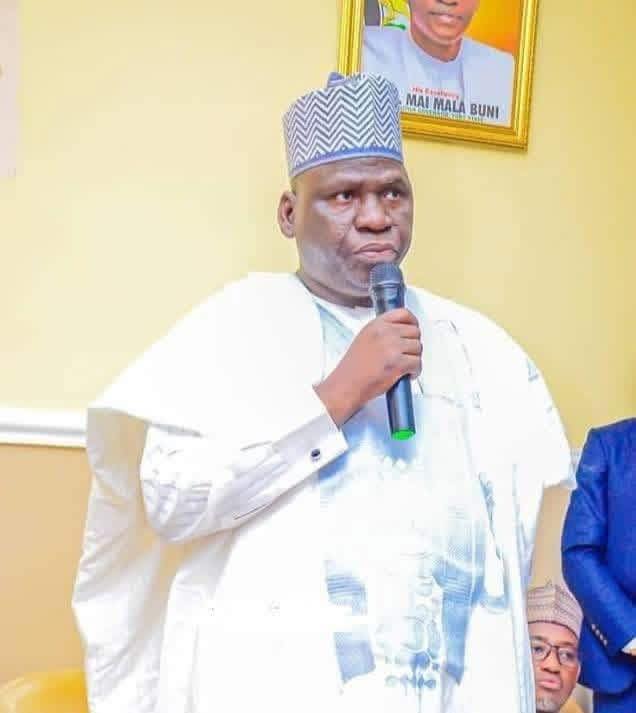
The Yobe State Chairman of the party, Hon. Muhammad Gadaka, made this statement at the Yobe Leadership and Innovation Summit 2026, organized by the Centre for Leadership and Good Governance, Yobe, held in Damaturu.
Gadaka said he remains optimistic about Nigeria’s future under the APC, noting that the party could dominate the country’s political landscape for at least a century due to its commendable policies and programmes.
Democracy, by design, resists permanence. It thrives on competition, periodic evaluation, and the possibility of change. The electorate is not static; it evolves, reacts, and sometimes rebels. Economic conditions shift, social dynamics transform, and new generations emerge with different expectations. In such an environment, the idea of uninterrupted rule for decades—let alone a century, appears less like a realistic projection and more like a misunderstanding of democratic fundamentals.
One of the most dangerous pitfalls for any ruling party is the assumption that its current strength guarantees future dominance. This assumption often breeds complacency. Leaders may become less responsive to public concerns, more insulated from criticism, and increasingly reliant on the instruments of power rather than the consent of the governed. Over time, this disconnect can become politically fatal.
Moreover, the Nigerian electorate has demonstrated a growing willingness to challenge incumbency. The myth that power, once secured, is unshakeable has been debunked. Voters are more informed, more vocal, and more willing to hold leaders accountable than ever before. Social media, civil society, and a more assertive press have all contributed to this shift, creating a political environment where narratives can change rapidly and dramatically.
It is also important to consider the role of internal party dynamics. Political parties are not monolithic entities; they are coalitions of interests, personalities, and ambitions. Maintaining unity over an extended period is a complex task. Factionalism, leadership struggles, and ideological differences can weaken even the most dominant parties from within. In many cases, the seeds of political decline are sown internally long before they become visible externally.
The broader implication of these grand projections is that they reveal a certain mindset, one that views political power as something to be held indefinitely rather than something to be earned continuously. This mindset can be detrimental not only to the party in question but to the health of the democratic system as a whole. When leaders begin to see power as a long-term entitlement rather than a temporary mandate, the incentive to govern effectively diminishes.
However, it would be overly simplistic to dismiss such statements entirely. They also reflect a desire for stability and continuity, qualities that are not inherently negative. In a country that has experienced political turbulence, economic uncertainty, and governance challenges, the idea of sustained leadership can be appealing. The challenge lies in balancing this desire with the principles of accountability and change.
True political longevity is not achieved through declarations but through performance. It is earned through consistent delivery of good governance, responsiveness to citizens’ needs, and the ability to adapt to changing circumstances. A party that can achieve this may indeed remain influential for a long time, but even then, its dominance will be contingent, not guaranteed.
The lesson here is not that long-term political success is impossible, but that it cannot be assumed. It must be built, maintained, and constantly renewed. And even then, it remains subject to forces beyond any individual’s control.
There is also a deeper philosophical dimension to this discussion. The phrase “man proposes, God disposes” speaks to the unpredictability of life itself. It reminds us that no matter how meticulously we plan, there are variables we cannot control. In politics, these variables are numerous: economic shocks, security challenges, public opinion shifts, and even unforeseen global events. Any one of these can alter the trajectory of a government or a political party in ways that no amount of planning can fully anticipate.
In this sense, humility becomes an essential quality for political leadership. Recognizing the limits of one’s control does not imply lack of ambition; rather, it reflects a mature understanding of reality. It encourages leaders to remain grounded, to listen more, and to govern with a sense of responsibility rather than entitlement.
As Nigeria continues its democratic journey, these lessons remain as relevant as ever. The country stands at a crossroads, facing complex challenges that require thoughtful leadership and genuine engagement with the people. Grand declarations about decades or centuries in power do little to address these challenges. What matters more is the quality of governance today, the policies implemented, the institutions strengthened, and the lives improved.
Ultimately, the electorate will have the final say. Democracy, for all its imperfections, provides a mechanism for correction. It allows citizens to reward performance and punish failure. It ensures that no political entity, no matter how powerful, is beyond accountability.
The story of political ambition in Nigeria is still being written. New actors will emerge, old ones will fade, and the balance of power will continue to shift. In this ever-changing landscape, one truth remains constant: power is transient.
Those who hold it today would do well to remember the lessons of the past. Bold predictions may capture headlines, but they do not determine outcomes. The future of any political party depends not on what it claims, but on what it does, and on how the people respond.
In the end, the contrast between the 60-year projection of the past and the 100-year vision of the present serves as a powerful reminder. It underscores the unpredictability of politics and the enduring relevance of a simple yet profound principle: no matter how confidently man proposes, it is ultimately beyond him to decide how events will unfold. And that, perhaps, is the most important lesson of all.