Africa
From Recovery to Growth: Strategic Monetary Policy -By Isah Aliyu Chiroma
A high PMI signals increased new orders, expanded production activities, and improved workforce hiring. Combined with inflation moderation and exchange-rate stability, these indicators suggest that the economy is progressively moving from recovery to growth consolidation.

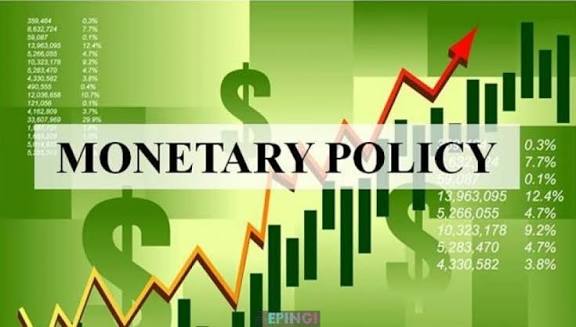
Amid global economic anxieties, from looming trade tensions to geopolitical uncertainties, the resilience of Nigeria’s banking sector remains a strong anchor. The Central Bank of Nigeria’s (CBN) Monetary Policy Committee (MPC) has again demonstrated a steady and deliberate approach to stabilizing the national economy. The Committee voted to maintain the Monetary Policy Rate (MPR) at 27.0 percent. This decision illustrates the strategic direction of Nigeria’s monetary authorities and reflects the careful balance required to sustain recent successes in managing inflation and exchange rate stability.
According to the MPC, financial soundness indicators are staying within regulatory thresholds. Even more significant is the ongoing recapitalization exercise, where 16 banks have already met the new capital requirements. A closer look reveals that the MPC’s decision is neither passive nor indecisive. It is a reflection of a careful alignment of evidence-based economic management with an understanding of the delicate path that Nigeria must navigate to achieve long-term stability.
One of the main reasons for retaining the MPR is the ongoing deceleration of inflation. For seven consecutive months leading up to October 2025, headline inflation has continued to decline, dropping from 18.02 percent in September to 16.05 percent in October. Even more encouraging is the significant drop in food inflation, which fell from 16.87 to 13.12 percent in just one month.
This trajectory did not occur by chance. It is the result of deliberate, tight monetary policy aimed at prioritizing price stability at a time when inflationary pressures threatened household incomes and business confidence. By keeping the MPR steady, the CBN is allowing the delayed effects of previous rate hikes to continue influencing the economy. Monetary policy, by its nature, has a lagging impact, and consistency is crucial to attain a stable economy.
The decline in core inflation, which has dropped to 18.69 percent, indicates that the economy is responding positively to the Bank’s decisions. Items like household furnishings and maintenance, which typically respond more slowly to monetary tightening, are also showing moderated prices.
For an economy previously challenged by currency volatility, food supply disruptions, and global commodity shocks, this path represents a significant policy achievement.
This indicated one of the quiet yet powerful success stories of the past year: Nigeria’s external sector has strengthened considerably. By November 14, 2025, foreign reserves had risen to US$46.70 billion up from US$42.77 billion just six weeks earlier. This level of reserves now provides over 10 months of import cover, a remarkable buffer in a global economy characterized by supply chain fragilities.
This improvement is linked to several factors, including increased capital inflows, a stable exchange rate, and better current account performance. Importantly, the CBN acknowledges the collaborative role of fiscal policy actors. Nigeria’s recent upgrade by major credit rating agencies and its removal from the FATF grey list underscore the reforms occurring across various institutions.
These developments are very critical. Investors confidence, once affected by volatility and policy uncertainties, is gradually being restored. The MPC’s decision to maintain a stable monetary environment despite global challenges is designed to preserve this momentum.
Recapitalization is often associated with difficult short-term adjustments, but in the long run, it safeguards the entire financial system from systemic vulnerabilities. By urging the CBN to successfully conclude this program, the MPC reinforces the importance of a robust, shock resistant banking framework that can support Nigeria’s economic ambitions.
With stronger banks, credit allocation is expected to improve, helping SMEs, manufacturers, and critical sectors obtain financing at more predictable rates as macroeconomic stability deepens.
Despite global headwinds, Nigeria’s growth numbers show positive results. Real GDP expanded by 4.23 percent in Q2 2025, up from 3.13 percent in Q1. Meanwhile, the Purchasing Managers’ Index (PMI) surged to 56.4 in November, the highest level in five years. This indicates growing optimism in the manufacturing and services sectors.
A high PMI signals increased new orders, expanded production activities, and improved workforce hiring. Combined with inflation moderation and exchange-rate stability, these indicators suggest that the economy is progressively moving from recovery to growth consolidation.
Retaining the MPR at 27 percent sends a clear, bold message, one that anchors expectations and reinforces policy continuity at a critical time. Raising the rate further might risk undermining the recent gains in economic stability.