Forgotten Dairies
Gov. Otti And ‘Small Shit Wey Dey Spoil White Boxer’ -By Isaac Asabor
But the episode with the journalist is a reminder that even the brightest record can attract attention for the smallest blemish. That is the wisdom behind the pidgin proverb. When the boxer is white, every stain shows. And in the theatre of public leadership, even “small shit” can quickly become the headline.

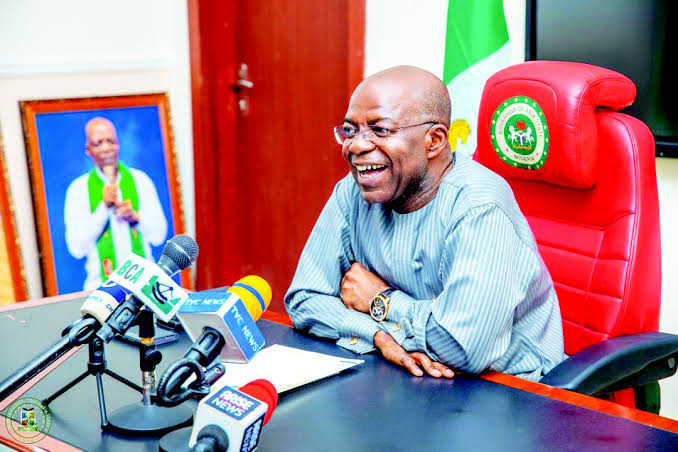
In Nigerian pidgin, people often say: “Na small shit dey spoil white boxer.” The meaning is simple but powerful. A white boxer may be clean, bright, and impressive, but the tiniest stain can immediately draw attention and overshadow its neatness. The proverb perfectly captures what recently happened in the public conversation surrounding Alex Otti, the governor of Abia State.
Across Nigeria, and even among many Nigerians in the diaspora, Otti has a reputation as one of the most performing governors of the moment. Since assuming office in May 2023, he has projected the image of a leader determined to reverse years of stagnation in Abia State. Roads have been revived, infrastructure project have been initiated, and the once-neglected commercial city of Aba has begun to breathe again.
For many observers, the difference between the current administration and those of past governors such as Orji Uzor Kalu and Okezie Ikpeazu has been striking. Abia had long suffered from governance that many citizens believed fell far short of expectations. In that environment, Otti’s energetic approach to rebuilding infrastructure made him stand out among his peers nationwide.
Indeed, in the eyes of many Nigerians, Otti’s record so far resembles that proverbial spotless white boxer. But then came the stain.
At a monthly media chat organized by the Abia State Government, a journalist, Chuka Nwabueze of BON Media Group, asked a question that has since ignited national debate. His question was straightforward: could the governor provide measurable data, beyond visible infrastructure, to demonstrate how his policies had improved the lives of ordinary Abians?
Rather than respond calmly, the governor reacted sharply. He rebuked the journalist publicly, describing the question as irresponsible and even suggesting that asking it was foolish. The exchange quickly spread across media platforms, triggering widespread discussion about governance, accountability, and the relationship between political leaders and journalists.
For many observers, the question posed by Nwabueze was not only legitimate but also intelligent. In modern governance, measurable impact matters. Infrastructure may be
visible, but development is ultimately about people, about improved income, education, health, and quality of life. These things are best captured through data.
In advanced governance systems across the world, governments routinely publish statistics on human development indicators: school enrollment, unemployment levels, mortality rates, economic productivity, and social welfare outcomes. Such data does not merely inform policy; it also allows citizens to measure whether government action is truly improving their lives.
Seen from the foregoing perspective, the journalist’s question was neither hostile nor unreasonable. It was, in fact, the kind of question that should stimulate deeper conversation about governance outcomes.
That is why the governor’s reaction created discomfort among many Nigerians who admire his work. Leaders, especially those in high office, are expected to maintain composure even under provocation. A governor speaking on a live broadcast represents not only himself but also the dignity of his office.
There were many ways the situation could have been handled differently.
The governor could have politely explained that comprehensive data was still being compiled. He could have outlined early indicators of progress. He could even have promised that his administration would soon publish measurable development statistics. Any of those responses would have strengthened his reputation.
Instead, the harsh response shifted public attention away from his achievements and toward the altercation itself. That is the irony of public leadership: years of hard work can momentarily be overshadowed by a single misstep.
This does not erase Otti’s accomplishments. Far from it. His efforts to revive Abia’s infrastructure and restore confidence in governance remain widely acknowledged. The transformation underway in Aba and other parts of the state is visible evidence that the administration has been active.
Yet leadership is not judged only by projects; it is also judged by temperament. The ability to tolerate criticism, answer difficult questions, and engage respectfully with the press is a hallmark of mature democratic governance. Journalists ask questions on behalf of the public. Sometimes those questions may sound uncomfortable or even inconvenient. But they remain a fundamental part of accountability. In that sense, the incident presents an opportunity rather than merely a controversy.
If Governor Otti embraces transparency by strengthening institutional data systems, perhaps through a well-equipped Abia State Bureau of Statistics, he could turn the entire debate into a landmark reform. Publishing regular development indicators would not only answer journalists but also place Abia among the few Nigerian states willing to measure governance outcomes scientifically. Such a step would silence critics more effectively than any heated response ever could.
Equally important would be a gesture of reconciliation. A simple public acknowledgment that the exchange could have been handled better would reinforce the governor’s image as a statesman confident enough to admit imperfection.
In politics, humility often strengthens leadership rather than weakening it. Ultimately, the story of Governor Otti remains largely one of progress and promise. His administration has rekindled hope among many Abians who long believed their state was drifting without direction.
But the episode with the journalist is a reminder that even the brightest record can attract attention for the smallest blemish. That is the wisdom behind the pidgin proverb. When the boxer is white, every stain shows. And in the theatre of public leadership, even “small shit” can quickly become the headline.