Africa
How Independent Is INEC?, by Isaac Asabor

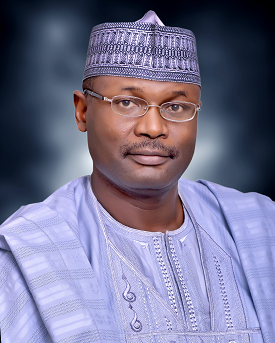
The Independent National Electoral Commission (INEC) is central to Nigeria’s democratic process. Established with the mandate to oversee elections and ensure free, fair, and credible outcomes, INEC carries immense responsibility. Yet, despite its title as an “independent” body, questions surrounding its true autonomy remain a subject of heated debate.
Without a doubt, INEC’s independence is enshrined in the Nigerian Constitution. It is meant to function as an impartial institution that can withstand political influence, financial manipulation, and societal pressures. The Electoral Act of 2010 provides a legal framework for INEC’s operations, granting it the powers to regulate political parties, conduct elections, and oversee voter registration. This framework is designed to foster a fair democratic process, where no political party or individual has undue influence over the results.
However, while INEC’s independence is legally guaranteed, the effectiveness of this constitutional safeguard often depends on the interpretation and enforcement of the law, which may be influenced by political will. Legal provisions alone cannot protect an institution from external pressures if there is no concerted effort to shield it from political interference.
A key factor in the debate over INEC’s independence has been persistent allegations of political interference. Over the years, opposition parties, civil society organizations, and observers have often questioned the impartiality of the commission. Accusations range from tampering with election results to collusion with ruling parties, and these concerns are not new to Nigeria’s political landscape.
For example, in the 2007 elections, widely regarded as one of the most flawed in the country’s history, there were widespread allegations of vote rigging and ballot box stuffing, with INEC criticized for failing to maintain control of the electoral process. In more recent times, the 2019 and 2023 general elections were also shadowed by claims of irregularities, including issues with result collation and vote transmission delays. These incidents often lead to public distrust in the electoral process and raise questions about the actual level of independence INEC enjoys from the ruling government.
In a similar vein, just recently, Civil Society Organizations (CSOs), which monitored the Edo State governorship election on Saturday, issued a damning review of the exercise, declaring that the results from several polling units were altered at coalition centres.
The civil society coalition, the Situation Room, said the conduct of the election lacked credibility.
Also, Yiaga Africa, said it deployed the Process and Results Verification for Transparency (PRVT) methodology for the Edo election, involving 300 stationary and 25 roving observers, covering a representative sample of polling units (PUs) across all 18 local government areas of the state, and ostensibly against the foregoing backdrop, faulted the conduct of the poll and the declared results as lacking integrity.
However, the electoral body has, at various times, refuted these allegations, citing challenges such as logistical problems, election-day violence, and sabotage. However, these denials often do little to change the public’s perception, as the pattern of electoral controversy continues to haunt Nigeria’s elections.
Another critical aspect of INEC’s independence is its financial autonomy, or the lack thereof. INEC, like most government institutions, depends on the federal budget to finance its activities, including election preparations, voter education, and technological upgrades. While the government allocates a specific budget for INEC’s operations, the process through which funds are disbursed remains a potential lever for political control.
For instance, delayed release of funds for electoral activities has been cited as a reason for INEC’s inability to adequately prepare for elections in the past. When funding is not timely or sufficient, the commission struggles to meet its obligations, leaving it susceptible to external pressures. Critics argue that if INEC had its own independent source of funding, it would be more empowered to carry out its mandate without fear of financial blackmail from political authorities.
Furthermore, the question of financial accountability arises. INEC’s spending is scrutinized by the National Assembly, which also wields significant political influence. This arrangement has led to questions about whether INEC can truly stand on its own, especially when the same politicians it oversees hold the power to approve its budget.
INEC’s ability to operate independently in the field is crucial to ensuring fair elections. The commission’s introduction of various electoral reforms, such as the Bimodal Voter Accreditation System (BVAS) and the electronic transmission of results, was aimed at reducing human error and the potential for manipulation. However, while these reforms were steps in the right direction, their implementation has not been without challenges.
The 2023 general elections highlighted some of these operational hurdles. Despite the deployment of electronic systems, several polling stations reported delays, equipment malfunctions, and in some cases, a complete failure of the technology. This raised suspicions about whether these lapses were due to INEC’s own inefficiencies or deliberate sabotage from political actors seeking to manipulate the process.
INEC has often found itself at the center of these controversies, facing backlash from both the public and political parties. The commission claims that it is not immune to the broader infrastructural and security challenges that affect Nigeria, especially during elections. For instance, election-day violence, ballot snatching, and intimidation of voters are issues beyond INEC’s direct control but have significant implications for the commission’s ability to operate independently.
Election security is another factor that complicates INEC’s independence. While the commission is responsible for overseeing elections, it relies heavily on security agencies to ensure safety and maintain order at polling units. The Nigerian Police, Army, and other security agencies are tasked with preventing violence, but their deployment is often overseen by the ruling government.
This reliance on state-controlled security forces has led to concerns about how neutral these agencies can be during elections. There have been instances where security forces were accused of aiding or abetting electoral malpractice, particularly in ruling party’s strongholds. When security agencies act in favor of one party, INEC’s ability to conduct free and fair elections is significantly compromised.
In the 2019 and 2023 elections, reports of military interference in the electoral process were widespread. There were accounts of voters being intimidated and opposition politicians being harassed, all of which contributed to the belief that INEC was not in full control of the election environment. Although INEC can set guidelines, it is at the mercy of security forces when it comes to enforcing them.
The success of any electoral body hinges on public confidence in its ability to act fairly and independently. Unfortunately, in Nigeria, public trust in INEC has often been low, primarily due to past electoral malpractices and inconsistencies in election results.
A survey conducted by a Nigerian civil society organization revealed that many Nigerians believe INEC is not free from political influence. This perception of bias diminishes the legitimacy of the electoral process and discourages voter participation. When people lose faith in the neutrality of the electoral umpire, it creates a cycle of apathy, where citizens are less likely to engage in the democratic process.
In response, INEC has consistently called for patience and understanding, emphasizing its commitment to improving election management. Despite this, the commission must work harder to rebuild trust. Public engagement, transparency in election logistics, and prompt communication are essential for changing this narrative.
Finally, the judiciary plays a crucial role in determining the extent of INEC’s independence. When disputes arise over election results, courts are tasked with adjudicating the outcomes. INEC’s decisions are often subject to judicial review, and election tribunals have, on occasion, overturned results declared by the commission.
While the judiciary serves as a check on INEC, the frequent involvement of courts in electoral matters suggests that the commission may not always get it right. Moreover, political actors have often used the judiciary to challenge election results in what some view as an attempt to manipulate the processthrough legal avenues. This dynamic further complicates the perception of INEC’s autonomy, as its decisions are constantly under scrutiny and often reversed by the courts.
In assessing how independent INEC truly is, it becomes clear that while it has made significant progress, it is still constrained by a host of challenges. Political interference, financial dependence, operational difficulties, security concerns, and public mistrust all combine to undermine the commission’s full independence.
In fact, for INEC to truly fulfill its mandate, a multifaceted approach is required, and this includes greater financial autonomy. Given the foregoing view, INEC should be allowed to manage its own budget with minimal interference from the executive and legislative arms of government.
In a similar vein, reforms to the Electoral Act must be continuous, with a focus on closing loopholes that enable political manipulation of the process, and INEC must invest more in public education and transparency, explaining its processes clearly to the electorate and making sure citizens are well-informed.
In a similar vein, there should be clear protocols on the role of security forces during elections, with measures in place to ensure their neutrality, and while the courts play an essential role in adjudicating election disputes, the process should not be politicized. Therefore, strengthening the integrity of the judiciary is necessary to complement INEC’s independence.
In conclusion, while INEC is designed to be an independent body, the reality on the ground suggests that its autonomy is limited by numerous external pressures. To ensure that Nigeria’s democratic process remains credible, urgent reforms and a renewed commitment from all stakeholders are needed to guarantee that INEC can function without undue influence. Only then can Nigeria’s elections be truly free, fair, and independent.