Forgotten Dairies
Inside The Black Magic Pot Of Nigeria -By Festus Adedayo
If only many Osupas who use the black magic could come out to attest to its efficacy and openly identify with it as this musician did, there is the probability that their testimonies would drive more converts into it. This may make faster the ongoing process of digging up the remnants of magic which our forefathers were lured to bury centuries ago.

Published
2 hours agoon
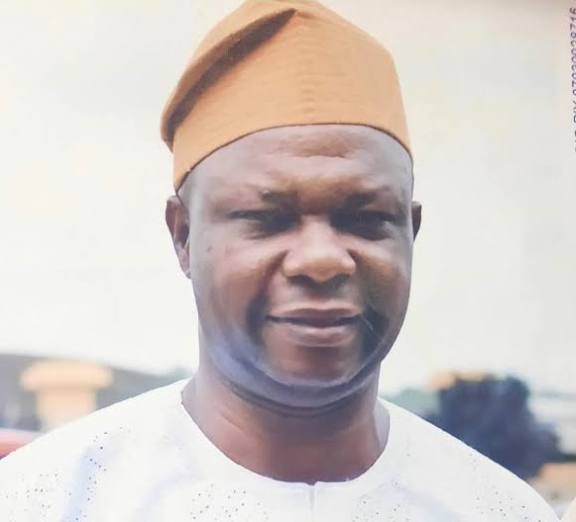
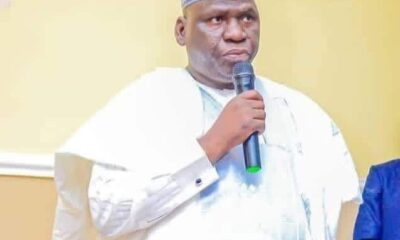
Osupa is a known Islamic faith adherent. Can anyone openly hoist two flags of black magic and Islam? A viral video of the Osupa confession instantly hit the airwaves. And tongues went wagging. Addressing his backup singers who were reportedly struggling to keep pace with his gobsmacking ability to memorize musical lines, Osupa urged them to make spiritualism the cornerstone of their existential pursuits. “Someone once advised me to grant an interview denying I am a fetish person, but I refused. I didn’t harm anyone with it. I only seek progress. If I don’t engage in it, what else should I use? Is it Panadol that will make me successful?” he joked.
Osupa also maintained that he constantly pays obeisance to Ifa, an ancient Yoruba religious system of divination. Ifa, he said, is a major hub of his personal spiritual routine. Then, his damming revelation: “Everybody practices it. Some do theirs in secret, but I do mine openly”.
Black magic operates essentially with mystical power. Through black magic, mysterious things which overwhelm science, difficult to explain, happen. Magic is a mystical power brought to life through ritual performance. Magic also influences human or natural events in a way that is outside of the ordinary human understanding.
Osupa’s open confession provoked the question, which we must answer individually, as Muslims or Christians, does black magic, called Juju, influence how we think about existence? Does the traditional belief in mystical power, manifest in the use of herbs, divination, magic, witchcraft and sorcery, occupy a part of our daily existence? E. Bolaji Idowu, famous theologian and ethnographer, in his 1967 seminal article, “The Study of Religion with Special Reference to African Traditional Religion,” published in ORITA: Ibadan Journal of Religious Studies, agreed with Osupa. Idowu even went ahead to say that Africans regard African Traditional Religion (ATR) as a “contemporary living reality.”
As the negative effects of globalization and western education, as well as changes in the socio-economic, political and religious life in every part of the earth, affect the African, they are forced to seek remedy in forsaken magic, herbs, witchcraft and sorcery. Many African beliefs and practices are almost all faded away. Yet, belief in mystical power is on the upsurge, daily gaining prominence in Africa. Christians and Muslims, great great grand-children of the Whiteman’s African converts of early 15th century, are going back to the beliefs of their forebears practiced before his advent.
Today, the media is inundated with stories of pastors burying strange objects, including human parts, as foundation of their churches. In Yoruba magical realism, it is called awórò. It is believed to be a magical pull for multiplication of audience. Islamic clerics who double as dibia of Yahoo Boys seeking occult powers to fortify their trade get burst almost on a daily basis. Human parts traders, when burst, often lead investigators to pastors/Islamic clerics whose divination aids this nefarious trade. Many in political authority, when struck by strange ailments, go in search of native doctors who use combinations of incantations and sorcery to treat them. There are recorded healing from these exercises. Also, partly due to skyrocket in costs of drugs, reliance on orthodox medicine is waning as herbs and roots take over the job of medics. Many Nigerians have local incisions round their bodies, upon which they wear suits and flowery clothes that cover the scarification. Yet, mum is the word from what seems to be an implosion in the number of Africans who migrate to black magic for resolution of their earthly travails.
In 2018, a Kenyan scholar, Moses Kirimi Ndunjo, conducted a research on the effect of traditional worldview among evangelicals of Tharaka community of Nithi County, Kenya. He especially concentrated on its implications on their Christian discipleship. He found out that, although they accepted Christianity, with over 90 percent of them having confessed acceptance of Jesus, “this has not so much affected their belief in traditional mystical power as many of them continue to hold firmly to the belief in Urogi (witchcraft); Araguri
The situation remains pretty the same in Nigeria. In February, an RCCG pastor, Bola Abiodun, was reported to have threatened an invocation of a deadly curse on a lady for addressing him as “Mr” rather than “Dr.” He then threatened the lady, “Don’t disrespect me if you don’t want to see my other side…If you don’t apologize to me in the next 5 minutes, you may not wake up tomorrow,” he wrote on his X handle. Many reasoned that the boldness of the pastor was rooted more in black magic than Christendom.
While many Nigerians and Africans imbibe the precepts of modernity, with their medical, scientific and technological explanations, on another hand, they do not abandon mystical power and its magic. The main features of magic are divination, witchcraft, sorcery and other mysterious phenomena which are at cross purposes with modernity.
Very many magical situations have been reported which defeat scientific reasoning. Hunters have shot at games in the forest which morphed into humans. These are cases in criminal law which test the confines of law and tradition. While modern system of law mostly attributes such stories to hallucination of the hunter, it seems to confirm that a world exists for traditional belief and practices. In Kenya, four years ago, wrote Professor Kagema, “I heard from my wife that there were two young men who were eating grass in our local market because they had stolen a motor bike. As a scholar and a priest, I could not exactly comprehend how this was possible. I went to see for myself and to my amazement, it was a true story. Two young men were busy eating grass and making a noise similar to that of goats. I joined my fellow pastors to pray for them but nothing changed. It was only after their relatives accepted to pay the owner of the motor bike that the lads recovered when the responsible magician reversed the situation.”
The position of magic in the African music industry where Osupa operates is notoriously dire. Persuaded that there is an enemy somewhere pursuing them and who wants to make mincemeat of their musical talents, African musicians are constantly in the pursuit of unseen enemies. As they do this, they search for black magic validation and deflection of potential attacks on them. It is why it is almost a rarity to find an African musician who does not fortify themselves with black magic.
In the early 1970s, gruelling wars were fought between musicians for individual validations. Ebenezer Obey, King Sunny Ade, Dele Abiodun, Emperor Pick Peters, Idowu Animashaun on the Yoruba Juju music turf; as well as Yusuff Olatunji, S. Aka, Kelani Yesufu, alias Kelly, Haruna Ishola, Kasumu Adio, Ayinla Omowura, Fatai Olowonyo, Ayinde Barrister, Kollington Ayinla etc, in the Sakara, Fuji and Apala genres. These wars were fought with black magic, ending up neutralizing some and leading to the liquidation of others. Recipients of the fiery swords of those wars could never doubt the efficacy of black magic.
Among Igbo traditional musicians, too, during and even after their demise, there have been continuous debates, leading to rivalry, over who holds the supremacy title of the most popular Igbo highlife musician. Fans and artists were/are most times at the center of the disputes. The contentious discussions hover over musicians like Dr. Sir Warrior, Bright Chimezie, Stephen Osita Osadebe, Oliver De Coque, in comparison with modern artists like Flavour and Kcee. It is however not known whether while alive, these musicians fought mutual destructive battles as the Yoruba’s.
As a signifier of the clash between the musicians and their enemies, their drums were known to encounter calamity at performance grounds. In my piece with the title, Lamidi Apapa’s missing cap (May 21, 2023) I wrote in passing about the fiasco of drums. In an interview granted renowned broadcaster, Dele Adeyanju, shortly before he died, Yoruba Ijesaland’s most evocative and authoritative Adamo music singer, Adedara Ar’
Omowura and his band members, which included lead drummer, Alao Adewole, alias Oniluola, had entered the venue of a night gig without paying obeisance to Ar’unralojaoba, who had earlier played. In the words of Ar’unralojaoba himself, on arriving the bandstand to take over the evening belt of entertainment from him, Omowura walked in, arrogant with his assumed musical superiority. As Adewole sent his drumming stick on errand to produce the usual electrifying rhythm, the drums not only refused, they began to get torn in sequence. All in all, the drummer lost about four drums within a short period. A rapprochement only came when Omowura prostrated before the elderly Ar’unralojaoba, with obeisance and propitiation to the god of the drum.
Also, many musicians, in search for protection, join occult associations. Alhaji Dauda Epo Akara, famous Awurebe music legend, who lived in Ibadan, the capital of Oyo State, was renowned for prologuing his songs with high dosage of Islamic verses recitation. It was only upon his death that it was found out that he belonged to an Ogboni cult. So also were many of the musicians of that era. Osupa’s confirmation that he does not neglect African traditional medicine and worship could be an indication that those fiery intra-genre wars among Yoruba musicians are still raging underground silently today and are being fought by magical spells.
Scientifically unexplainable occurrences of black magic happen daily in Africa. It is why, especially in Nigeria, in spite of modernity, as the 2027 election period gets nearer, indications of gravitation towards black magic by politicians will get higher. At junctures where three footpaths meet, calabashes, inside which are propitiation materials (heads of goats, palm oil sprinkling, cowries, èkuru – steamed white bean pudding – white cloths and many more) are placed there at dawn. It is believed that these black magic sacrifices have very strong hold on the outcome of elections.
The power in mystical Africa comes in different forms. It is mostly verbalized in words or incantations. Among the Yoruba, it is always alliteration and simile. For instance, in incantations to suborn obedience, the enchanter will say, “the leaf of Ogbó orders you to listen (gbó)”. Both words are alliterative.
John Mbiti, a renowned Kenyan Anglican priest, philosopher, major scholar of African Traditional Religion and theologian, who was famously reputed to be the founding father of African Christian theology, brought a new flavour to the mystique of magic. He said, in Africa, it is believed that words/curses spoken by an elderly to a younger one carry the power of force. The words of parents to their children are also viewed as possessing potent power, especially if they are uttered or pronounced in a fit of anger or time of crisis. Among the Yoruba, children court words of prayers from their parents and avoid curses from them. It is believed that such words enjoy efficacy.
Among the Ameru, a Bantu ethnic group indigenous to the eastern and northern slopes of Mount Kenya, the belief is that if parents die with their curses hanging on their children, such children run mad thereafter or die. Mbiti gave validation to this. In his 1969 book, African Religions and Philosophy , he said that formal ‘curses’ and ‘blessings’ from parents possess extremely potent powers and are believed to be very efficacious. Children, he said, travel several kilometers from their domiciles to be blessed by their aged parents, while taking extra care to ensure that their parents do not curse them.
In this work cited above, Mbiti even confirmed that in Africa, there were mystical powers which, upon being adequately invoked, cause “people to walk on fire flames without getting burnt, to lie on thorns or nails without getting pierced, to harm people from a distance, to change into dangerous beasts which can hurt people or their property, to change nonliving things into living creatures, to see into hidden secrets, to detect thieves or even stupefy them so that they are caught unawares and to foretell the future.”
Africa is moving backwards towards these magical powers. It probably has realized the incapability of orthodox medicine, power and authority to protect the African from their existential realities. This has led to what is called syncretism. In it, people practice their individual religions of Christianity or Islam, play significant roles in mosques or churches, while at night, they go to their groves to offer propitiation to African gods, in exchange for protection or salvage. Some people have said that this is recoursed to because of the perception that the Christian and Islam God is not immediate in His intervention, unlike the potency of black magic, renowned for its immediacy.
Many western-oriented persons, as well as Islamic and Christian organizations, refer to black magic as fantasy or inconsequential. A pastor was recently quoted in a news report as gloating that Osun river worshipers in Osogbo thought his members who touched the grove would die, but didn’t. However, black magic is the lived reality and experience of millions of African people. To them, it is efficacious if appropriately administered.
If only many Osupas who use the black magic could come out to attest to its efficacy and openly identify with it as this musician did, there is the probability that their testimonies would drive more converts into it. This may make faster the ongoing process of digging up the remnants of magic which our forefathers were lured to bury centuries ago.