Forgotten Dairies
June 12 and the Unfinished Business of Nigerian Democracy -By John Kokome
Democracy in Nigeria has come a long way, but it is still a work in progress. The nation has won the battle against military rule, but the greater battle is to ensure that democratic governance translates into dignity, security, and prosperity for every citizen.

Every nation has dates that define its soul. For Nigeria, June 12 is one of such moments. It is not merely a date on the calendar or another public holiday; it is a powerful reminder of the resilience of a people who refused to surrender their right to choose their leaders.
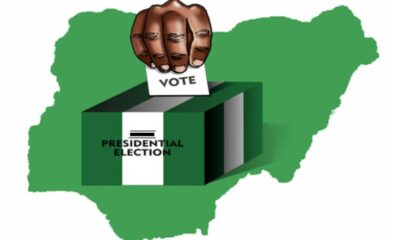
Thirty-three years after the historic June 12, 1993 presidential election and over two decades after the restoration of civilian rule, Nigeria has every reason to celebrate its democratic survival. The country has moved from the dark era of military decrees and authoritarian rule to a political order where governments derive legitimacy from the ballot box. Yet, beyond the celebrations, an uncomfortable question remains: Has democracy truly delivered on its promises to the Nigerian people?
There is no denying that Nigeria has recorded notable democratic gains. Since 1999, the country has sustained its longest uninterrupted period of civilian governance. In a region where military interventions and democratic reversals have periodically threatened constitutional order, Nigeria’s ability to maintain democratic continuity is a significant achievement.
The country has also witnessed increasingly competitive elections and a historic transfer of power in 2015, when an incumbent president was defeated at the polls and handed over to an opposition candidate. This was a watershed moment that demonstrated that political authority in Nigeria could change hands through constitutional means rather than force.
The democratic era has also expanded the boundaries of free speech. The media, civil society groups, activists, and ordinary citizens now possess greater freedom to interrogate government policies and hold leaders accountable. The rise of digital technology and social media has further dismantled the traditional barriers between those who govern and those being governed.
However, democracy cannot survive on periodic elections and constitutional rituals alone. The ultimate purpose of democracy is to improve the welfare of the people. It must put food on the table, create opportunities for young people, guarantee security, and inspire confidence in a better future.
For millions of Nigerians, the democratic experience remains a paradox. They have political rights but face severe economic hardship. They can elect leaders, but many still lack access to necessities such as quality healthcare, functional schools, stable electricity, good roads, and sustainable livelihoods. The widening gap between democratic expectations and everyday realities has fueled public frustration and voter apathy.
The challenge goes beyond government performance; it also concerns the quality of Nigeria’s politics. Political parties, which should serve as the foundation of democratic culture, often struggle with transparency and internal democracy. Candidate selection is frequently shaped by money, influence, and political calculations rather than competence, character, and clear policy alternatives.
Elections themselves remain a work in progress. While technological innovations and electoral reforms have improved the process, issues such as vote buying, electoral violence, manipulation, and declining voter participation continue to cast shadows over Nigeria’s democratic credibility.
Another major challenge is the weakness of public institutions. A healthy democracy is not built around powerful individuals but around strong institutions that can enforce the law, protect citizens’ rights, and ensure accountability. When institutions become vulnerable to political pressure, democracy becomes a mere contest for power rather than a vehicle for national development.
Therefore, the conversation on June 12 must move from remembrance to renewal. The heroes of the pro-democracy struggle did not risk their lives simply for Nigerians to vote every four years. They fought for a country where justice would prevail over privilege, where leadership would mean service, and where government would remain accountable to the people.
The task before Nigeria’s current generation is clear: to complete the democratic journey that June 12 started. This requires courageous leadership, stronger institutions, credible elections, active citizenship, and a renewed commitment to the ideals of fairness, equity, and national progress.
Democracy in Nigeria has come a long way, but it is still a work in progress. The nation has won the battle against military rule, but the greater battle is to ensure that democratic governance translates into dignity, security, and prosperity for every citizen.
That is the unfinished business of June 12. That is the promise Nigeria must still fulfil.
John Kokome
A Communications Strategist and Public Affairs Analyst writes from Lagos
kokomejohn@yahoo.com