Africa
Kano’s Hausa Language Bill is a Victory for Nigerian Education -By Abdullahi Abubakar Ladan
This is why I call on the Kaduna State Government to replicate Kano’s model without delay. With Governor Uba Sani’s commitment to inclusive governance, as seen in initiatives like the Open Government Partnership, now is the time to develop complex science textbooks in Hausa, alongside Yoruba and Igbo equivalents nationwide. Nigeria’s democracy is just 26 years young since the Fourth Republic’s dawn in 1999; we are still learning, experimenting, and refining. But with steps like Kano’s, we are inching towards getting it right—building an education system that honors our diversity while unleashing our potential.

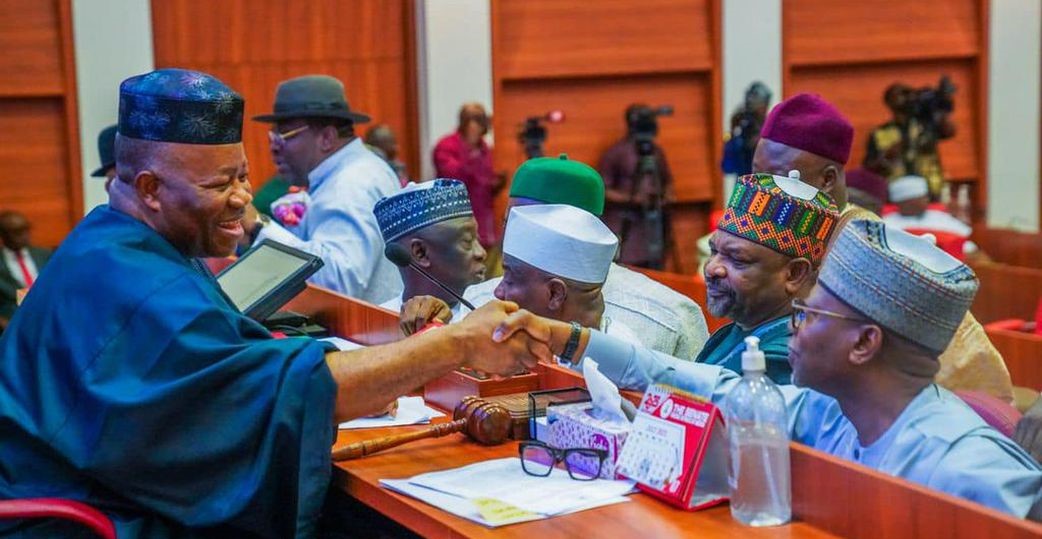
Nigeria is linguistically diverse, with over 500 languages weave the fabric of our identity, the Kano State House of Assembly’s recent passage of a bill mandating Hausa as the primary language of instruction in public primary schools is a landmark development worthy of national celebration. This progressive step, signed into law on November 5, 2025, signals a long-overdue shift towards education that resonates with our children’s lived realities rather than imposing an alien medium that stifles their potential. As a good governance advocate who has long championed policies that prioritize citizen-centered reforms, I welcome this bold move with open arms. It is not just a win for Kano; it is a clarion call for Hausa-speaking states like Sokoto, Zamfara, and Jigawa, as well as Yoruba-dominant ones such as Lagos, Oyo, and Osun, and Igbo heartlands including Anambra, Enugu, and Imo, to follow suit and localize their curricula accordingly.
The rationale is straightforward and irrefutable: children learn best when concepts are unpacked in the language they first grasp the world through—their mother tongue. For too long, we have force-fed English onto our young ones, watching them grapple with abstract ideas in a tongue that feels foreign, leading to rote memorization rather than genuine comprehension. This not only alienates them from the joy of learning but perpetuates a cycle of educational inequality. Kano’s bill recognizes this, positioning Hausa not as a relic but as a tool for empowerment, ensuring that foundational knowledge in math, science, and literacy is built on solid linguistic ground.
This approach is no Nigerian innovation; it mirrors global success stories where mother-tongue instruction has fueled national progress. Consider China, a powerhouse of economic and technological advancement. Research from the UNESCO Institute for Lifelong Learning highlights how China’s emphasis on mother-tongue-based multilingual education for its vast minority populations—such as Uyghur, Tibetan, and Mongolian—has been instrumental in its educational equity and overall development. By integrating native languages into early schooling while transitioning to Mandarin, China has bridged knowledge gaps, boosted cognitive skills, and produced a generation capable of innovation. As linguist Gina Tam notes in discussions on regional languages, “Mother-tongue education reinforces cultural identity and helps preserve linguistic diversity, an important aspect in the multicultural tapestry of China,” leading to higher academic achievement and social cohesion. Without this foundation, China’s meteoric rise—from agrarian society to global leader—might have been stunted.
India, our neighbor in the Global South, offers another compelling parallel. The National Education Policy 2020 explicitly promotes multilingualism, advocating mother-tongue instruction up to Grade 5, with studies showing it enhances critical thinking, reduces dropout rates, and fosters creativity. Linguist Ganesh Devy, founder of the People’s Linguistic Survey of India, aptly states, “Learning multiple languages from an early age not only enriches cognitive abilities but also deepens the understanding of India’s diverse cultural fabric. This policy has empowered millions, turning linguistic diversity into an economic asset through sectors like IT and tourism.
Closer to home, Ghana’s recent directive by Education Minister Haruna Iddrisu, making mother-tongue instruction compulsory in basic schools as of October 2025, underscores the continental momentum. Drawing from the 1951 Accelerated Development Plan, which established local languages for the first three years, Ghana aims to improve comprehension and cultural preservation—echoing UNESCO’s findings that children learn faster and more confidently in their native tongue. Even France, with its storied centralism, has evolved: the 2021 Molac Law now permits immersive teaching in regional languages like Breton, Basque, and Occitan for the majority of the school day, safeguarding heritage while enhancing learning outcomes. These examples prove that prioritizing indigenous languages does not isolate; it equips.
Yet, in Nigeria, the consequences of our English-centric model are starkly evident in our ballooning unemployment crisis. The National Bureau of Statistics reports that as of Q2 2024, Nigeria’s overall unemployment rate stands at 4.3%, but this masks a graver reality: post-secondary graduates face rates as high as 8-9%, far outpacing those with only primary education. Youth unemployment hovers around 6.5%, with nearly 10 million Nigerians—many fresh graduates—idling in the labor market. These are not lazy youths; they are products of a system that awards certificates without comprehension. Struggling to decode lessons in a second language, they emerge as unemployable cogs—unable to innovate, create, or apply knowledge. The result? A stifled economy where potential manufacturers, founders, and professionals languish, exacerbating daily rising unemployment figures.
Contrast this with what mother-tongue education promises: true understanding that sparks ingenuity. When children connect deeply with lessons in Hausa, Yoruba, or Igbo, they grasp nuances that English-only teaching glosses over, paving the way for problem-solvers who can invent local solutions—from agro-tech in the North to fintech in the Southwest. Of course, this must not come at the expense of global connectivity. English should remain the official language of communication in schools, taught rigorously as a subject to enable research, international collaboration, and opportunities in English-speaking nations. A bilingual bridge—mother tongue for foundations, English for horizons—is the balanced path forward.
This is why I call on the Kaduna State Government to replicate Kano’s model without delay. With Governor Uba Sani’s commitment to inclusive governance, as seen in initiatives like the Open Government Partnership, now is the time to develop complex science textbooks in Hausa, alongside Yoruba and Igbo equivalents nationwide. Nigeria’s democracy is just 26 years young since the Fourth Republic’s dawn in 1999; we are still learning, experimenting, and refining. But with steps like Kano’s, we are inching towards getting it right—building an education system that honors our diversity while unleashing our potential.