
Africa
Trump: The Path Buhari Charted -By Pius Mordi
If President Bola Tinubu is to effect a fundamental review of the country’s security system, an inquest must be held in Buhari’s so-called deradicalisation programme to identify the “repentant” terrorists now embedded within the military. Failing to do so, Nigeria will just be moving in circles. President Tinubu has to dismantle that Buhari doctrine.

At the height of the army’s fight against Boko Haram under General Azubuike Ihejirika as Chief of Army Staff, there was a remarkable measure of success in shooing back the Islamist insurgents from the territories they had taken. That was when Muhammadu Buhari, then nursing the desire to rule Nigeria again through his Congress for Progressive Change (CPC), intervened. Apparently piqued by the army’s success, he proclaimed that attack against Boko Haram is attack against the north of the country. He classified the insurgents as freedom fighters. Along with other northern elites, he accused Ihejirika of neutralising the north’s best and threatened to report him to the International Criminal Court (ICC) of war crimes. President Goodluck Jonathan ultimately succumbed and removed and retired his army chief.
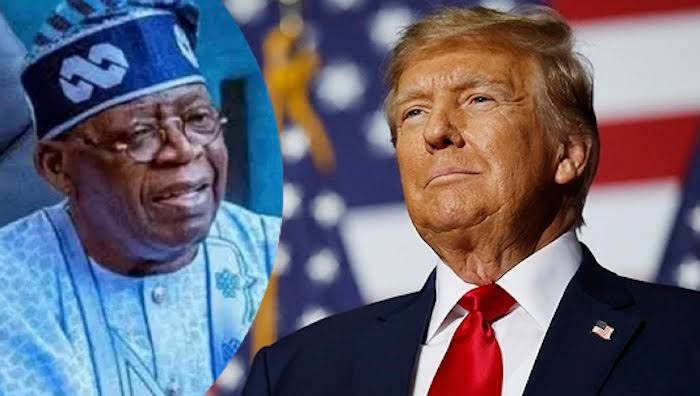
The threat issued by President Donald Trump to take military action against Nigeria if the “genocide against Christians” continues has brought to the fore what the two-time ruler did to Nigeria during his time as elected president. Some Nigerians were incredulous and pointedly argued that the Boko Haram insurgency attacks by other terrorist groups affect Christians and Moslems alike. That is true. But Buhari before and after he became president charted the path for Trump’s threat. Even though Buhari made the defeat of insurgency one of his major campaign promises while accusing Jonathan of not doing enough, his actions barely disguised his sympathy for Boko Haram. He promised that Boko Haram will be defeated within three months of taking office, a promise that appeared to be a scripted deceit. While Lai Mohammad claimed the terrorists had been “technically defeated” when they became more brazen in their attacks, the chain of developments unraveled a deeper game plan by Buhari and his presidency.
Buhari’s singular road map for resolving the menace of open grazing by Fulani cattle herders is to unveil a series of initiatives to entrench open grazing at a time modern cattle rearing dictated the global adoption of ranching. To him, it is open grazing characterised by destruction of farmlands and crops or nothing.
There was the Ruga Settlement Scheme, a controversial, short-lived initiative intended to create permanent, integrated settlements for herders and their families. When this was successfully resisted, he came up with the National Livestock Transformation Plan (NLTP)
It was touted as a long-term framework for modernizing the livestock sector and was designed to be state-driven and voluntary.
When that did not get the buy-in of states, especially those in the south, Buhari unilaterally came up with the idea of recreating what was said to be colonial cattle routes. Buhari repeatedly expressed a commitment to reviving and recovering colonial-era grazing routes and reserves, which were designated areas for cattle movement and grazing established under a 1965 Northern Nigeria law. This idea also met with strong opposition from many states, again, especially in the South, where governors had passed anti-open grazing laws.
The final disingenuous manoeuvre from him was the controversial National Water Resources Bill he submitted to the National Assembly. The bill, among other provisions, aimed to centralize the control and management of all surface and underground water resources and their riverbanks as well as adjacent lands under the authority of the Federal Government through a commission, superseding state and local control, and even community as well as individual land rights.
Of course, states read the script and dumped the bill. But his Fulani kinsmen equally read the script and saw a fresh impetus in its content. They saw in Buhari a president committed to doing anything to use federal resources to protect their age long tradition of open grazing, rejecting all persuasions that cattle rearing, just like every other agricultural venture, is a business, a personal one at that.
With that seeming assurance, they embarked on the most audacious campaigns of land grab. The Middle Belt was their main operational theatre, killing whole communities, occupying their lands. Fulani militants have attacked and occupied numerous communities primarily across the central Middle Belt region, as well as parts of the North West, North East, South East, and South West. Benue and Plateau states were the worst hit.
From the infamous Christmas Eve massacre of 2023 where over 200 people were killed in Barkin Ladi and Bokkos local government areas, the 2022 massacres in Wase and Kanam where over 150 people were killed, and many other attacks, the killings inevitably took a religious colouration as the Fulani terrorists are mainly Moslems while the victims killed and displaced from their ancestral lands were essentially Christians. It was an undisguised campaign for land. Former Benue State governor, Samuel Ortom, did not mince words in accusing Buhari of a devious agenda. “Buhari has empowered and emboldened the Fulani pastoralists in their expansionist agenda, including killings. It is equally a known fact that the President has failed woefully in securing Nigeria, and Benue State in particular,” Ortom said in a statement, accusing the president of abdicating his statutory duty of security lives and properties.
The action he took following strident protests was to institute a dubious “deradicalisation” programme of those he called “repentant” terrorists. He housed and paid them and were subsequently absorbed into the military in an opaque exercise. Those same “repentant” terrorists were later found to have become entrenched moles in the campaign, betraying soldiers who were often ambushed. All the while, Buhari was content with sustaining the internally displaced people’s camps in the Benue and Plateau states.
Yes, there had been killings in the country, but Buhari took it to an unprecedented level with his undue emphasis on facilitating the spread of violent and deadly land grab by his kinsmen. And yes, it took a religious colouration that only took a life of its own with Moslems affected too. On the late President Buhari lies the responsibility of the new dimension of sectarian crisis. He condoned it because it served the interest of his Fulani kinsmen who brazenly occupied other people’s ancestral land while complicitely leaving the displaced people in the IDP camps.
If President Bola Tinubu is to effect a fundamental review of the country’s security system, an inquest must be held in Buhari’s so-called deradicalisation programme to identify the “repentant” terrorists now embedded within the military. Failing to do so, Nigeria will just be moving in circles. President Tinubu has to dismantle that Buhari doctrine.


















You must be logged in to post a comment Login