
Africa
Ideology Imposition Aids Nigeria’s Religious Crisis -By IfeanyiChukwu Afuba
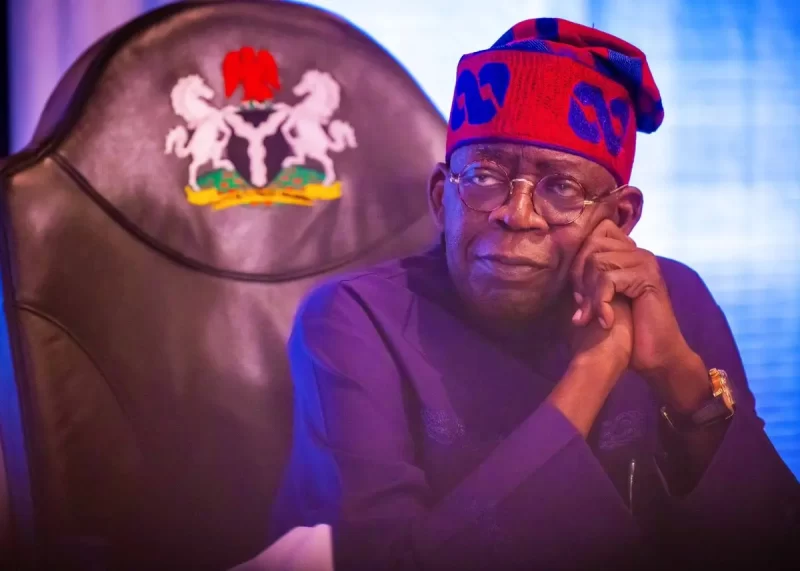
In 2014, Bola Tinubu weighed in on Nigeria’s insecurity, saying, the “slaughtering of Christian worshippers is strongly condemnable.” Femi Fani Kayode stated categorically in 2019: “Nigeria has had more Christians murdered, more Churches bombed and burnt and more clerics slaughtered than any other country over the last 58 years.” And some lamely ask how the Trump – Cruz fellows arrived at the conclusion of genocide?

By the psychology of deflection, it’s not surprising that there are interests trying to shift blame in Nigeria’s religious crisis. The Christian Association of Nigeria leadership (CAN), Texas Senator, Ted Cruz alongside his congressional allies and US President, Donald Trump are accused of seeking to escalate Nigeria’s religious problem. No doubt, the CAN and sections of American political leadership are of the strong view that Christians have suffered persecution in the midst of Nigeria’s insecurity. For this reason, President Trump indicated readiness to take action against the militants unleashing violence across Nigeria. Official government reaction was two – fold; a cautious welcome of partnership with the US against terrorism and rejection of existence of religious genocide. But
those generalising the violence as random and at the same time railing against external intervention, ought to know better. It bears stressing that religious persecution has violent and non – violent expressions. It is not time barred. When the remote and immediate factors of the current tension are recognised, the narrative unravels as crisis of ideology imposition.
President Bola Tinubu’s government may not be held responsible for the perceived run of Christian genocide in the country. To be fair, the current administration is only accountable for not ameliorating the situation in the past two and half years. The quest for religious dominance has a long historical journey which reached turning points under Mohammadu Buhari’s clannish presidency. In the pre independence, pro – confederal order, Sharia law was practised in the northern region without rancour. The significant jurisdiction of the regions enabled “independent” administration and development. This model largely thrived until the military coup of January 1966. It was on account of the strong power of the regions that the Aguiyi – Ironsi regime enacted the unification decree 34 of 1966 in a misguided effort at national unity. This honest, but naive move was particularly resisted by the north which feared ascendancy of the east in the new permutation. Although the unification decree was repealed following a counter coup, centralised military rule still held sway in the successive years. Trouble began with the attempt to import the Sharia of the regions – era into national constitutional framework in 1978. Expectedly, constituent assembly members from other parts of the country opposed the gratuitous proposal. In the context of one nation, one destiny motto the incoming Shehu Shagari presidency distilled from words of national anthem, the pledge and shared federation experiences, the Sharia diversion was discrminatory and provocative. The idea of a parallel grundnorm based on one faith in a multi religious State feeds on bigotry. It’s one of the most insensitive things for anybody to canvass in Nigeria’s quasi federal structure with a strong centre.
The 1978 constituent assembly stalemated on this divisive subject, as did also the 1989 and 1994 constitutional assemblies. The well – founded rejection of Sharia was only reversed by military dictatorship. Let it be emphasised that it was only by arbitrary decision of few persons standing on ethno – religious loyalties in the respective ruling juntas that the Islamic ideology was smuggled into Nigeria’s Constitution. Sharia provisions in past and present Constitutions remain what it is – imposition of an offensive, sectional worldview on the rest of Nigerians. Accordingly, it’s a seed of socio – political instability planted in the soil of our polity. It’s effects cannot be contained by the passage of time because the seed is inherently dysfunctional. Imposition of a religious ideology against better judgement and expressed will of Nigerians has continued to haunt the country. It projects one out of the religions practised by Nigerians as superior, dominant. This triggers pride of state recognition, a trail of officialdom in the affairs of the elevated religion. This environment of indulgence fosters that sense of entitlement that impels zealots into beginning to place limitations on other religions. Speaking on Channels Television, Tuesday, November 4, 2025, Ladi Thompson, a security consultant, was in agreement that these streams of extremes formed the “ideological and structural roots of terrorism in Nigeria.”
Under this climate of coronation, Maitatsine arose in 1981 to push his compulsive right of way. The issue is not whether he espoused fringe, extremist Islam or was not even considered a muslim by some. What is central is the mentality that religious ideas could be propagated by coercive means. Related to that was the assurance about having a territory of their own. A sense of divine mission, however delusional, dictated carving out space for a religious empire. And so, a call to arms and massacre of those who refused to surrender their sanity. In 1986, a chilling message was delivered with Nigeria’s registration with Organisation of Islamic Countries. It’s important to note that the name was Organisation of Islamic Countries at the time and for about ten years afterwards. Taking Nigeria, a country with population split halfway between Christians and Muslims into OIC was an act of contempt for non muslims. Islamisation was afoot. Nigeria’s continued membership of OIC since then and involvement in new, similar organisations is even more telling. Public outcry means nothing. About 1995, a Christian, Gideon Akaluka, was accused of committing blasphemy in Kano State. Shortly after, he was sprung from prison where he was under protective custody and beheaded by a mob. And nothing happened. The assailants were not murderers, they were executors of unquestionable sentence. Abuja, once advertised as unity city, the pride of the nation, prostrated to the army of religious ideology in 2001. In this same city of equal stake for all Nigerians, a beauty contest organised by Silverbird Productions would not hold because adherents of a certain religion vetoed the legitimate venture with riots.
A problem well defined is the first step toward finding solutions. That is the essence of Chinua Achebe’s wise words about a people knowing where the rain began to beat them. Let us
therefore be clear that
a history of religious supremacy paved the road for the ongoing persecution of Christians in Nigeria. Nigeria continues to travel a road of injustice; a road of shameless discrimination where Catholic universities are not allowed to prefix the defining marker, Saint to their names; so that instead of St Peter University, it’s truncated to Peter University. Yet, this same system fraudulently boasting secularity splashes the terms Islam, Sharia, Grand Kadi, Muslims ad infinitum from Sections 275 to 279 of the amended 1979 Constitution; in which same document there is not a whisper, not a breath, not the faintest scent of the words, Christian, Bible, Canon Law, ten commandments, Church! Lest we forget, some provisions of the 1999 Constitution were deviations from resolutions of the 1994 Constitutional Conference. For some, the version of 1999 Constitution promulgated by the Abubakar Abdulsalami junta ought to be discarded for a new, inclusive Constitution.
Government’s acts of omission and commission in the ascendance of faith precepts, values and culture to public statutes softened the ground for violation of rights of other Nigerians. A reign of impunity under which religious laws became state laws and fanatics trampled on other religions without repercussions sent signals to ethno – religious hegemonists. The impression that some religions are mightier than others in Nigeria is part of what attracted the foreign fighters in search of a caliphate. The task, it seemed, would be easier here with the mileage already achieved in marginalisation of contending faiths. This played out especially under Mohammadu Buhari’s presidency when ethno – religious cleansing surged in the south, middle belt and Christian – majority parts of the north. _The Punch_ August 7, 2021 published the joint findings of International Committee on Nigeria and the International Organisation for Peace Building & Social Justice. The report said: “There is strong evidence and a compelling legal argument that over the past decade or so, and increasingly under the current Fulani – dominated government of Mohammadu Buhari, Nigeria is experiencing what could be seen as targeted religious genocide, or what, at the very least, is widespread and often coordinated religious campaigns being conducted against Christians.”
Despite convenient political denials, the circumstances of Christian genocide are strong and widespread. They include the self – evident accounts in the public domain, reported by both local and international media. Ironically, the case of targeted violence against Christians is significantly strengthened by past representations of latter day deniers. We recall that
Chibok is a Christian – dominated local government of Borno State. Estimates put the population of Christians between eighty and ninety – five percent. This fact was clear to the Boko Haram sect when the group launched a night invasion of a female secondary school in Chibok town. Slavish marriage was one of the means used by the militants to conscript some of the girls into their brand of Islam. The abductors demanded of Leah Sharibu, a great witness of Christ, to renounce
her Christian faith in exchange for freedom. She would not. In slow martyrdom, she has spent ten years plus in punitive captivity. Yet, some argue there is no targeting of Christians. Between them, killer herdsmen and jihadist terrorists have massacred thousands of Christians in the past two decades, destroyed Christian communities, seized lands and gone as far as renaming usurped areas! In 2014, Bola Tinubu weighed in on Nigeria’s insecurity, saying, the “slaughtering of Christian worshippers is strongly condemnable.” Femi Fani Kayode stated categorically in 2019: “Nigeria has had more Christians murdered, more Churches bombed and burnt and more clerics slaughtered than any other country over the last 58 years.” And some lamely ask how the Trump – Cruz fellows arrived at the conclusion of genocide?
The hard, narrow way is often the more rewarding. For Nigeria at this delicate juncture, it’s about equal treatment of religions. Let the process of dismantling preferential faith structures and policies begin.

















You must be logged in to post a comment Login