Africa
Leadership Insights: 40 Minutes With Governor Oyebanji (1), by Abiodun Komolafe

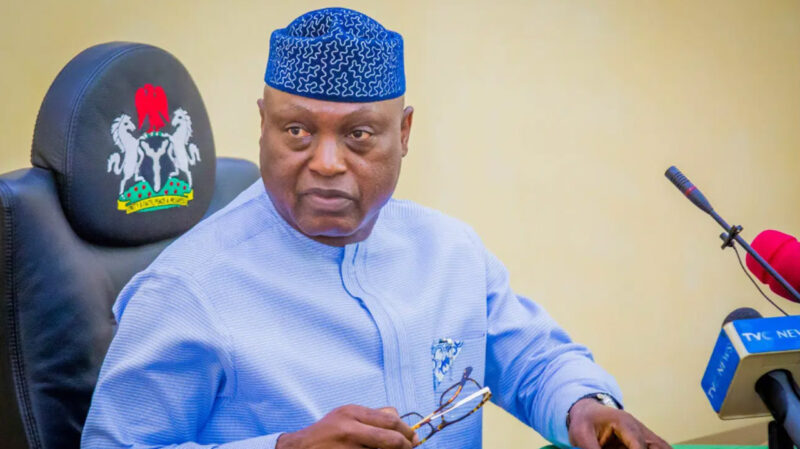
I recently had the honour of visiting Ekiti State, where I embarked on a self-guided tour to explore the projects completed or underway by Governor Biodun Oyebanji. From the bustling streets of Ado-Ekiti to the quaint towns of Ikere-Ekiti, Ikole-Ekiti and Oke Ako-Ekiti, Oyebanji’s transformative initiatives have inspired optimism among residents, who appreciate his people-first leadership.
As I concluded my tour, I sought out the governor’s perspective on his administration’s progress. Our thoughtful discussion revealed a leader committed to redefining the boundaries of possibility for all Ekiti residents. With his dedication to the welfare of his people, Oyebanji indeed stands out as a refreshing anomaly in today’s political landscape. This commitment to progress is further reflected in his own assessment of his administration’s accomplishments.
Assessment of Administration
“As the elected governor of Ekiti State, I believe it’s not my place to assess my own administration. Instead, I leave that to the people who elected us into office. However, I can confidently say that over the past two years, we’ve made significant progress in delivering on our campaign promises, particularly across the six pillars of our administration: Governance, Youth Development and Job Creation, Human Capital Development, Agriculture and Rural Development, Infrastructure and Industrialization, and Arts, Culture and Tourism.
“My greatest joy is that we’ve been able to restore trust in government, which I believe is essential for effective governance. We’re committed to continuing this progress and ensuring that our social contract with the people of Ekiti State is fulfilled. During my election campaign, I pledged to be open, responsive and responsible, and over the past two years, we have worked tirelessly to uphold these values, earning recognition from nearly all the critical stakeholders in the state for our commitment to transparency and accountability.”
Economic Development
“Our campaign is built around the concept of Shared Prosperity, ensuring that everyone, regardless of background or education, can enjoy a quality life. In Ekiti, we believe that everyone deserves to live well. To drive growth, we’re focusing on supporting Micro, Small, and Medium Enterprises (MSMEs), which are the engine of our economy.
“We recognize that security is a critical prerequisite for development. As a government, we’re committed to making a distinction between growth and development. While growth refers to an improvement in per capita income, development is about building infrastructure and creating opportunities for all. Ultimately, our goal is to create a secure and prosperous Ekiti State where everyone can thrive.
“Ekiti State’s development strategies are designed to catalyze growth for the people. We’ve established the Bureau of Local Content to ensure that a percentage of our physical projects is reserved for locals. This approach promotes local economic growth and reduces capital flight. Contractors working in Ekiti State are required to retain a percentage of their income within the state, encouraging local investment and ensuring the state benefits from its development projects.”
Healthcare and Education
“Health and Education fall under our Human Capital Development pillar, built on the principle that ‘Health is Wealth.’ Upon taking office, we prioritized stabilizing the health sector, which had been plagued by low worker morale due to poor conditions of service. We addressed the disparity in health workers’ salaries, bringing them in line with federal rates. Notably, we’re one of the first states to pay Hazard Allowance, despite being one of the poorest states. We also pay the Medical Residency Training Fund (MRTF) and have allocated funds to upgrade the Ekiti State University Teaching Hospital (EKSUTH) facilities.
“We’ve taken significant steps to boost the morale of our health workers, including paying CONMESS and CONHESS to health workers at both the state and Local Government levels. This move has greatly reduced the number of health workers leaving local and state facilities to work in federal facilities. We’re currently renovating 11 health facilities across Ekiti State, equipping them with necessary tools and attracting more doctors to the state. Our goal is to ensure that healthcare services are available, affordable and accessible to all.
“Our flagship Health Insurance Scheme, Ulerawa, has been a game-changer, with many individuals, including pensioners, enrolled in the program. Recent statistics show that we’ve achieved a significant reduction in mortality rates in the state – a first in decades. This accomplishment builds upon the foundation laid by my predecessor, Dr. Kayode Fayemi, and demonstrates the value of continuity in governance.
“Our education strategy is built on the idea that the quality of education depends on three key factors: what you teach, where you teach, and how you teach. We’re focusing on developing a relevant and up-to-date curriculum, improving teacher training and methodology, and creating a conducive learning environment. We’re upgrading our curriculum, providing teacher training and re-training, and increasing subvention to our tertiary institutions. We’re also incentivizing our teachers and prioritizing the teaching of STEM subjects.”
Itawure-Aramoko-Ado Ekiti Road
“I’d like to commend President Bola Tinubu for his efforts in improving road infrastructure in Ekiti State. During my campaign, I made a promise to the people of Ekiti State, and I intend to keep it. One issue that’s important to address is the Itawure-Aramoko-Ado-Ekiti Road, which is a federal road. As such, Ekiti State Government does not have the authority to make changes to this road.
“The current protocol for reconstructing federal roads isn’t feasible for Ekiti State, as it doesn’t provide for refunds. Unless we receive assurances from the Federal Government that it’ll refund us or allow us to toll the road, we can’t move forward.
“As the governor, I must be mindful of the state’s resources – if Ekiti State were my company, I wouldn’t spend its resources without a clear plan for returns. Fixing a federal road, for which we won’t be reimbursed or able to toll for revenue, would divert funds away from our state roads.
“To mitigate the challenges posed by the poor condition of the federal road, we have reconstructed and upgraded alternative state roads, providing a smoother journey to Ado-Ekiti. Specifically, we have identified and improved alternative routes, such as going through Efon Alaye – Ipole Iloro – Ikogosi – Erijiyan – Ado-Ekiti, making them truck-free by installing barriers. For travelers coming from Igede-Ekiti, a convenient detour is available through Ilawe and Igbara Odo, which connects seamlessly to Akure. This demonstrates effective governance in action.
“Meanwhile, we appreciate the Federal Government’s efforts in constructing the Akure-Ita Ogbolu-Ikere-Ado-Ekiti Road. However, I am currently seeking over N200 million to pay for the houses that were demolished in Ikere-Ekiti to pave the way for the completion of that road. Unfortunately, this amount will not be reimbursed by the Federal Government.”
Continuity of Government Projects and Policies
“As the first back-to-back government in Ekiti State, we’ve seen a mix of policy changes and continuity. Our campaign is focused on Continuity, and we’ve delivered on that promise by completing most of the projects started by Governor Fayemi. I was able to do this because I was part of that government and believed in the projects’ reasoning. We’ve even improved upon some of them.
“We’ve also made progress on secondary facilities in the state. Governor Fayemi completed and equipped 10 or 11 of them, and we’ve started work on the remaining ones. This continuity benefits the people, as we’re not starting from scratch. Instead, we’re building upon existing foundations.
“Our administration is guided by a 30-year Development Plan launched by Governor Fayemi. My manifesto is an offshoot of this plan, making it easier for us to execute our projects. Also, the Ekiti State Transition Law makes it mandatory for successor governments to complete their predecessors’ projects. This law has not been revoked, and we aim to complete these projects before leaving office.”
*To be concluded.
*KOMOLAFE wrote from Ijebu-Jesa, Osun State, Nigeria (ijebujesa@yahoo.co.uk)