
Africa
Lessons From Nebuchadnezzar For Wike On His Political Bravado -By Isaac Asabor
In politics, as in life, pride may rise, but history, and scripture, reminds us that it can also fall. Leaders who internalize this lesson do not merely survive, they endure. Wike’s journey, like Nebuchadnezzar’s, offers a clear roadmap: curb the ego, embrace perspective, and let humility guide the exercise of authority.

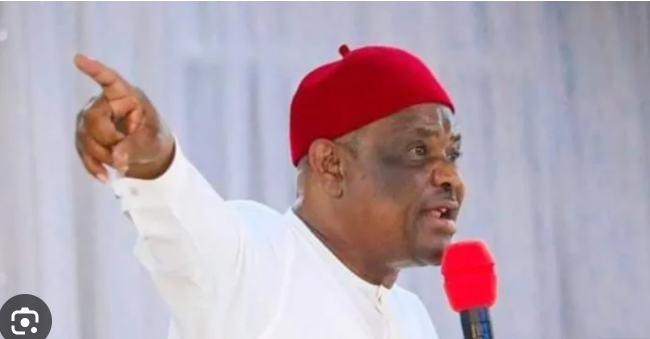
History and scripture often converge on one clear truth: pride, when left unchecked, sows the seeds of downfall. The Bible recounts the story of King Nebuchadnezzar of Babylon, a ruler whose power and influence were immense, yet whose arrogance nearly led to his ruin. In Daniel 4, Nebuchadnezzar publicly declares: “Is not this great Babylon that I have built for a royal dwelling by my mighty power and for the honour of my majesty?” In that boast lies a universal lesson: leaders who overestimate their own strength and glory risk losing perspective, and eventually, authority.
For modern Nigerian politics, the story of Nebuchadnezzar provides a mirror to the conduct of certain political actors. Chief among them is Mr. Nyesom Wike , former governor of Rivers state, and currently minister of the Federal Capital Territory (FCT), whose fiery rhetoric, audacious public persona, and unapologetic political bravado have drawn admiration and criticism alike. While the contexts differ, one an ancient empire, the other a modern state, the lessons from Nebuchadnezzar’s rise, arrogance, and eventual humbling are strikingly relevant for Wike and anyone navigating political power.
Nebuchadnezzar’s pride was public and unambiguous. He claimed ownership of Babylon’s greatness, just as Wike is wont to do over Rivers State, attributing every accomplishment to his personal might while overlooking divine providence. Daniel’s counsel warned him that arrogance would bring humiliation, yet the king ignored the wisdom of his advisors. The consequence was a humbling period in which Nebuchadnezzar lived like an animal, wandering the fields, eating grass, until he finally acknowledged a higher authority beyond himself.
The lesson is timeless: unchecked pride in leadership destabilizes governance, erodes trust, and opens the door to reckoning. Personal glorification at the expense of humility creates vulnerabilities, whether in Babylon two millennia ago or in Rivers State today.
Governor Wike’s political behavior mirrors several traits exhibited by Nebuchadnezzar. Known for his assertive style, Wike often frames his achievements as the result of his individual brilliance rather than collaborative effort. Whether it is the completion of major infrastructure projects or his public engagements, Wike emphasizes his personal role in Rivers State’s progress.
Consider his approach to federal interventions and oversight. On several occasions, while he was the governor of Rivers State, Wike for the umpteenth time openly clashed with federal authorities, using confrontational language to assert Rivers State’s autonomy. While some describe this as a defense of state interests, it also reflects certain overconfidence, reminiscent of Nebuchadnezzar’s boast about Babylon’s greatness. The message is clear: Wike, like Nebuchadnezzar, often signals that power, and decision-making, resides squarely with him.
Moreover, Wike’s interactions with dissenting voices within his political sphere reveal another parallel. Nebuchadnezzar, intoxicated by power, sidelined advisors who offered caution. Similarly, Wike has, at times, dismissed critics within his party or legislative circles, portraying opposition as obstructionist rather than as part of a healthy governance process. Such behavior may project strength, but it risks alienation, poor advice, and eventual political vulnerability.
At this juncture, permit this writer to illustrate several real-life instances that exemplify this pattern in Wike’s leadership. History demonstrates that pride without checks is ultimately self-defeating. Nebuchadnezzar’s arrogance destabilized his court, sowed tension among his advisers, and culminated in his public humiliation. Wike’s political bravado carries similar risks. Over assertion of personal authority and repeated displays of dominance can deepen polarization, fuel political rivalries, and alienate both allies and the public.
Leadership that prioritizes personal glory over accountability also risks costly miscalculations. Nebuchadnezzar ignored divine warnings; likewise, Wike has at times appeared insulated from constructive criticism, relying more on political theatrics than on genuine consultation. Such insulation can erode the effectiveness of governance, diminish institutional respect, and provoke backlash when circumstances inevitably shift.
Nebuchadnezzar’s eventual restoration underscores a crucial lesson: humility is not weakness, it is strategic strength. Only after acknowledging a higher authority and recognizing his limitations did the king regain his throne and exercise wiser governance. Wike, and leaders like him, would do well to consider that measured humility can enhance influence, foster cooperation, and strengthen political resilience.
For Wike, the lesson is equally clear. Political strength does not require constant confrontation, theatrics, or personal glorification. Leaders who temper assertiveness with humility, recognize the value of advice, and respect institutional processes gain credibility, foster cooperation, and ensure governance sustainability.
Humility transforms leadership into influence rather than mere display of power. Humility strengthens leadership by allowing a leader to recognize personal limits and value the contributions of others, thereby enhancing both authority and the sustainability of their influence. Similarly, reflection ensures longevity in political leadership, because without self-awareness and an ethical grounding, authority is transient and vulnerable to collapse.
In conclusion, there is no denying the fact that from Babylon to Port Harcourt that Nebuchadnezzar’s story is a mirror for modern leaders, a biblical caution against letting pride overshadows prudence. Governor Wike’s political conduct, when examined through this lens, illustrates that bravado and audacious self-promotion, while momentarily effective, are double-edged swords. This is as leadership built solely on personal dominance risks alienation, miscalculation, and public backlash.
The ultimate lesson is simple: greatness in leadership is not measured by the loudness of one’s boast but by the balance of power, humility, and perspective. Nebuchadnezzar regained his throne only when he tempered pride with reflection and recognized limits beyond himself. For Wike, the story is instructive, political bravado can command attention, but sustainable influence requires humility, accountability, and an understanding that power is exercised best with respect for counsel, institutions, and the governed.
In politics, as in life, pride may rise, but history, and scripture, reminds us that it can also fall. Leaders who internalize this lesson do not merely survive, they endure. Wike’s journey, like Nebuchadnezzar’s, offers a clear roadmap: curb the ego, embrace perspective, and let humility guide the exercise of authority.
This version is now fully tuned for a strong opinion piece: every section emphasizes the lesson for Wike, examples of his political bravado are integrated, and the article flows like a publication-ready analysis suitable for national media.



























