Forgotten Dairies
MATTERS ARISING: Nnamdi Kanu vs Nigeria’s Security Concerns -By Abdulqudus Yusuf
The judge, who stressed the need for national security, described Kanu as an “international terrorist,” citing threats he issued against foreign missions. Although the prosecution had sought the death penalty, Justice Omotosho said he chose life imprisonment “out of mercy,” referencing biblical principles in his remarks.

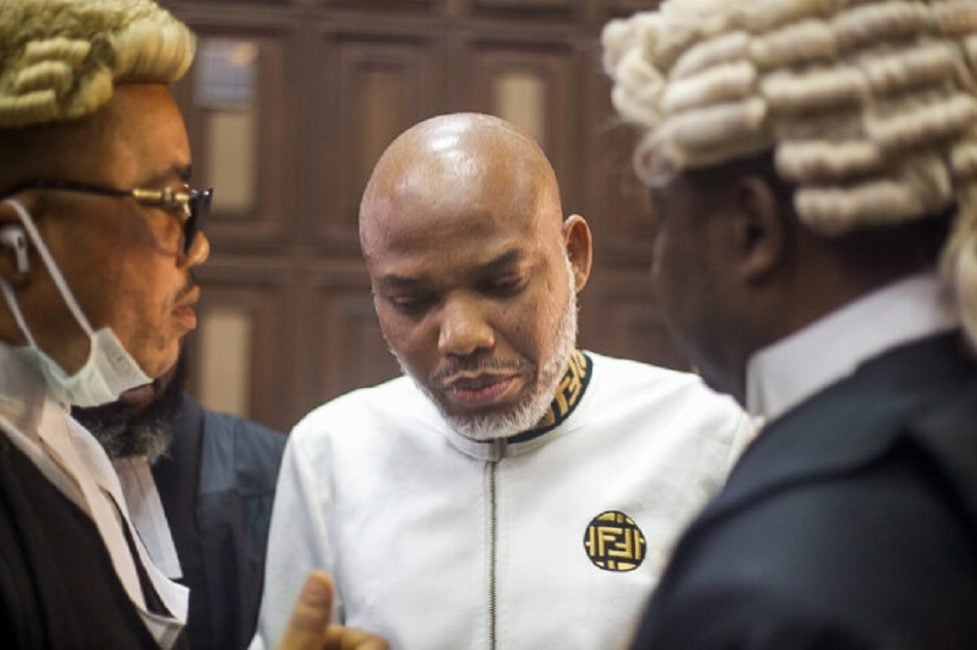
The Leader of the proscribed Indigenous People of Biafra (IPOB), Mazi Nnamdi Okwu Kanu, has been moved to the Nigerian Correctional Service facility in Sokoto, following the life sentence handed down to him this week by Justice James Omotosho of the Federal High Court.
His legal counsel, Aloy Ejimakor, confirmed the development on Friday through a post on his X account, disclosing that operatives of the Department of State Services (DSS) escorted the separatist leader out of Abuja in compliance with the court’s directive.
Kanu’s relocation marks a new phase in a saga that has spanned nearly a decade — one defined by courtroom battles, political tension, allegations of government excesses, and violent clashes between state forces and separatist loyalists.
Who Nnamdi Kanu Is
Nnamdi Okwu Kanu, a British-Nigerian political activist born in Isiama Afara in Abia State, came to national and international prominence as the founder and leader of IPOB, the separatist movement campaigning for the re-establishment of the defunct State of Biafra. He operated Radio Biafra, a London-based broadcast platform through which he disseminated his messages of secession, resistance, and civil disobedience — messages that frequently brought him into direct conflict with the Nigerian state.
Kanu, who openly identifies with Judaism, became a symbol of pro-Biafra agitation in the South-East, drawing a devoted following but also attracting intense scrutiny from security agencies.
The Offences and the Charges
Kanu was convicted on seven terrorism-related counts. The court found that through his Radio Biafra broadcasts, he issued threats, incited violence, and ordered “sit-at-home” actions that disrupted economic and social activities across the South-East. The judge held that his directives resulted in intimidation of the civilian population and encouraged attacks on police stations, military personnel, and political figures.
One of the counts linked him to inflammatory rhetoric that allegedly contributed to the killing of a former presidential aide and the destruction of public institutions.
He was also convicted for importing a radio transmitter used to run Radio Biafra, and for leading a proscribed organisation in violation of Nigeria’s anti-terrorism laws.
The Controversies That Shadowed the Trial
Kanu’s trial has always been controversial. After his initial arrest in 2015 and subsequent bail in 2017, he fled the country following a military raid on his home. In 2021, he was arrested in Kenya under circumstances his lawyers and supporters continue to describe as an “extraordinary rendition.” The federal government denied wrongdoing, but the incident deepened international interest in the case.
His supporters consistently accused the government of persecution, political intimidation, and human-rights abuses. The defence also argued repeatedly that he was unfit to stand trial due to health concerns, in a claim the court rejected after receiving a report from the Nigerian Medical Association stating otherwise. At one point, Kanu dismissed his entire legal team and opted to represent himself, causing further delays.
His lawyers also challenged the validity of the terrorism charges, arguing that the legal basis had been overtaken by amendments to the law. The court held that charges filed in 2015 remained valid under the law at the time.
The trial period was equally marked by tensions outside the courtroom, including protests, sit-at-home orders by IPOB supporters, and clashes with security agencies. Kanu himself was at one point ejected from the courtroom for “unruly behaviour,” according to court records.
The Judgment That Changed Everything
On Wednesday, Justice James Omotosho convicted Kanu on all counts and imposed life imprisonment for five of the offences, alongside additional terms of 20 years and 5 years for the remaining charges, which are all to run concurrently.
The judge, who stressed the need for national security, described Kanu as an “international terrorist,” citing threats he issued against foreign missions. Although the prosecution had sought the death penalty, Justice Omotosho said he chose life imprisonment “out of mercy,” referencing biblical principles in his remarks.
He also ordered that Kanu must not be held at Kuje Prison, citing past jailbreaks and security vulnerabilities, and directed that he be kept in a high-security custodial facility with no access to computers, smartphones, or broadcasting devices, as the court found that digital tools previously enabled him to incite violence remotely.
Why Sokoto?
The decision to move Kanu to a custodial centre in Sokoto appears to be in line with the court’s directive that he be placed in a secure facility away from locations where he has a strong support base or where his presence might trigger unrest. Sokoto’s facility is one of the most fortified in the country, and relocating him there is seen as a strategic attempt to prevent fresh security challenges.
His supporters, however, have already begun raising questions about his safety, access to lawyers, and whether the transfer violates earlier court arrangements on visitation rights.
Kanu’s legal team has indicated it will challenge the judgment at the Court of Appeal. IPOB has also released statements describing the court outcome as a “travesty,” while urging calm among its followers. But analysts, like the famous Obi Cubana predict, that the case, which is now entering its post-conviction phase may inflame political discourse in the South-East ahead of the 2027 election cycle and will President Tinubu’s chances of reelection, saying, “Tinubu will struggle to get 10,000 votes.”
For now, the separatist leader begins his life sentence far from his home region, in a northern correctional centre where the next chapter of his long-running confrontation with the Nigerian state will unfold.