Connect with us

Africa

“More Roads, More Flyovers, But No Future: Bauchi’s Education Crisis” -By Yasir Shehu Adam

The same is true of health and welfare. Other states are using federal allocations to cushion the suffering caused by fuel subsidy removal, but here in Bauchi, there are no real welfare programmes for struggling families. Hospitals remain under-equipped, and the youth are left without meaningful job opportunities.

Published

on

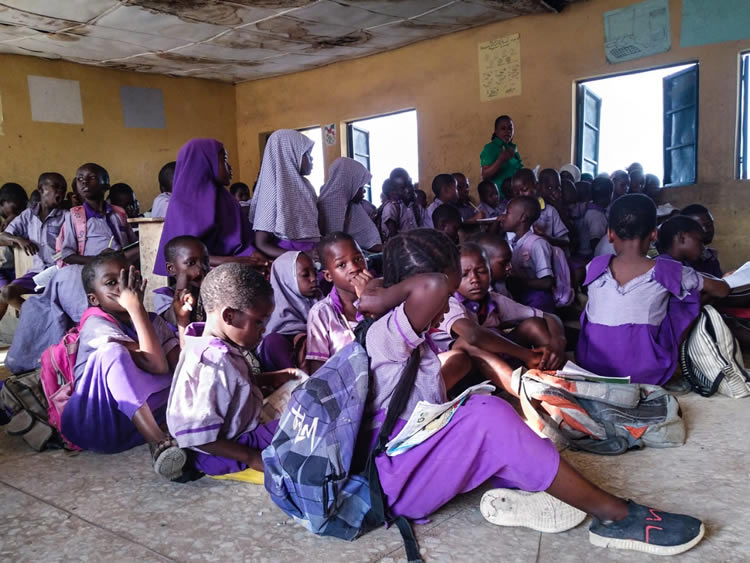
Students sitting in the ground in Nigeria school

When Gombe State recently launched a bold programme to tackle its education crisis, I could not help but think of my own state, Bauchi. Gombe, with more than 700,000 out-of-school children, has moved quickly to harmonise data, engage communities, and create practical solutions. The government there has set targets for every local government area, introduced special programmes for olderr learners, and partnered with UNICEF and UBEC to get children back into school.

Now, compare this with Bauchi State. According to UNICEF’s 2023 figures, Bauchi has an estimated 1.2 million out-of-school children — the highest in the country. Yet, instead of a serious, data-driven response, what we see are new roads and flyovers. Impressive structures, yes, but they do little to lift children out of illiteracy or to secure the future of our state.

Education is not just another sector; it is the foundation of every kind of progress. A society cannot rise on illiteracy. Without educated citizens, there will be no sustainable development, no innovation, and no future leaders. Bauchi’s failure to prioritise education is nothing less than a betrayal of its children.

The same is true of health and welfare. Other states are using federal allocations to cushion the suffering caused by fuel subsidy removal, but here in Bauchi, there are no real welfare programmes for struggling families. Hospitals remain under-equipped, and the youth are left without meaningful job opportunities.

This is why Gombe’s example matters. If a neighbouring state can gather traditional rulers, religious leaders, education experts, and communities around a single cause — saving children from the streets and bringing them back to school — then Bauchi has no excuse. We need more than promises; we need action.

Advertisement

The government of Bauchi State must:

Launch a mass enrolment campaign with measurable targets.

Support poor families so children, especially girls, stay in school.

Improve school infrastructure and teaching quality.

Redirect resources from vanity projects into human development — education, health, and youth empowerment.

Advertisement

Bauchi does not need more roads; it needs more classrooms. Bauchi does not need more flyovers; it needs more teachers. What we need is leadership that sees children as the real foundation of development.

The future of over a million children is at stake. Bauchi must act now.

By Yasir Shehu Adam (Dan Liman), young journalist and writer from Bauchi

Continue Reading
Advertisement
Click to comment

Leave a Reply

Your email address will not be published. Required fields are marked *

Trending Contents

Topical Issues

JAMB and UTME JAMB and UTME
Forgotten Dairies9 hours ago

The Role of Technology in Nigeria’s Education System -By Alheri Una

To fully maximize technology in education, government investment is crucial. Public-private partnerships can help provide internet access, digital devices, and...

Russian-Indian Business Dialogue, December 2025 Russian-Indian Business Dialogue, December 2025
Forgotten Dairies9 hours ago

Russia–India Dialogue Provides Platform for Strengthening Bilateral Entrepreneurship -By Kestér Kenn Klomegâh

Participants noted the development of Russia–India cooperation and implementation of joint business projects will continue at major international platforms, including...

David Sydney David Sydney
Africa9 hours ago

The Importance of Proper Legal Documentation in Business -By David Sydney

Where a business relationship is undocumented or poorly documented, even a legitimate claim may fail for lack of proof. Oral...

Bola Oyebamiji Bola Oyebamiji
Politics14 hours ago

The Deputy Question: How APC’s Choice Will Shape Osun’s 2026 Contest -By Kolapo Tokode

A Christian, Oke offers religious balance to Oyebamiji’s candidacy. He is widely regarded as financially buoyant and politically influential, particularly...

Forest Forest
Africa14 hours ago

The Devastating Impact Of Deforestation -By Favour Haruna

We can mitigate deforestation's effects by adopting sustainable choices and supporting conservation.Reduce paper usage, choose sustainable products, and spread awareness....

NEPA - DisCos NEPA - DisCos
Africa14 hours ago

Electricity Tariffs in Nigeria: Who Really Pays and Who Benefits -By Jennifer Joab

To fix the system, Nigeria needs more than just tariff reviews. There must be transparency in band classification, rapid rollout...

Kate Henshaw Kate Henshaw
Africa21 hours ago

You Can’t Photoshop Discipline: Kate Henshaw, Fitness, And The Hard Truth We Keep Dodging -By Isaac Asabor

Kate Henshaw did not say anything new. She said something true. And truth, especially when stated plainly, unsettles people who...

Rivers - Wike and Fubara Rivers - Wike and Fubara
Africa21 hours ago

How Wike, Fubara and Rivers’ Lawmakers Are Disrespecting President Tinubu -By Isaac Asabor

What Wike, Fubara, and the lawmakers have done, collectively and individually, is to tell Nigerians that the President can speak,...

nigeria-bandits-lead-illustration-new nigeria-bandits-lead-illustration-new
Africa21 hours ago

Insecurity in Nigerian Communities: A Threat to Peace and Development -By Khadija Shuaibu Muhammad

Insecurity in our communities has reached a critical level. If not addressed urgently and collectively, it could destroy the very...

HUNGER, Poor, Poverty in Nigeria HUNGER, Poor, Poverty in Nigeria
Africa21 hours ago

The Kampala Declaration: How African Youth Can Lead Food System Transformation to Accelerate the Achievement of Zero Hunger by 2030 -By Emeka Christian Umunnakwe

Africa’s food systems future is already being shaped by its young people, what remains is for governments, investors, institutions, and...