Africa
Natasha’s Petition To IPU: A Game-Changer, Not A Toothless Effort -By Isaac Asabor
Natasha Akpoti-Uduaghan’s petition to the IPU is a watershed moment for Nigerian politics. It is not merely about her personal grievances but about ensuring that Nigeria’s democratic institutions function with integrity. The IPU must rise to the occasion, as it has done in similar cases worldwide, by thoroughly investigating Natasha’s claims and holding the Nigerian Senate accountable.

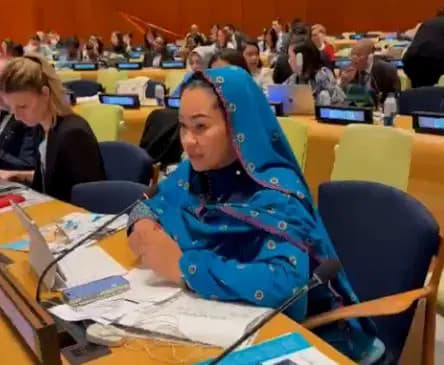
The controversy surrounding the suspension of Senator Natasha Akpoti-Uduaghan has taken a significant turn with her decision to seek international intervention through the Inter-Parliamentary Union (IPU). While Senate President Godswill Akpabio and his aides have dismissed the IPU’s authority to summon him, their stance ignores a crucial fact: the IPU is not a toothless bulldog. Historically, the IPU has played a decisive role in resolving parliamentary disputes across the world, often ensuring justice where national mechanisms fail. Contrary to the dismissive rhetoric of Akpabio’s camp, Natasha’s petition is consequential and should not be trivialized.
Without a doubt, the IPU has proven influence in parliamentary matters. In fact the IPU, a United Nations-recognized institution, has a long history of intervening in cases of parliamentary misconduct, human rights abuses, and unjust political persecution. Its role transcends mere rhetoric, it has successfully influenced legislative reforms, mediated disputes, and pressured governments to respect democratic principles.
One notable example is the case of Myanmar, where the IPU actively condemned and applied diplomatic pressure against the military junta’s persecution of parliamentarians. The organization also played a role in securing the release of detained lawmakers in Venezuela, advocating for fair legislative practices in Cambodia, and intervening in cases of politically motivated suspensions across Latin America and Africa. These precedents debunk the erroneous assertion that the IPU lacks the authority to question or influence the actions of sovereign states’ legislative bodies.
The IPU’s ability to impose diplomatic pressure has often led to tangible changes. In 2019, the IPU played a key role in securing the release of opposition politicians in Uganda who had been detained under questionable circumstances. Similarly, in Turkey, the IPU consistently challenged the government’s suppression of dissenting lawmakers, forcing international discussions on human rights violations. The organization’s influence is recognized in the corridors of power globally, making it a formidable force in upholding parliamentary integrity.
Since Natasha appeared at IPU to present her case, not a few of her traducers faulted her action, but to this writer, her case deserves international scrutiny. In fact, the argument that the Nigerian Senate’s actions against Natasha Akpoti-Uduaghan are an “internal affair” is both misleading and dangerous. When democratic institutions are weaponized to suppress dissenting voices, the international community has a duty to intervene. Natasha’s allegations of sexual harassment and abuse of power by Senate President Akpabio are serious and cannot be brushed aside as mere political maneuvering.
Furthermore, her six-month suspension for what the Senate describes as “gross misconduct” raises fundamental questions about gender bias and power dynamics in Nigeria’s political landscape. If Akpoti-Uduaghan’s removal was indeed a procedural disciplinary measure, why has the Senate been unwilling to address her allegations transparently? Instead of dismissing her claims, the Senate should welcome the IPU’s involvement as a means to clear any doubts and uphold legislative integrity.
Without a doubt, Akpabio’s resistance is a sign of guilt. In fact, the hostility from Akpabio’s aides towards the IPU’s interest in the matter raises more suspicions than it dispels. If Akpabio has nothing to hide, why does he fear the IPU’s involvement? His media aide, Eseme Eyiboh, insists that Akpabio is under no obligation to respond to the IPU, but this position contradicts the fundamental principles of accountability in democratic governance.
The notion that Natasha’s appeal to the IPU is “contemptuous” because she previously sought judicial intervention is a weak defense. If the Nigerian judiciary was effective in handling such cases without political interference, there would be no need for international oversight. History has shown that domestic institutions often fail victims of power abuse, making international intervention the only viable recourse.
In 2018, for instance, the IPU’s intervention in the Maldives’ political crisis helped to restore the parliamentary rights of opposition lawmakers who had been unlawfully removed from office. A similar stance was taken in Zambia, where the IPU condemned the intimidation of opposition politicians and called for fair judicial processes. These cases prove that the IPU does not just make statements, it applies diplomatic weight that often forces change.
Looking at the issue from the perspective of the implications for Nigeria’s democracy, it is germane to opine that If the Nigerian Senate is truly committed to upholding democratic principles, it should embrace transparency and due process. The perception that legislative power is being wielded as a tool for personal vendettas, suppression of female politicians, or shielding powerful individuals from scrutiny undermines Nigeria’s credibility on the global stage.
By dismissing Natasha’s petition as inconsequential, Akpabio’s camp risks portraying Nigeria as a country where political bullying and institutionalized impunity are acceptable. If left unchallenged, this trend could set a dangerous precedent, discouraging women from active participation in politics and eroding public trust in the legislative process.
Beyond individual cases, the IPU’s role in shaping democratic governance cannot be overstated. Countries that have ignored IPU interventions in the past have faced diplomatic and reputational consequences. The Nigerian government should consider this before dismissing Natasha’s petition.
Natasha Akpoti-Uduaghan’s petition to the IPU is a watershed moment for Nigerian politics. It is not merely about her personal grievances but about ensuring that Nigeria’s democratic institutions function with integrity. The IPU must rise to the occasion, as it has done in similar cases worldwide, by thoroughly investigating Natasha’s claims and holding the Nigerian Senate accountable.
Akpabio and his aides can downplay the IPU’s influence all they want, but history has shown that the organization’s interventions can alter the course of political events. The world is watching, and the IPU’s response to this case will determine whether Nigeria’s democracy is truly progressing or regressing into a system where power is wielded with impunity.