
Africa
When Will The FG Respond To Obasanjo With Facts, Not Insults? -By Isaac Asabor
Explanatorily put, if Obasanjo criticizes the economic trajectory, the FG should provide verifiable data showing why his concerns are misplaced or exaggerated. Simply calling him a hypocrite does nothing to educate the Nigerian populace.

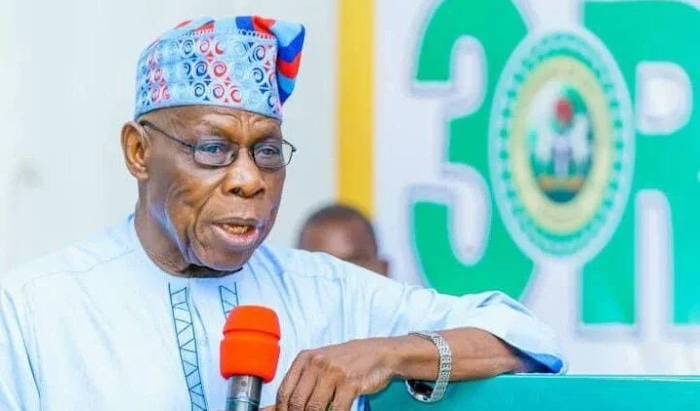
Nigeria’s political landscape is no stranger to robust debates, criticisms, and counterarguments. However, when constructive criticisms are met with Ad Hominem attacks rather than reasoned rebuttals, democracy suffers. This unfortunate trend has become glaringly evident in the Federal Government’s (FG) recurrent responses to former President Olusegun Obasanjo’s critiques.
Obasanjo, a statesman with a storied history in Nigeria’s governance, has never shied away from speaking his mind. Whether one agrees with his views or not, his criticisms, often rooted in his experience and perspective, ought to be engaged with facts, logic, and counterpoints. Unfortunately, the Nigerian government’s responses to Obasanjo have frequently taken the form of personal attacks, character assassination, and diversionary rhetoric. This approach does not serve the public interest and only deepens the perception of a government unwilling to engage in intellectual discourse.
A critical look at past engagements between Obasanjo and the FG reveals a disturbing pattern of name-calling and deflection. Rather than addressing the substance of his criticisms, government spokespersons often resort to attacking Obasanjo’s person, his past leadership, or his perceived shortcomings.
For instance, in July 2019, Obasanjo wrote an open letter to President Muhammadu Buhari, warning of rising insecurity in Nigeria. He highlighted the increasing cases of terrorism, banditry, and ethnic violence, urging the government to take urgent steps to address the crisis before the nation spiraled into chaos.
Rather than acknowledging the valid concerns raised, the FG, through its spokespersons, dismissed the letter as the ramblings of an embittered former leader. The response included accusations that Obasanjo was merely seeking relevance and attempting to destabilize the government. Lai Mohammed, the then Minister of Information, derided the former president, implying that he was a hypocrite who failed to tackle insecurity during his own tenure.
The core issues raised in the letter, and how to decisively tackle the worsening security situation, were left unaddressed. Instead, the response deflected attention to Obasanjo’s past rather than presenting a coherent counterargument or outlining concrete steps to improve security.
In a similar vein, in January 2023, following the general elections, Obasanjo criticized the electoral process, raising concerns about the credibility of the Independent National Electoral Commission (INEC) and calling for remedial actions to uphold democracy. This was a crucial intervention in a period when Nigerians were expressing disillusionment with electoral transparency.
Again, rather than engaging with the substantive issues, the FG’s response was laced with vitriol. Presidential aides dismissed Obasanjo as a meddlesome “political busybody” and accused him of attempting to install his own preferred candidates. The government completely sidestepped discussions on the election’s credibility and the concerns raised by both local and international observers. It was another missed opportunity for constructive engagement.
Also in a similar vein, in 2020, Obasanjo criticized the economic direction of the Buhari administration, particularly the growing debt profile and the lack of economic diversification. He cautioned against Nigeria’s increasing reliance on foreign loans, warning that it could lead to economic enslavement.
Rather than addressing these warnings with economic data or a roadmap for managing the country’s finances, the FG’s response was dismissive and laced with personal jabs. The presidency accused Obasanjo of hypocrisy, referencing the debt Nigeria accumulated under his watch while ignoring the key point of rising debt without corresponding economic growth.
In fact, the Federal Government’s recent response to former President Obasanjo’s criticism of the Lagos-Calabar Coastal Highway project is fundamentally flawed. Attacking a respected elder statesman for expressing his views, rather than engaging with the substance of his concerns, demonstrates a disregard for constructive criticism and democratic discourse. Obasanjo’s experience and insights into governance are valuable, and flippantly dismissing his opinions with a flippant is unarguably disrespectful and counterproductive.
Furthermore, the government’s defensiveness, particularly the Minister’s personalizing of the criticism by claiming “if someone calls this project fraudulent, they are also calling me a fraud,” suggests an unwillingness to accept scrutiny. Transparency and accountability are essential for public trust, and a mature response would involve addressing Obasanjo’s specific concerns about wastefulness and corruption with detailed evidence and reasoned arguments, not resorting to personal attacks and dismissive pronouncements.
Without a doubt, the repeated pattern of Ad Hominem responses from the FG reveals an unfortunate reluctance to engage in serious discourse. This is dangerous for several reasons.
First, it discourages constructive criticism. When public figures who speak out are met with personal attacks rather than rational debate, it creates a chilling effect. Other stakeholders, including civil society and the media, may become wary of critiquing the government for fear of similar backlash.
In a similar vein, it undermines democracy. This is as a healthy democracy thrives on debates, disagreements, and discourse. Therefore, when government officials choose insults over engagement, they erode the democratic culture of accountability and transparency.
Also in a similar vein, it distracts from real issues. By attacking the messenger, the FG often ignores the message. This lack of engagement means critical national issues, whether insecurity, the economy, or governance, remain unaddressed while political mudslinging takes center stage.
Having opined as much as harangued in this context, it is germane to sound a note of warning that the way forward is for the FG to always respond with facts, not insults, when critiqued.
In fact, if the FG is confident in its policies and governance, it should have no difficulty responding to criticisms with facts. In the view of this writer, the government can change its approach by engaging criticism with data, acknowledge criticism and improve in the area or areas they were faulted of, and encourage intellectual discourse.
Explanatorily put, if Obasanjo criticizes the economic trajectory, the FG should provide verifiable data showing why his concerns are misplaced or exaggerated. Simply calling him a hypocrite does nothing to educate the Nigerian populace.
In a similar vein, not every critique is baseless. Instead of outright dismissals, the government can acknowledge valid points and outline measures being taken to address them.
Also in a similar vein, it is not a misnomer to opine that Nigeria needs a political culture that encourages robust and fact-based discussions. The presidency should set the tone by engaging critics constructively rather than reducing public discourse to name-calling.
In fact, the FG’s repeated use of Ad Hominem attacks against Obasanjo’s criticisms is not just counterproductive, it is a disservice to Nigerians. Whether one agrees with Obasanjo’s views or not, the issues he raises deserve serious engagement, not flippant insults. If the government truly serves the people, then it must prioritize responding with reason, facts, and solutions rather than indulging in personal attacks.
Against the backdrop of the foregoing view, it is not a misnomer to conclude that is time for the FG to elevate its discourse and prove that it is a government capable of engaging in rational debate. Anything less is a betrayal of democratic principles.


























You must be logged in to post a comment Login