
Forgotten Dairies
The Opaque ‘Reintegration’ Of Insurgents -By Pius Mordi
The DRR programme adopted has not worked and will not because that was not the intention. Last month, Nigerian soldiers engaged in counter-insurgency operations in the North-East were reported to have expressed concerns over an alleged directive requiring them to work alongside former Boko Haram members who were recently reintegrated into society under the Borno State Government’s de-radicalisation programme.

“We have forgiven them and they have sworn by the Quran. We told them to abide by the terms and conditions of the Quran not to go back to any form of violence and not to give any information to the enemy.”
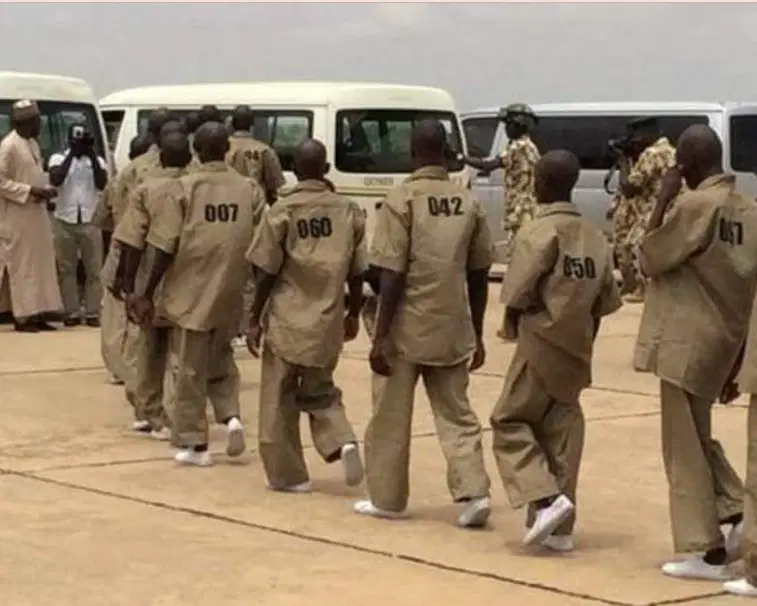
That was how Prof. Usman Tar, Commissioner for Information and Internal Security in Borno State, defended the state government’s decision to reintegrate a fresh batch of 720 insurgents who are said to have been “de-radicalised” and now “repentant” into the society. His explanation is the closest to getting an insight into the de-radicalisation and reintegration of Boko Haram insurgents into the society.
By official count, up to 10,000 Islamist insurgents have been reintegrated under a programme introduced by late President Muhammadu Buhari. It was a direct response to the amnesty programme by late President Umaru Yar’Adua and largely implemented by President Goodluck Jonathan that eventually restored peace to the Niger Delta and stabilised crude oil production. After the success of the amnesty for the Niger Delta militants in curbing the disruption of crude oil production, immense pressure was mounted on Jonathan to negotiate with the Boko Haram militants and grant them amnesty. The Sultan of Sokoto, Alhaji Mohammad Saad Abubakar in March 2013 urged President Goodluck Jonathan to unilaterally declare amnesty for the members of the fundamentalist sect, Boko Haram, as part of the measures to halt the insurgency by the group. The Sultan had argued that extending amnesty to the sect members will pave way for dialogue between the sect and the federal government. The former president was quite willing to do just that if that would save the north from the devastating attacks by the violent Islamists. The snag was who to negotiate with. Jonathan told those who were calling for negotiation and amnesty to bring forward representatives of the insurgents as he could not negotiate with ghosts.
When eventually a response came from the insurgents, they nominated Muhammadu Buhari who at the peak of the onslaught launched against them by General Azubuike Ihejirika, then Army Chief, had declared that attack against Boko Haram was an attack against the North. He did not accept but got his opportunity to do his own thing when he became President in May 2015.
In September 2015, Buhari introduced his de-radicalisation, rehabilitation, and reintegration (DRR) programme which became known as Operation Safe Corridor at a dedicated camp in Gombe State.
Unfortunately, unlike the amnesty programme for Niger Delta ex-militants, the absorption of Boko Haram insurgents have deepened the insecurity challenge in the northeast. It was an exercise conducted in an opaque manner. Not only has the problem deepened in the northeast, it has spread to other parts of the north, especially the middle belt. The execution of the Niger Delta original version achieved its set objectives – the militants ceased violent agitation, embraced peace, got trained as productive professionals while crude oil production has since improved and stabilised.
So what went wrong with the Boko Haram version? They were taken through a “psychological, psycho-spiritual, and trauma counselling” in addition to rehabilitation and sports therapy. There was also vocational training in fields such as carpentry, tailoring, and farming followed by civic education and an oath of allegiance to the Nigerian government. That is what Nigerians were told.
There was no peculiar success story of any of the insurgents integrating into the society and eventually becoming a success. Rather, we were inundated with stories of those who underwent the programme being absorbed into the military and becoming insider leeches. The thought of having the insurgents who had killed our soldiers now fighting alongside the people they used to slaughter was illogical. It was not unusual for stories of the absorbed insurgents to now sabotage the military which was compelled to see them as colleagues. Some analysts and civil society organisations have also raised concerns about the possibility of recidivism, warning that inadequate monitoring could allow some former militants to return to extremist activity. Research into community attitudes has highlighted the challenges of building trust between victims and former combatants, even when rehabilitation programmes are in place.
The Boko Haram insurgency, which began in 2009, has claimed tens of thousands of lives and displaced millions of people across north-eastern Nigeria. Despite sustained military campaigns, the militant group and its splinter factions continue to pose a security threat in more parts of the region.
Prof. Usman Tar’s pronouncement captures all that is wrong with Buhari’s rehabilitation programme. It was not designed to solve the insurgency challenge. Rather, it was inspired by the desire to get even with the Niger Delta recipé. If they could get paid stipends while undergoing training prior to reintegrating with the society, then the Boko Haram insurgents should enjoy the same patronage.
The DRR programme adopted has not worked and will not because that was not the intention. Last month, Nigerian soldiers engaged in counter-insurgency operations in the North-East were reported to have expressed concerns over an alleged directive requiring them to work alongside former Boko Haram members who were recently reintegrated into society under the Borno State Government’s de-radicalisation programme.
Chukwudi Abiandu, a veteran journalist and political commentator, is unequivocal in his assessment of the scheme. Said he: “These are people who took up arms against their country and compatriots killing and maiming, terrorising communities, all of which are criminal acts for which they should be tried and when found guilty, convicted. By the Nigerian Constitution, calling criminals repentant insurgents is against the laws of Nigeria. But worse is to integrate them into the Nigerian military. For me, that thought alone is sinister and those behind it expose themselves to having ulterior motives that are sinister to the well being and security of Nigeria.”
I wholeheartedly agree with him. And the spread in insurgency demonstrates its failure. There is no audit or evaluation of the scheme. On the other hand, the so-called repentant insurgents felt emboldened to spread their terror campaign on a deadlier level. The reintegration programme should stop and captured insurgents be treated according to the letters of Nigerian laws that deals with treason.






















You must be logged in to post a comment Login