
Africa
The Port of Lomé: Why It Became West Africa’s Transshipment Hub and What Nigeria Can Learn -By Kator Ifyalem
For Nigeria, the opportunity remains enormous. The country’s market size, industrial potential, strategic location, and growing infrastructure base provide advantages that few African nations can match. Yet the experience of Lomé demonstrates that competitive advantage is not inherited – it is earned through consistent investment, efficient governance, and a relentless commitment to reducing friction in the movement of goods. If Nigeria can combine its scale with world-class operational performance, it has the potential not merely to compete with regional hubs but to become the dominant maritime gateway for West and Central Africa.

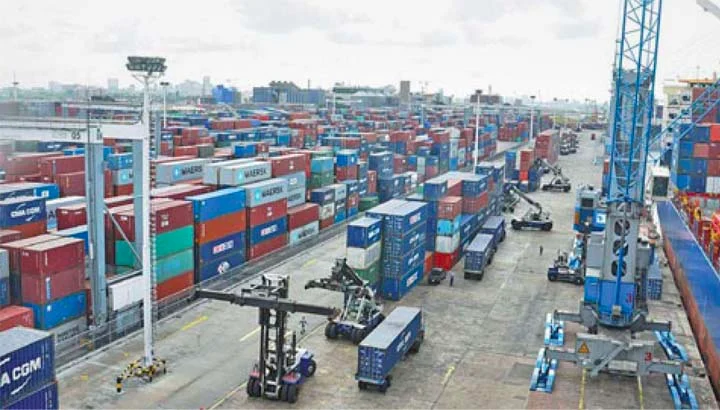
In the highly competitive world of maritime trade, few African ports have transformed their fortunes as dramatically as the Port of Lomé in Togo. Despite serving a country of barely nine million people and an economy significantly smaller than Nigeria’s, Lomé has emerged as one of West Africa’s most important transshipment hubs, attracting some of the world’s largest container vessels and serving markets far beyond its national borders. Its rise offers important lessons for Nigeria, a nation with one of Africa’s largest economies and a natural geographic advantage that should position it as the undisputed maritime gateway of the Gulf of Guinea.
The success of Lomé begins with geography, but geography alone does not explain its dominance. Situated along major east-west shipping routes on the Gulf of Guinea, Lomé is strategically positioned between major West African markets. More importantly, the port possesses naturally deep waters that allow it to receive large container vessels without extensive tidal restrictions. While many regional ports require vessels to wait for favorable conditions or navigate operational constraints, Lomé offers shipping lines efficiency and predictability, two factors that drive modern maritime logistics.
However, natural advantages only tell part of the story. The real transformation occurred through deliberate investment and policy decisions. Over the past two decades, Togo aggressively pursued port modernization, attracting private capital and international terminal operators. The expansion of the container terminal significantly increased capacity and enabled the handling of larger vessels. Modern cargo handling equipment, streamlined operations, and continuous infrastructure upgrades created a port environment capable of competing with larger regional rivals.
A critical factor behind Lomé’s rise is its role as a transshipment center rather than merely a destination port. In transshipment, large vessels discharge containers that are then redistributed onto smaller vessels serving neighboring countries. This model allows shipping companies to consolidate cargo movements, reduce costs, and optimize vessel deployment. As more shipping lines selected Lomé as a regional hub, network effects emerged. Increased vessel calls attracted more cargo, which in turn attracted additional shipping services, creating a self-reinforcing cycle of growth.
Perhaps the most overlooked aspect of Lomé’s success is operational efficiency. In global shipping, time is money. Every additional day spent waiting at anchor, clearing cargo, or navigating bureaucracy increases costs throughout the supply chain. Togo recognized this reality and invested heavily in reducing bottlenecks. Customs procedures were progressively digitized, administrative processes streamlined, and port operations designed to minimize vessel turnaround time. Shipping lines increasingly prioritize reliability over size alone, and Lomé built a reputation for delivering predictable service.
The port also benefits from a relatively integrated logistics ecosystem. Cargo destined for landlocked countries such as Burkina Faso, Niger, and Mali can move through established transport corridors linked to Lomé. By positioning itself not only as a seaport but as a logistics gateway to the wider hinterland, Togo expanded its market far beyond domestic consumption. This regional approach transformed the port into an indispensable trade artery for several West African economies.
The contrast with Nigeria is striking. Nigeria possesses a far larger economy, significantly greater cargo demand, an enormous consumer market, and multiple ports located near industrial and commercial centers. Yet many shipping operators continue to cite congestion, infrastructure deficiencies, unpredictable clearance processes, and logistical bottlenecks as constraints on efficiency. While substantial investments have been made in recent years, including deep seaport developments and modernization initiatives, operational challenges continue to limit Nigeria’s ability to fully capitalize on its natural advantages.
One of the most important lessons from Lomé is that maritime competitiveness is not determined solely by market size. Large economies often assume that cargo will naturally flow to them. In reality, shipping companies make decisions based on cost, speed, reliability, and predictability. A smaller country with efficient systems can outperform a larger economy burdened by delays and complexity. Lomé demonstrates that operational excellence can be more influential than economic scale.
Another lesson is the importance of policy consistency. Investors in ports and logistics infrastructure typically operate on investment horizons measured in decades rather than years. Frequent regulatory changes, overlapping agency responsibilities, and uncertain operating environments can discourage long-term investment. Togo’s relatively stable approach to port development helped create confidence among global shipping lines and terminal operators. Nigeria’s maritime sector could benefit significantly from sustained policy continuity that prioritizes efficiency and investor confidence.
The development of multimodal transport connections is equally important. Ports do not compete in isolation; they compete as part of entire logistics chains. Cargo owners evaluate the total cost and speed of moving goods from origin to destination. Efficient road, rail, and inland logistics networks are therefore as important as the port itself. Nigeria’s ongoing investments in rail connectivity and inland transport corridors have the potential to transform port competitiveness if executed consistently and integrated effectively.
Digitalization also remains a crucial area for improvement across the region. The future of global trade lies in seamless electronic documentation, automated cargo tracking, integrated customs systems, and real-time data visibility. Ports that reduce paperwork, eliminate duplication, and increase transparency gain a significant competitive advantage. Lomé’s progress in simplifying processes illustrates how technology can enhance efficiency without necessarily requiring massive physical expansion.
Ultimately, the story of Lomé is not merely a port success story; it is a lesson in strategic execution. Togo understood that maritime trade is a service industry where customers are shipping lines, cargo owners, and logistics operators. By focusing relentlessly on efficiency, infrastructure, connectivity, and reliability, it transformed a relatively small national asset into a regional powerhouse.
For Nigeria, the opportunity remains enormous. The country’s market size, industrial potential, strategic location, and growing infrastructure base provide advantages that few African nations can match. Yet the experience of Lomé demonstrates that competitive advantage is not inherited – it is earned through consistent investment, efficient governance, and a relentless commitment to reducing friction in the movement of goods. If Nigeria can combine its scale with world-class operational performance, it has the potential not merely to compete with regional hubs but to become the dominant maritime gateway for West and Central Africa.




















You must be logged in to post a comment Login