
Breaking News
CBN Restrictions Leave Five Profitable Banks Without Dividends as Six Pay N1.27trn
GTCO and Zenith led six Nigerian banks that paid N1.27trn dividends in 2025, while five profitable lenders could not pay due to CBN restrictions.

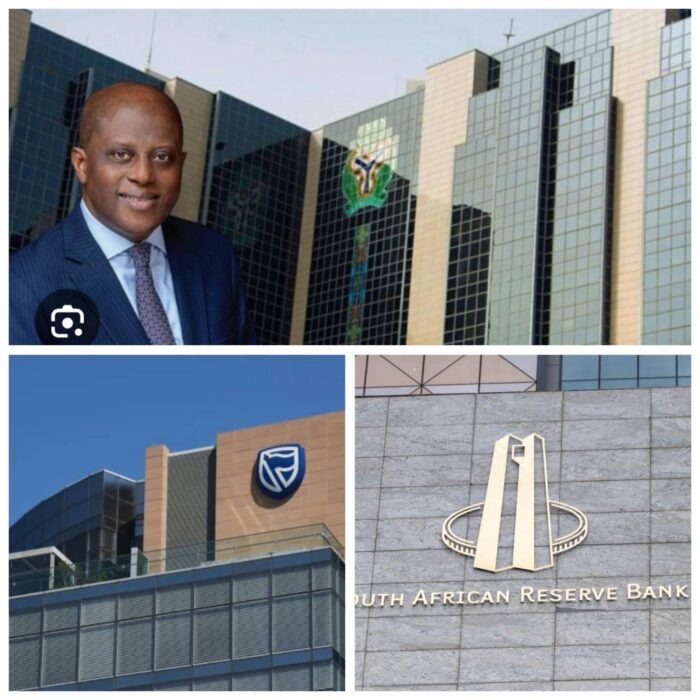
Only six of Nigeria’s largest listed banks paid dividends totalling N1.27 trillion to shareholders for the 2025 financial year, despite strong earnings across the banking sector.
Five other lenders that recorded profits were unable to reward shareholders after failing to meet dividend requirements imposed by the Central Bank of Nigeria (CBN).
According to findings by Financial Vanguard, GTCO, Zenith Bank, Stanbic IBTC, Ecobank Transnational Incorporated, Wema Bank and FCMB passed the CBN’s dividend eligibility requirements and declared payouts.
The banks that did not pay dividends were affected by a combination of regulatory restrictions, the CBN’s capital-retention policy, rising non-performing loans (NPLs), provisioning requirements and the need to maintain stronger balance sheets.
GTCO led the dividend payments with N429.830 billion, representing N12.76 per share. Zenith Bank followed with N410.698 billion at N10 per share, while Stanbic IBTC paid N63.607 billion at N4 per share.
Ecobank Transnational Incorporated declared $40 million at 0.16 cent per share, while FCMB paid N14.969 billion at 35 kobo per share.
The Tier-1 banks, particularly GTCO and Zenith, accounted for 81.9 per cent of the total dividend payout.
Banks’ profit falls 3.8%
The audited financial statements of the 11 major listed banks showed that their combined Profit Before Tax fell to N6.4 trillion in 2025 from N6.7 trillion in 2024, representing a 3.8 per cent decline.
Tier-1 banks accounted for N4.15 trillion of the 2025 PBT, compared with N5.06 trillion a year earlier.
In contrast, Tier-2 banks recorded N2.262 trillion, up significantly from N1.602 trillion in 2024.
Gross earnings climb to N26.4trn
While aggregate profit declined, the banks’ combined gross earnings increased from N23.2 trillion in 2024 to N26.4 trillion in 2025.
Tier-1 banks generated N18.2 trillion, compared with N16.9 trillion in 2024, while Tier-2 banks recorded N9.5 trillion against N7.6 trillion.
Access Holdings recorded the highest gross earnings among the Tier-1 banks, rising to N5.5 trillion from N4.9 trillion.
Zenith Bank’s gross earnings increased to N4.1 trillion from N3.8 trillion, while GTCO recorded a marginal rise to N2.15 trillion from N2.11 trillion.
First HoldCo also grew its gross earnings to N3.4 trillion from N3.2 trillion. UBA, however, recorded a slight decline from N3.1 trillion to N2.97 trillion.
‘Profitability alone did not determine dividend payments’ — Ahimie
Fiona Ahimie, President of the Chartered Institute of Stockbrokers (CIS), said the disparity in dividend payments was primarily caused by differences in banks’ capital strength, regulatory compliance, earnings quality and strategic priorities.
“The divergence in dividend payments among Nigerian banks this year was primarily driven by differences in capital strength, regulatory compliance, earnings quality and strategic priorities, rather than profitability alone.
“Some banks declared dividends because they maintained strong capital adequacy ratios, delivered robust earnings and were able to satisfy regulatory requirements while retaining sufficient capital to support future growth.
“Others, despite reporting profits, opted not to pay dividends because preserving capital became a higher priority.”
Ahimie said the banking sector’s recapitalisation exercise, balance-sheet strengthening, higher risk-asset provisioning and regulatory restrictions contributed to the decision by some banks to retain earnings.
On the effect on investors, she said:
“The immediate implication is a divergence in returns. Income-focused investors who rely on dividend payments may shift their preference towards banks with stronger capital positions and consistent payout records.
“For banks that suspended dividends, there could be short-term pressure on their share prices as investors reassess valuation and income expectations.
“However, if retained earnings are deployed effectively to strengthen capital and support future earnings growth, the decision could ultimately create greater long-term shareholder value.”
She added that the decision was not necessarily an indication of financial distress.
“For customers, the impact is relatively limited in the near term. A bank’s decision not to pay dividends does not necessarily indicate financial distress.
“In many cases, it reflects a conservative capital management strategy designed to improve resilience and enhance the bank’s capacity to support lending, digital investments and business expansion.
“Stronger capital positions ultimately translate into greater confidence in the banking system.”
Looking ahead, Ahimie said:
“The outlook for the banking industry remains constructive.
“As most banks already met the recapitalisation and other regulatory requirements, dividend payments are expected to become more stable and predictable. So they are likely to maintain relatively consistent distributions due to their stronger earnings capacity and capital positions.”
‘CBN stopped the banks from paying dividends’ — Adonri
David Adonri of Highcap Securities Limited said the CBN’s decision was aimed at protecting depositors after the regulator determined that some banks were not sufficiently strong to distribute dividends.
“Several banks did not pay dividends for the financial year ended December 31, 2025, because after reviewing their financial accounts, CBN was not convinced that they were strong enough to pay dividends.
“That was a stringent move by CBN to safeguard the interest of depositors notwithstanding the expectation of investors.”
He explained that the expiry of forbearance on partial provisioning for doubtful credits affected the retained profits of some banks.
“CBN stopped the banks affected from paying dividends because when the forbearance given banks in respect of partial provisioning for doubtful credits lapsed, the banks did not have sufficient retained profits after application of full provisioning.”
Adonri also noted that some lenders needed to preserve funds to meet foreign debt obligations.
“With this kind of stern regulatory action by CBN, shareholders will be forced to scrutinise the management of their banks to forestall any future threat to their dividend income.
“Banking is a delicate business. It requires stringent monitoring from regulators and shareholders to prevent abuses and failure. The action of CBN in stopping payment of dividends by some banks should boost depositors’ and investors’ confidence in the industry.”
‘It was a regulatory push-back’ — Olayinka
Tajudeen Olayinka, an investment banker and Chartered Stockbroker, said the dividend restrictions represented a deliberate regulatory intervention.
“The inability of some Nigerian banks to pay dividends from their 2025 accounts arose from deliberate regulatory pushback.
“Many of the affected banks had huge final write-off from regulatory forbearance which could impact their balance sheets if they were allowed to pay dividends.
“It was CBN that refused to approve payment of dividends by these banks, by invoking its regulatory power over the banks.”
Olayinka maintained that the banking sector still had strong prospects.
“The industry has bright future. Most of the banks affected actually proposed to pay dividends, in spite of the need to end forbearance.
“So, it wasn’t that they didn’t have enough, CBN just felt it might appear excessively imprudent if the affected banks were allowed to pay dividends alongside huge provisions and write-off they were compelled to make.”
He also cited exposure to the syndicated loan default from Nestoil as another issue affecting some banks.
“Some of the banks were also exposed to a huge syndicated loan default from Nestoil which they have now fully provided for. I must say that the current regulatory stance imposes discipline and prudence on Nigerian banks, which is positive for the industry and key stakeholders.”
Kurfi explains CBN’s position
Mallam Kasimu Kurfi said the CBN Governor had stated that banks that were denied dividend payments had failed to sufficiently clean up their impairments.
“The governor of the Central Bank of Nigeria has said that those banks that did not pay dividend were not able to clean their impairments and were denied to pay dividends”.
Kurfi further disclosed that one of the Tier-1 banks was stopped from paying dividends because of its exposure to a foreign bank subsidiary.
According to him, the exposure represented about 20 per cent of shareholders’ funds, above the 10 per cent threshold allowed under the CBN’s prudential guidelines.
“The banks needs to either increase their shareholders’ funds or sell some of their holdings to align with the maximum limit of 10% shareholders’ funds before they can be allowed to pay dividends to shareholders,” he said.
The development highlights the growing importance of capital strength, provisioning and regulatory compliance in determining how much Nigerian banks can return to shareholders, even when they remain profitable.
Africans Angle News



























You must be logged in to post a comment Login