Africa
Navigating Unprecedented Hunger In The Land: Voices from a Challenging Era, by Isaac Asabor

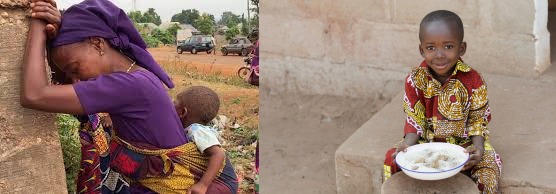
As I stood at the bus stop at Ogba in Lagos on a hot afternoon, the usual chatter of commuters filled the air. But one voice, laden with frustration and despair, stood out from the rest. A man, possibly in his 60s, lamented aloud, “Since birth, I have never experienced the kind of government-induced hardship that I am passing through under this administration”. His words struck a chord, echoing the sentiments of millions across Nigeria who are grappling with unprecedented economic difficulties widely believed to have being exacerbated by the president’s pronouncement that “Subsidy is gone” on May 29, 2024.
To capture the pulse of the nation, I decided to engage in conversations with others on the streets. What I discovered was a shared sense of disillusionment and hardship that transcends age, occupation, and location.
At the busy market in Ogba, adjacent to the bus stop, a young mother balancing a child on her hip expressed her struggles. “I can barely afford to feed my family,” she said, her voice trembling. “Prices of basic food items have tripled, and my husband’s salary remains the same. We are just trying to survive day by day.”
A taxi driver, who has been in the profession for over 20 years, shared his frustrations as well. “Fuel scarcity and high prices have made my job nearly impossible. I spend more time in fuel queues than on the road. My income has dropped, and I don’t know how much longer I can keep this up,” he lamented, wiping sweat from his brow.
In a similar vein, at Berger bus stop, also in Lagos, a young university graduate lamented his inability to find employment despite his qualifications. “I graduated two years ago, and I have been searching for a job ever since. But with the current state of the economy, no one is hiring. I feel like my dreams are slipping away,” he confessed.
An elderly woman selling fruits by the roadside at Berger shared a poignant reflection on the situation. “I have seen governments come and go, but I have never seen anything like this. We were promised better days, but all I see is more hardship. My children help me out, but even they are struggling,” she said, her eyes filled with worry.
These voices, representative of a nation in distress, paint a picture of an economy that is failing its people. While government officials argue that the current policies are necessary for long-term stability, the immediate impact on ordinary citizens is overwhelming. The soaring cost of living, marked by rising food prices, fuel scarcity, and a depreciating naira, has pushed many into a state of despair.
Without sounding exaggerative in this context, there is no denying the fact that that just as people’s voices are lamentably resonating as a result of the prevailing hunger and hardship in the land so also is the hardship in taking its toll on lives.
The situation, no doubt, is paradoxical, given the fact that Nigeria is a country endowed with vast natural resources and a rich cultural heritage. The fact that Nigeria is richly blessed by God is difficult to grasp as not a few Nigerians are currently grappling with multifaceted socio-economic challenges that are severely impacting on their dreams and lives.
In fact, high levels of poverty, insecurity, and inadequate access to basic necessities have created a perfect storm of hardship that is already manifesting in tragic incidents. A recent heartbreaking case illustrates the severe consequences of these struggles: the tragic deaths of a mother and her five children in Kano after consuming expired cassava flour leaves a sour taste in the mouth, and eyes widely opened in trepidation.
Recently, news broke of a mother and her children tragically dying due to food poisoning linked to consuming expired cassava flour. Reports suggest that the family had resorted to using the flour out of desperation, demonstrating the severe economic constraints many are facing. This heartbreaking incident is a stark reminder of the lengths to which families must go to secure food, often compromising their health and safety.
At this juncture, this writer may not be wrong in his conjecture that any top government official and his supporters who are often blindfolded by partisan politics may choose to blame the dead in this context for emphasized being meticulous, and exhibiting awareness around food safety, forgetting that the broader discussion must address why families are forced to consume potentially hazardous products in the first place.
This incident is not an isolated case but rather a symptom of the larger food insecurity crisis in Nigeria, exacerbated by a multitude of factors including rising inflation, persistent poverty, and inadequate social support systems.
According to the World Bank, nearly 90 million Nigerians live in extreme poverty, and the ongoing inflation has made basic food items increasingly unaffordable. Food prices have been surging, contributing to a situation where many families are left to choose between quality and quantity. The Food and Agriculture Organization (FAO) reports that as of 2023, more than 19 million Nigerians are experiencing crisis levels of food insecurity, particularly in the northern regions of the country.
The burden of inflation extends beyond food; energy costs have also skyrocketed, and unemployment rates remain high, leading to restricted disposable income levels for millions of Nigerian families. As a result, many households resort to low-cost food options, often resulting in dangerous choices.
Consumers are increasingly compromising on the quality and safety of their food to save costs. With the soaring prices of staple foods, like rice, beans, and even cassava, many families have found themselves turned toward substandard or expired food products. Reports have emerged from various states highlighting cases of foodborne illnesses linked to unsafe consumption patterns, reflecting not only a lack of access to nutritious options but also the desperate measures taken by impoverished families to survive.
The health implications posed by dire economic conditions extend beyond food insecurity. Nigeria faces a burgeoning health crisis, with reports of malnutrition and preventable diseases increasing among children and vulnerable populations. The challenge is compounded by inadequate healthcare infrastructure, limited access to clean water, and a lack of essential medical supplies, which further exacerbates the situation.
In fact, the devastating loss of lives due to the consumption of expired foods out of desperation to survive is no doubt a tragic emblem of the hardships faced by many Nigerians today. As the nation contends with rising poverty, food insecurity, and systemic failures, it highlights the urgent need for both governmental and non-governmental intervention to support these vulnerable communities.
Addressing the issues of food safety, economic support, and the provision of basic services is not merely a matter of policy but a moral imperative that requires immediate action to save lives and restore hope. The people of Nigeria deserve better, and it is up to all stakeholders to ensure that such tragedies become a thing of the past, paving the way for a more secure and prosperous future for all its citizens.
In fact, the government’s responsibility is to protect and uplift its citizens, but when policies lead to widespread suffering, one must question the effectiveness of such governance. The voices on the streets, from the elderly to the young, tell a story of resilience being stretched to its limits.
As we navigate through these challenging times, it is essential that the government re-evaluates its approach and prioritizes the well-being of its citizens. The Nigerian people have shown resilience in the face of adversity, but even the most resilient can only bear so much. It is time for our leaders to listen, act, and bring about the relief that is so desperately needed.
Until then, the voices of the people on the streets will continue to resonate, serving as a stark reminder of the harsh realities faced by the citizens of this nation.