National Issues
Ndigbo Are Too Advanced for You: A Response to the Inconsequential Isaac Fayose -By Daniel Nduka Okonkwo
The Igbo story is one of survival through civil war, economic displacement, systemic marginalization, and continuous reinvention. From trade networks across West Africa to global boardrooms and academic institutions, our footprint reflects determination, not moral deficiency.

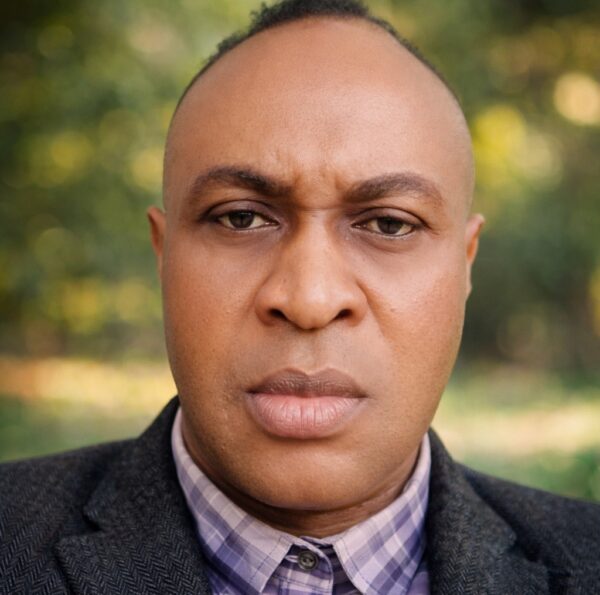
Ethnic stereotyping is intellectually lazy. Does Cubana Chief Priest, or any social media personality, represent the moral character of over 40 million Igbo people? Suggesting so would be as illogical as claiming that Portable defines the entirety of the Yoruba nation. Nigeria’s strength lies in its diversity. No ethnic group can be reduced to the behavior of a few individuals.
Street artist Portable is widely recognized for his controversial persona, often exhibiting a volatile and confrontational attitude that garners significant social media attention. Critics frequently describe his behavior as chaotic and disrespectful. But does a single individual represent the entire Yoruba nation?
Public discourse in a diverse country like Nigeria demands responsibility, historical awareness, and moral restraint. When influential individuals choose to generalize or malign an entire ethnic group, they do more than express personal frustration; they risk deepening divisions within an already fragile national fabric.
Isaac Fayose, younger brother of former Ekiti State Governor Ayodele Fayose, who is often publicly critical of his brother, recently posted a video in which he described the Igbo ethnic group as “easy to buy,” alleging that they are driven primarily by money and power and have “forgotten” Nnamdi Kanu in detention. He went further to express gratitude that he was not Igbo by tribe, portraying the group as politically and morally compromised. Can he speak against the Fulani in that manner? Can one criticize the entire Yoruba nation because of the Tinubu administration or declare that all Yorubas are cowards as a punchline?
Such sweeping generalizations are not only intellectually weak; they disregard history, achievement, and complexity. What should one expect from commentary that ignores nuance and reason?
The Igbo nation has produced some of Africa’s most formidable intellects and globally respected figures: Dr. Nnamdi Azikiwe, Nigeria’s first President; Chinua Achebe, whose literary genius redefined African storytelling; Chimamanda Ngozi Adichie, an internationally celebrated author; and historical figures such as Olaudah Equiano, whose writings helped shape abolitionist discourse. In politics and business, names such as Peter Obi and Cletus Ibeto reflect enterprise, leadership, and global competitiveness. Chukwuemeka Odumegwu Ojukwu remains a defining figure in Nigeria’s historical narrative. These legacies cannot be diminished by careless rhetoric from a street commentator who has not studied history or read Ibrahim Badamasi Babangida’s book to understand the difference between the brave and the cowardly.
To reduce such people, globally known for resilience, entrepreneurship, and intellectual depth, to a caricature of being “easily bought” is not criticism; it is prejudice disguised as commentary.
Many criticisms historically directed at the Igbo stem from perceptions of their industriousness and commercial success. Across Nigeria and in diaspora communities worldwide, the Igbo are widely recognized for their ability to build thriving enterprises from limited resources and to create something out of almost nothing. In some quarters, this economic dynamism is misinterpreted as dominance or threat. But economic competitiveness is not a moral deficiency; it is resilience in practice.
If credibility is indeed the currency of conscience, then those who speak must also withstand scrutiny. Public records indicate that Isaac Fayose was previously arraigned a few years ago before Justice Binta Muhammad of the Federal Capital Territory High Court in Lugbe over allegations bordering on advance fee fraud. According to the charge, he was accused of obtaining ₦17,600,000 under false pretence in relation to a property lease transaction, contrary to Section 1(1)(a) and punishable under Section 1(3) of the Advance Fee Fraud and Other Fraud Related Offences Act, 2006.
While the presumption of innocence remains a cornerstone of any legal system, moral authority in public commentary is strengthened by personal integrity. Those who cast collective aspersions on entire ethnic groups must be prepared to have their own public record examined.
Moreover, criticism must be consistent. If similar language would be considered inflammatory when directed at the Fulani, Yoruba, Hausa, or any minority group, then it remains equally unacceptable when aimed at the Igbo.
Nigeria’s democracy is already strained by insecurity, economic hardship, and political distrust. Reckless ethnic rhetoric does not strengthen the nation; it weakens it. Constructive criticism of political decisions or ideological positions is legitimate. Blanket condemnation of an entire people is not.
The Igbo story is one of survival through civil war, economic displacement, systemic marginalization, and continuous reinvention. From trade networks across West Africa to global boardrooms and academic institutions, our footprint reflects determination, not moral deficiency.
National unity is not sustained by silence in the face of prejudice. It is sustained by insisting on fairness, historical truth, and mutual respect. Public figures must recognize that words carry weight, especially in a country where ethnic tensions have historically produced tragic consequences.
The task before Nigeria is not to trade insults across tribal lines. It is to build a society where merit, accountability, and justice transcend ethnicity.
In a plural society, conscience must be guided by responsibility. And credibility, indeed, remains its true currency.
Daniel Nduka Okonkwo is a Nigerian investigative journalist, publisher of Profiles International Human Rights Advocate, and policy analyst whose work exposes corruption, institutional failures, and the quiet forces shaping governance and global influence. With over a thousand published pieces featured on Sahara Reporters, African Defence Forum, Daily Intel Newspapers, Opinion Nigeria, African Angle, and other leading international media platforms, he blends meticulous research with compelling storytelling to drive accountability and reform. A human rights advocate, ghostwriter, and strategic communicator, Daniel transforms complex issues into clear, actionable insights that resonate both locally and globally.
Email: dan.okonkwo.73@gmail.com