Africa
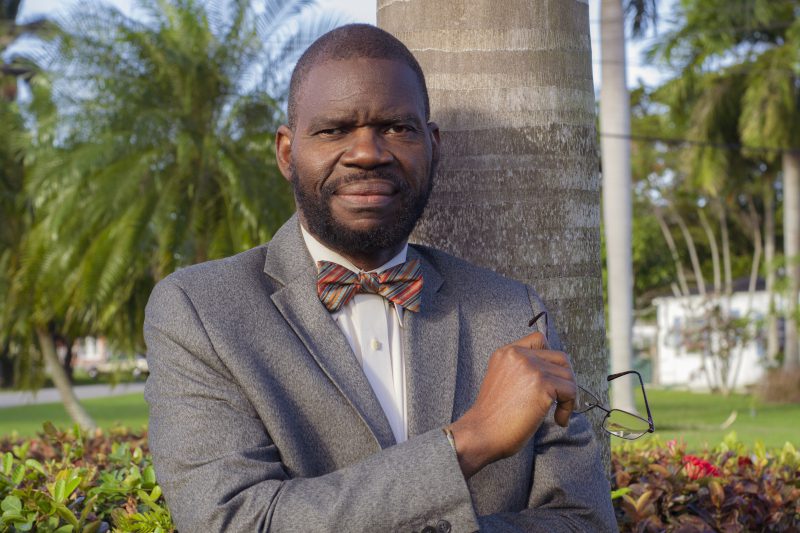
Nigeria’s Forgotten Poor, by Abiodun Komolafe

“I have heard you loud and clear. I understand the pain and frustration that drive these protests, and I want to assure you that our government is committed to listening and addressing the concerns of our citizens”.
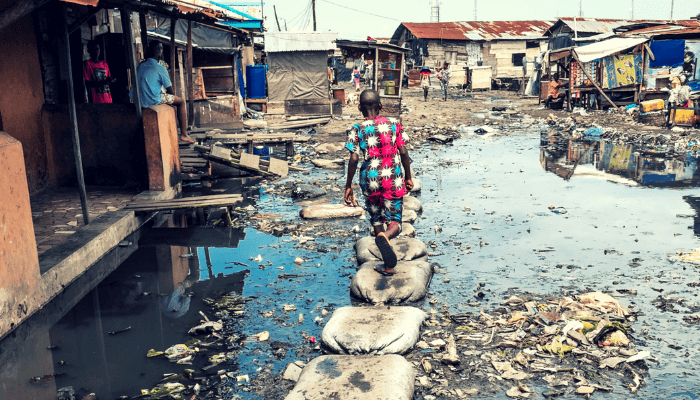
These were the words of President Bola Tinubu in a broadcast to the nation on the now-suspended #EndBadGovernanceInNigeria protests. Among other things, the protests have highlighted the plight of Nigeria’s forgotten poor, who are not just passive bystanders but active voices demanding change. The brief nature of this outcry finds its flow in the poor’s ability to sustain their demands and hold their leaders accountable. Therefore, as the protests subside, it is crucial for the governments at the national and subnational levels to acknowledge the poor’s legitimate grievances and engage in constructive dialogue to address the systemic issues perpetuating poverty and inequality in the land.
It is interesting to note that Nigeria, Africa’s most populous nation, has long struggled with the principalities of inequality and powers of political disenfranchisement. Amidst the chaos of decades of mismanagement, corruption and neglect, Nigeria’s poor have been denied the opportunity to participate fully in the political process, to shape the decisions that affect their lives. They have been denied access to basic services and infrastructure, thus leaving them vulnerable to a cycle of disempowerment and social injustice. The sickening reality is that our economy has been stifled by a system that spends more time managing bureaucratic red tape and political conflicts. Of course, that’s why politicians are always competing to see who can promise the most bread and circuses to the poor, because, clearly, that’s all the poor needs! Tragically so, the country as a whole country has suffered as a result!
The carnage in Bangladesh today, which has led to Prime Minister Sheikh Hasina’s resignation and flight from the country, highlights a deeper issue. Paradoxically, in terms of the conventional definition, by growth rate, Bangladesh “is doing well”. Unfortunately, the episode in Bangladesh has once again brought up the illusion of the ‘trickle-down effect’ which, decades ago, particularly, in the 1960s, was referred to as ‘growth without development’. In view of the defining events in Kenya and Bangladesh, even in a different context in the UK and France, perhaps, in discussing the poor, we might care to contrast ephemeral growth of trickle-down economics with the concept of ‘pre-distribution’, an approach which prioritizes building from the base, ensuring access to education, healthcare, and other essential services. With all the events unfolding around us, we in Nigeria should take this with more than a passing glance.
With the advent of self-rule in the early 1950s, pre-distribution actually became the conventional wisdom. The thrust of political thinking was to build up from the base in terms of access to sustainable development and equitable growth; and it worked! A critical look at the building of social capital by agencies such as the Lagos Executive Development Board (LEDB), and the various agencies of the regional governments attested to this. Indeed, their mode of operations led to the emergence of what used to be described as a thriving petite and real middle class. Evidence of their achievements can still be seen in areas like Surulere, which was originally ‘New Lagos’, Bodija in Ibadan, and a host of other places in and around the regional capitals of that era.
The on-going social crises worldwide have debunked the Bretton Woods’ Structural Adjustment Programme (SAP) anchored on its flawed ‘trickle-down effects’ ideology. So, it’s time to revisit ‘pre-distribution’ by recognizing the state’s crucial role in citizens’ lives. Pre-distribution requires state involvement in capital and market structures, redirecting capital to the real sectors for sustainable growth. This, in turn, generates tax revenues for the state. For instance, a universal health insurance system, funded by, say, 40 million Nigerians, each contributing a modest amount (e.g., N3,000/month) in health insurance premiums, could create a massive economy comparable to that of Togo, which is a sovereign state. The possibilities are vast, with numerous examples, such as recapitalizing the Bank of Agriculture (BOA) and linking it with Commodity Exchanges, Boards and Agriculture Cooperatives. This framework may trigger an agro-industrial revolution, boosting non-oil exports to half of crude oil exports by 2031; and that’s a conservative estimate.
Pre-distribution is the key alternative for countries like Nigeria. So, dear fatherland must choose between pursuing the discredited Bretton Woods-inspired illusion or reverting to the more enlightened approaches of the 1950s and 1960s. The motto of the London School of Economics (LSE), ‘rerum cognoscere causas’, is instructive! By ‘knowing the causes of things’, the government can avoid social upheavals and implement a comprehensive anti-poverty programme that not only alleviates suffering but also empowers the masses, serving as a catalyst for economic growth. A notable example is President Ignacio Lula Da Silva’s poverty reduction initiatives, which sparked Brazil’s rise to a top ten global economy.
The World Bank predicts that approximately 40.7% of Nigeria’s population will be living below the international poverty line by the end of 2024. So, the government must recognize the poor’s inherent dignity and worth. In a world that seems to have forgotten its meaning, Tinubu’s efforts have so far demonstrated a commitment to the well-being of Nigerians. His initiatives, aimed at economic growth, job creation and social welfare have been driving the steam of promise, and his willingness to engage with diverse stakeholders is a good cup towards inclusive governance. Building on this momentum, the president can solidify his legacy by taking bold steps to empower the poor and the marginalized.
In a country that’s full of possibilities and questions, Tinubu’s administration must seize the opportunity presented by the protests to recalibrate its priorities and create a new life for the poor, free from the complications of their existence. Rather than dismissing the protests as a mere nuisance, it can empower this obviously marginalized group to drive positive change. The protests have ignited a spark, and it is now up to the government to fan the flames of reform by creating a brighter future for all Nigerians, especially the poor, who have been left in a desolate place where hope seems as elusive as freedom. The poor shouldn’t be the objects of our charity but the subjects of our own moral reckoning. Only by confronting this truth can the hymn of humanity resonate, echoing through the chambers of our collective conscience.
Walt Whitman was right: “A promise is a cloud. It rains nourishment.” The president’s recent statement echoes this sentiment, as he cautioned against allowing “violence and destruction” to “tear our nation apart”. Instead, he urged Nigerians to “work together to build a brighter future, where every Nigerian can live with dignity and prosperity”. Commendable! But will the government, which has historically regarded the poor with suspicion and disdain, rise to the challenge and show compassion, or will it let the embers of connection to fade, once again leaving the poor forgotten? Only time will tell!
May the Lamb of God, who takes away the sin of the world, grant us peace in Nigeria!
*KOMOLAFE writes in from Ijebu-Jesa, Osun State, Nigeria (ijebujesa@yahoo.co.uk)