Africa
Nigeria’s Paralympics to the Rescue, by Zayd Ibn Isah

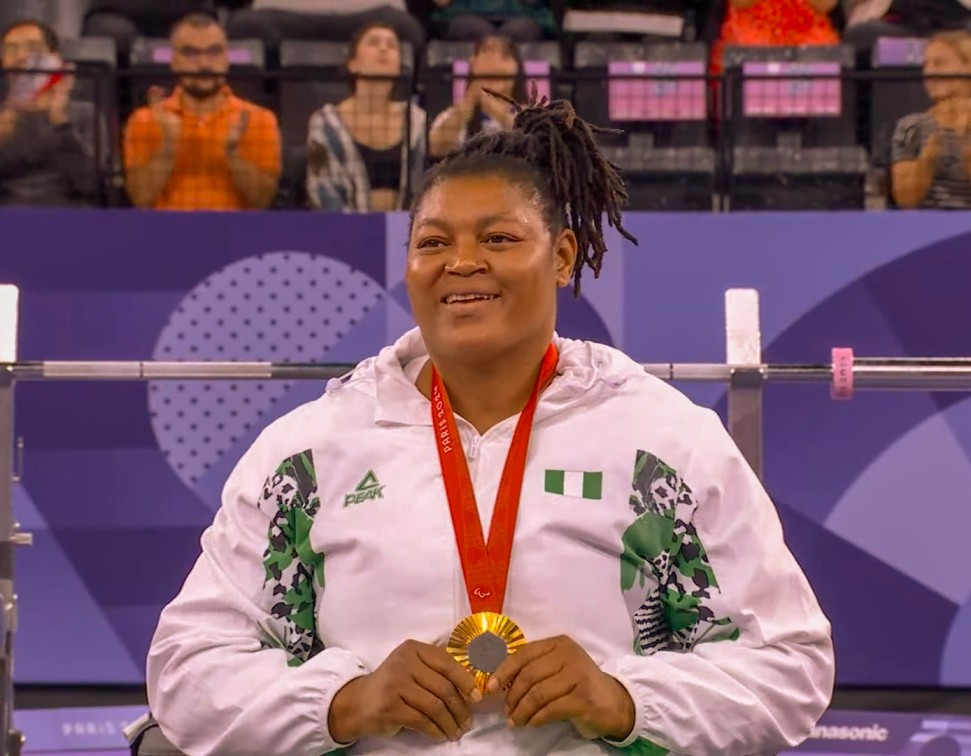
Our Paralympians have considerably erased the bitter taste of Team Nigeria’s poor performance in the Paris Olympics. They did this by winning two gold, three silver, and two bronze medals, finishing in 40th position on the medals table of the recently concluded Paralympic Games. A lot of people have noted that the two gold medals won in Paris are the country’s lowest since Barcelona ’92. In fact, this particular outing has been dubbed the worst in the history of Team Nigeria’s participation in the Paralympics. And still, as I asked a friend of mine, isn’t that better than our able-bodied athletes, who didn’t win anything at all? After all, “at all, at all na im bad pass,” as we say in Nigeria’s pidgin parlance.
I genuinely believe that we should applaud the individual achievements of the remarkable athletes who represented us, rather than dismiss their efforts as a group. For one, Nigeria’s para-powerlifter, Folashade Oluwafemiayo, set an incredible world record of 166 kg, and that was merely the icing on the cake. She also broke her previous record of 86 kg to become the first para-athlete in history to lift 166 kg and win a gold medal. Talk about “ability” in disability!
Or how about Eniola Mariam Bolaji, the 18-year-old badminton player who made history by defeating Ukraine’s Oksana Kozyna to win a bronze medal? Apart from being Nigeria’s first medal in Paris, this was also the first-ever badminton medal won by any African player at either the Olympics or Paralympics. And what of powerlifter Onyinyechi Mark, who won Nigeriaʼs first gold medal after lifting a remarkable 150kg in the womenʼs 61kg event? What about Isau Ogunkunle, Bose Omolayo, Flora Ugwunwa? Should their individual exploits be whittled down merely because Team Nigeria’s collective tally did not measure up to certain standards?
I understand that Nigeriaʼs performance at the Olympics left many people disappointed. We basically finished without a single medal. But that should not make us judge our Paralympians more harshly than needed. If anything, their outstanding performances were inspiring demonstrations of grit, skill, and incredible athleticism.
Folashade’s heroism in particular, has earned her commendations from numerous Nigerians. The Minister of Sports Development, Senator John Owan Enoh, was especially ecstatic, calling on Nigerians to celebrate her for bringing honor and glory to the country. His statement reads:
“Dear Nigerians,
Our very own Folashade Oluwafemiayo has delivered an outstanding performance at the Paralympics. She achieved something no other woman has done in powerlifting at the 2024 Paralympic Games in Paris, France.
Folashade not only set a Paralympic record by lifting 167 kg, but she also set an Elite World Record. She served as the Team Captain for Team Nigeria’s contingent at the Paris 2024 Paralympic Games, demonstrating great skill, determination, and an excellent spirit.
Let’s come together to congratulate and celebrate our champion for bringing pride to herself and our great nation, Nigeria.”
The Minister’s rallying call to celebrate Folashade for bringing glory and honor to Nigeria is commendable, considering the fact that he came under heavy criticism from Nigerians in the wake of Team Nigeria’s abysmal performance in Paris.
American actor, author, and businessman Steve Robert Guttenberg once said, “Regardless of being an underdog or facing mental or physical disability, you can still be a hero.” The Paralympians are undoubtedly the heroes and heroines of Paris 2024. They have once again excelled where their counterparts struggled to make an impact. As such, we need to celebrate them just as we would have celebrated their counterparts if they had won medals. Remember, they had a much smaller contingent, and still ventured into the Games without anything close to the support and optimism which followed their Olympian counterparts.
Even with all of this, our Paralympians did not return empty-handed, and by returning with the weight of individual exploits, they have contributed towards inspiring future generations of champions. And if we are able to honour their individual achievements at the Paralympics, we should also be motivated to pay more attention towards the development of a sporting community that is more inclusive and open towards people living with disabilities.
If we can enable our sporting sector to transform the lives of Paralympic athletes, we can by extension help drive social change and positively affect the general attitude towards disabled people in Nigeria. This is because the Paralympic Games can play an important role in inspiring ordinary people to think differently about disability. After London 2012, research found that one in three people had their attitudes towards disabled people changed as a result of the Paralympic Games.
According to the National Commission for Persons With Disabilities (NCPWD), there are about 35 million persons currently living with disabilities in Nigeria. This might seem like a significant number on the surface, but in reality, it is almost as if PWDs are invisible in our country. We are talking about millions of people with visual, hearing, physical, intellectual, and communication impairments; forced to make do with little or no access at all to good education, healthcare, employment, housing and systems of social protection. These people face daily stigma, discrimination and even violence, and have to deal with the shame of being seen as having little worth to society. When you consider that it is normal for parents to seclude their children with disabilities from society, then you would not only understand the level of potential being lost because many talents remain hidden, but also appreciate the bravery and commitment of disabled people who shatter stereotypes, like our amazing Paralympians.
I am not about to veer the thrust of this article from its original premise to another issue entirely, but I would only like for us, as a society, to see the Paralympians as an extension by which life can be made better for people living with disabilities. Anyone can become a member of the disability community at any point in their life, either through an accident, disease, or aging. But this never means that such a personʼs life is basically over. Paralympians routinely achieve feats that prove how much one can still accomplish even when living with a disability. And even outside of sports, disabled people still show a fierce ability to do great things, even more than their abled counterparts.
In an article I wrote not too long ago, after the abysmal performance of Team Nigeria at the Olympics, I stressed that we are now at a pivotal moment in our history of sports development. This is because triumph at the Olympics always comes down to the intersection of factors like pure chance or calculated intentionality. And there is only one of those factors that we can control. If we want to ensure that future outings at either the Olympics or Paralympics improve significantly, we must begin working now to harness raw talent through dedicated training, adequate funding (allowances and training grants) and motivation.
We need to increase grassroots participation in sport, especially as this would provide an avenue for young people to utilize their energies positively, while bridging the link between basic communities and the machinery of government. We need reliable partners and investors to work with the government in developing functional systems for disabled people: there should be concrete plans to incorporate ramps in our cities, tactile pavements with textured ground surfaces for visually impaired people, and key features at public spaces for the benefit of the disabled. And of course, there should be more opportunities for people with disabilities to engage in sporting activities, and even go on to compete on the global stage.
The Nigeria Olympic Committee is charged with overseeing all activities leading to the Olympic and Paralympic Games, and they are also responsible for supporting athletes through relevant programmes revolving around funding, training, marketing and promotion. One hopes that the NOC would now focus on helping athletes adapt to assistive technology and equipment developed for the purpose of competition in the Paralympics. Some of these innovative devices are running blades with prosthetics, carbon fibre wheelchairs, and cycling track racing devices. Adapting to new tech will not only be helpful to our athletes, but expand our chances at the Paralympic Games as more people could focus on other sports such as archery, swimming and cycling.
As of now, Nigeria has gained 87 medals (42 gold, 21 silver, and 23 bronze) in its proud history at the Paralympic Games, and if that is not an indication that we need to value our Paralympians, then I don’t know what else it means. Our children are reminded of athletes like Mary Onyeali and Chioma Ajunwa and the Dream Team squad of footballers that made history in 1996. But do they know about Adeoye Ajibola, Adekundo Adesoji and Eucharia Iyiazi—past Paralympians who have made our nation proud? If future generations are to know about Tobi Amusan and Blessing Okagbare, they should also know of Flora Ugwunwa, Folashade Oluwafemiayo, Onyinyechi Mark and Eniola Mariam Bolaji.
We should honour and respect our Paralympians just as much as their Olympic counterparts. Additionally, we can also provide platforms for Paralympic champions to speak openly about real social barriers such as stigma and lack of access. They can as well proffer ideas by which these barriers can be broken for young people living with disabilities to excel and live full lives.
It is always awesome to see individuals with physical disabilities compete at the global stage while representing their countries. Many people might see Paralympic events as a source of inspiration for all, not only those with disabilities. But while that is a welcome and positive takeaway, such inspiration is only possible due to the athletic capabilities of the Paralympic participants. At the end of the day, the Paralympian is just living out his or her dream, and dreams differ a lot. People living with disabilities have valid dreams just like the rest of us, and it is fine if they don’t inspire warm feelings from spectators, as long as they are treated with respect and given opportunities to live normal lives.
Before we begin plans to help the disabled amongst us, we should sensitize the public in order to enable a general shift in attitude towards disabilities. As our cities expand, we should be careful to not leave disabled people behind by not providing the basic facilities they have needed and asked for over and over again. Making sure that every aspect of our society (education, sports, healthcare, governance and social service) remains accessible for people of all abilities is the first step towards genuine inclusion, equity and progress.
And as I have stated before, if we are to excel further and possibly record better performances at sports as a nation, we must be willing and ready to commit to strategic plans. These plans would ensure that we are more than prepared when the time finally comes to shine.
Zayd Ibn Isah can be reached at lawcadet1@gmail.com