Africa
Nigeria’s Youth Are Not Lazy; They Are Trapped in a Broken System -By Abdulazeez Toheeb Olawale
Nigeria’s youth are not lazy. They are working, enduring, and surviving within a broken system. What they need is not condemnation, but opportunity — and a country willing to give them a future worth believing in.

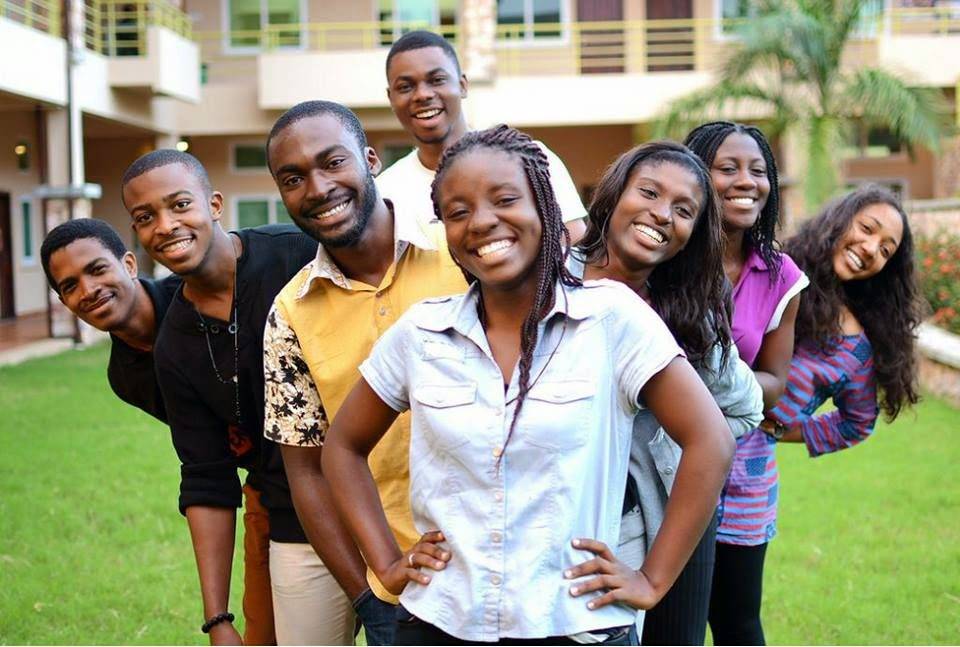
For years, Nigeria’s youth have carried a damaging label: lazy. Whenever unemployment rises or poverty deepens, fingers are pointed at young people rather than at the systems meant to support them. It is a convenient narrative — one that absolves leadership of responsibility while placing the burden of national failure on those with the least power. But the lived reality across Nigeria tells a very different story.
Nigeria’s youth are not lazy. They are trapped.
Every day, millions of young Nigerians wake up with determination but no clear path forward. They line up at cyber cafés to submit job applications that are rarely acknowledged. They attend interviews that lead nowhere. They volunteer endlessly, hoping experience will someday translate into opportunity. This is not idleness; it is persistence in the face of repeated disappointment.
In Nigeria’s so-called industrial states — Lagos, Ogun, Rivers, Kano, and others — the myth of youth laziness completely collapses. Visit factories in Lagos’ industrial corridors or manufacturing hubs in Ogun State and you will find young Nigerians doing menial, physically draining jobs for little pay. Many of these workers are university graduates, HND holders, and skilled professionals forced into casual labour with no job security, benefits, or career progression. They endure long hours and harsh conditions not because they lack ambition, but because survival leaves them no choice.
Beyond factories, the streets tell an even louder story. Graduates ride ọkàda, drive maruwa, load goods in markets, push wheelbarrows, hawk under the scorching sun, and take on jobs society often looks down on — all in the name of survival. These are young people who studied, dreamed, and planned for better futures, only to find that formal employment opportunities at the federal, state, and local government levels are either scarce, politicised, or completely inaccessible.
Yet, in the midst of hardship, there is a moral strength that often goes unacknowledged. Many Nigerian youths consciously reject criminality despite the pressure to “make it by any means.” They refuse to engage in fraud, violence, or other illegal activities, choosing honest labour instead. For them, dignity matters. They fear staining their parents’ names and betraying the values they were raised with. In a society where crime sometimes appears rewarded, this restraint is a quiet but powerful act of patriotism.
Education, once seen as a ladder out of poverty, has increasingly become a broken promise. Each year, universities and polytechnics produce hundreds of thousands of graduates, yet the economy absorbs only a fraction. Even the National Youth Service Corps (NYSC), designed to ease graduates into national service and employment, has become another source of anxiety — from malfunctioning portals and delayed postings to unpaid allowances and uncertainty after service. Many young Nigerians begin adult life already exhausted by systemic failure.
Entrepreneurship is often promoted as the alternative, but the environment is hostile. Young business owners face multiple taxation, erratic power supply, poor infrastructure, rising costs, and constant harassment from regulatory and revenue agents. Many promising youth-led ventures collapse not due to incompetence, but because the cost of staying afloat is simply too high. A system that taxes survival cannot foster innovation.
In rural communities, insecurity has driven young people away from farming, worsening food shortages and deepening poverty. In urban centres, rising living costs have turned independence into a luxury. Meanwhile, policy inconsistency and unreliable government data continue to widen the gap between official claims and everyday reality.
The question that lingers, then, is unavoidable: what is the hope of the Nigerian youth? When hard work no longer guarantees stability, when education does not lead to opportunity, and when public institutions remain largely closed to merit, frustration becomes inevitable. A generation that should be building the nation is instead struggling simply to stay afloat.
Labeling Nigerian youth as lazy in the face of these realities is not just inaccurate — it is dangerous. It shifts blame from broken institutions to broken spirits. A country that repeatedly ignores the cries of its youth risks breeding anger, disillusionment, and social instability.
Nigeria does not suffer from a shortage of hardworking young people. It suffers from a shortage of functional systems, inclusive governance, and honest leadership. Until policies begin to match the energy, sacrifice, and resilience of its youth, the cycle of frustration will continue.
Nigeria’s youth are not lazy. They are working, enduring, and surviving within a broken system. What they need is not condemnation, but opportunity — and a country willing to give them a future worth believing in.
A nation cannot shame its youth into success. Nigeria must stop blaming young people for surviving the only way they can and start fixing the systems that have failed them. Every graduate riding an ọkàda, every factory worker earning peanuts, every hustler refusing crime despite hunger is proof that this generation is not lazy, it is patient beyond measure. But patience has limits. If Nigeria continues to waste the energy, dignity, and dreams of its youth, the cost will be far greater than unemployment figures. The future of this country is already knocking. How long will we keep the door shut?
Abdulazeez Toheeb Olawale is a Nigerian writer and emerging journalist with a strong interest in public policy, governance, and socio-economic issues. His work focuses on giving voice to everyday Nigerian realities, especially the struggles and resilience of young people navigating a broken system. He writes with a commitment to accountability, national development, and social justice.
He can be reach via toheebazeez200@gmail.com