Africa
Ochanya Deserves More Than Memory, She Deserves Justice -By Isaac Asabor
Ochanya deserves more than memory, she deserves justice. Her story is a test of Nigeria’s moral compass. If we fail her again, we fail every child who looks to the law for protection. We fail every survivor who dares to speak out. We fail ourselves.

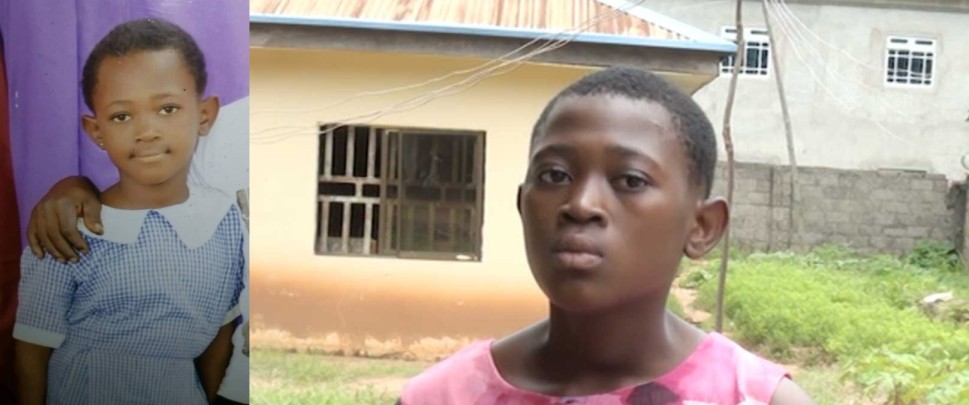
In the heart of Nigeria’s struggle for justice and child protection, one name continues to echo with haunting clarity: Ochanya Ogbanje. Her story is not just a tragedy, it is a national indictment. At just 13 years old, Ochanya died on October 17, 2018, from complications including Vesico-Vaginal Fistula (VVF), reportedly caused by years of sexual abuse at the hands of her guardian, Andrew Ogbuja, and his son, Victor. She was a student at Federal Government Girls College, Gboko, Benue State, a place meant to nurture her dreams, not destroy them.
Seven years later, the hashtag #JusticeForOchanya is trending again. However, this time, it is not just about remembrance. It is about reckoning. It is about demanding that her name not be relegated to a footnote in Nigeria’s long history of failed justice. Ochanya deserves more than memory, she deserves justice.
Ochanya’s ordeal began in the home of her aunt, Felicia Ochiga-Ogbuja, who was married to Andrew Ogbuja, a lecturer at the Benue State Polytechnic. Instead of finding safety and care, Ochanya was allegedly subjected to repeated sexual abuse by both Andrew and his son Victor over several years. The abuse reportedly began when she was just eight years old.
The physical toll of this abuse was devastating. She developed VVF, a condition that causes continuous leakage of urine due to trauma to the vaginal wall, often seen in cases of sexual violence or obstructed childbirth. Her suffering was not just physical; it was emotional, psychological, and spiritual. In addition, it ended in death.
The aftermath of Ochanya’s death saw public protests, media coverage, and widespread condemnation. Nigerians from all walks of life demanded justice. Nevertheless, the legal outcomes have been nothing short of disastrous.
Andrew Ogbuja was acquitted by a state high court in April 2022. Victor Ogbuja, the other accused, remains at large. Felicia Ochiga-Ogbuja, the aunt who failed to protect her, was convicted of negligence, but sentenced to only five months in prison. Five months. For years of silence, complicity, and betrayal.
These outcomes are not just legal failures, they are moral collapses. They reflect a justice system that does not take the protection of children seriously. They send a chilling message: that even in the face of overwhelming public outrage, justice can be denied.
Ochanya’s case is not just about one girl. It is about every child in Nigeria who suffers in silence. It is about the culture of impunity that allows perpetrators of sexual violence to walk free. It is about the systemic rot that prioritizes bureaucracy over humanity.
She was a child, and the system failed her. From the abuse to the courtroom, Ochanya was let down at every turn. The institutions meant to protect her instead enabled her suffering.
The perpetrators have not been held accountable. One accused was acquitted. Another is missing. The guardian who failed her received a sentence that barely registers. This is not justice, it is impunity.
Her case is a symbol of a broader crisis. Ochanya’s story resonates because it reflects the experiences of countless other children in Nigeria. It is a rallying cry for reform, not just remembrance.
Public outrage demands action. Every anniversary of her death reignites calls for justice. Social media platforms are filled with petitions, hashtags, and demands for accountability. Nigerians are tired of watching justice slip away.
Silence is complicity. If the state continues to ignore this case, it sends a message that crimes against children can be committed without consequence. That is unacceptable.
The resurgence of #JusticeForOchanya is not accidental. It is driven by a collective sense of outrage and fatigue. Nigerians are tired of hearing about abuse cases with minimal outcomes. They are tired of watching perpetrators evade justice. They are tired of a system that protects the powerful and punishes the vulnerable.
Social media has become a powerful tool in this fight. Platforms like X (formerly Twitter) are filled with posts, petitions, and hashtags demanding justice. Activists, journalists, and everyday citizens are using their voices to amplify Ochanya’s story. They are refusing to let her name fade into obscurity.
One user wrote: “Winifred is trending … here is why. Walk with me.” That walk is a journey through pain, injustice, and the urgent need for reform.
Justice for Ochanya is not just about righting a wrong; it is about restoring faith in a broken system. If her case is left unresolved: It emboldens perpetrators of sexual violence, it erodes public trust in the judiciary, it signals to survivors that their pain will be ignored and it undermines Nigeria’s global commitments to protect children and combat gender-based violence.
The implications are far-reaching. They affect how Nigeria is perceived internationally. They affect how survivors choose to report abuse. They affect the very fabric of society. So, what must be done? The answer to the foregoing question cannot be farfetched, as Justice for Ochanya requires more than sympathy, it demands systemic change.
Against the backdrop of the foregoing, it is germane to opine that Victor Ogbuja should be arrested and prosecuted. His continued freedom is a stain on the nation’s integrity.
In a similar vein, the case should be reopened, and reviewed in a transparent manner. The public deserves to know why justice was denied, and what can be done to fix it.
In addition, sexual violence trial processes should be reformed while dedicated courts should be established across Nigeria’s geo-political regions to engender faster timelines, and better victim support as they are essential.
Also, compensation and support should be provided to Ochanya’s family. This is as it is not out of place for the state to take responsibility for its failures.
Not only that, there should be resolved will on the part of the government to strengthen and enforce child protection laws as this must never happen again.
Without any iota of exaggeration, the foregoing steps are not just recommendations, they are moral imperatives.
Ochanya deserves more than memory, she deserves justice. Her story is a test of Nigeria’s moral compass. If we fail her again, we fail every child who looks to the law for protection. We fail every survivor who dares to speak out. We fail ourselves.
Justice for Ochanya is justice for Nigeria. Until it is served, the nation remains on trial. Let her name not be a hashtag that trends and fades. Let it be a catalyst for change. Let it be the reason we finally say: enough is enough.