
Africa
When Hunger Becomes a National Emergency: Nigeria’s Growing Food Crisis -By Babashehu Usman
In many ways, the hunger that is haunting Nigeria today is the result of many unaddressed earlier signs — floods, conflict, economic stress, aid shortfalls. But it’s in the response that a turning point might be found. If the nation acts swiftly, with compassion and coordination, the story could shift from one of looming disaster to one of resilience and rebuilding. If not, the consequences will be felt for a generation.

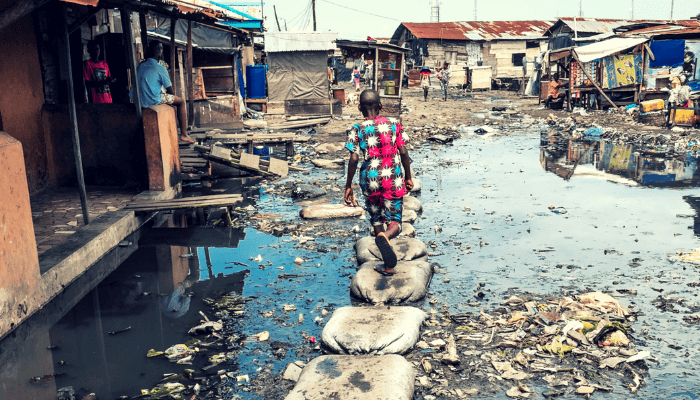
Nigeria, a country blessed with vast agricultural potential and a young, energetic population, now finds itself facing one of its most serious humanitarian challenges: a sweeping hunger crisis gripping millions of its citizens. Recent reports from World Food Programme and other international bodies paint a stark picture — nearly 31 million Nigerians are confronting acute food insecurity, with the risk of millions more sliding into malnutrition and deprivation.
The roots of this crisis are multiple, intertwined, and deep-seated. Conflict in the northeast, persistent displacement, and shrinking humanitarian funding form one part of the story. In regions like Borno State, where armed insurgency and displacement pressures are high, the withdrawal or reduction of aid programs has had a devastating effect. According to WFP, more than 1.3 million people stand to lose access to vital food or nutrition assistance in the coming months.
At the same time, ordinary Nigerians in urban centres are feeling the pinch in very concrete ways: rising food-and-fuel costs, inflation eroding household budgets, and wages that have not kept pace. It’s in the markets of Lagos, Kano and beyond where the crisis hits home: a basket of basic goods becomes unaffordable, and choosing which family member eats becomes a painful decision.
The humanitarian angle is only part of the story. The broader economic picture matters too. When farmers’ fields in flood-prone or conflict-impacted zones lie idle; when supply chains are disrupted by transport, security or infrastructure breakdowns; when livestock is lost or crops fail — the ripple effects extend beyond immediate hunger. They impact livelihoods, rural economies, and ultimately the national food supply.
There is also a governance and policy dimension. The challenge isn’t simply about food being available — it’s about whether it reaches those who need it, whether markets remain stable, whether social safety nets exist and whether government responses are timely and scaled. In Nigeria’s context, aid funding gaps and institutional constraints are complicating the scale-up of relief efforts. As the WFP warns, unless urgent action is taken, the situation could deteriorate even further.
For many families, the crisis has a very human face. Mothers skip meals so their children can eat. Children go to school unfed. Displaced persons in camps or informal settlements wait for food deliveries that may or may not arrive. These are not abstractions — they are everyday realities for millions of Nigerians.
What makes the crisis especially urgent is that the window for prevention is closing. Malnutrition leaves lasting scars: growth stunting, increased vulnerability to diseases, reduced cognitive development in children — and once those damage pathways are set, reversing them is far harder than preventing them. The implications for a country with a large young population are profound.
In response, interventions must be multi-pronged: emergency food aid for the most vulnerable; support to farming communities for production and resilience; fixing supply chains; strengthening social protection systems; and, in the medium term, addressing underlying drivers like conflict, climate change, and infrastructure deficits. The government, donors, civil society and international organisations all have roles to play — the task is urgent.
For ordinary Nigerians, the crisis demands awareness and solidarity. It may mean supporting local food-banks, advocating for better accountability in aid and policy, staying informed and holding stakeholders to account. At this stage, the hunger crisis is also a test of national responsibility: can Nigeria marshal its resources and partnerships to ensure no one is left to starve in a land of plenty?
In many ways, the hunger that is haunting Nigeria today is the result of many unaddressed earlier signs — floods, conflict, economic stress, aid shortfalls. But it’s in the response that a turning point might be found. If the nation acts swiftly, with compassion and coordination, the story could shift from one of looming disaster to one of resilience and rebuilding. If not, the consequences will be felt for a generation.
Babashehu Usman student of mass communication Kashim Ibrahim University ,Maiduguri

























You must be logged in to post a comment Login