Africa
Of Sycophants, Sycophancy and that Tinubu’s Cap -By Prince Charles Dickson Ph.D
Remember our young man at the Dibia’s shrine. He wanted a spell to end his lineage’s poverty. What he got was a mirror. The cap may be bright, but if you wear it without purpose, you’ll look foolish in the sun. The commissioner may sit inside the meeting, cap in place, but if he cannot speak truth or act bold, the result will be the same: suspension of performance, suspension of progress.

It begins with a parable—because for too long, our leadership and governance have lacked the bite of story.
A young man visits a Dibia Afa. He wants to know why he is poor, why he was born to a father of little means, why his lineage is tied to lack. The Dibia asks him: “Drop ego, Afa.” The young man laughs: “But I said I am poor. That is why I came.” The Dibia tells him: “Your father came here thirty years ago and asked the same question. You gave exactly the same answer. So, you are indeed his true son.
As they say: what the snake gives birth to will always carry the same markings.” And then he asks: “If you’re not ready to lose, how do you expect to gain?” The young man shuffles away, confused. He had come for the revelation, not the question. He wanted a magic wand, not a mirror.
This little story points to something bigger: a culture of repeating the same answers, of inherited deficiencies, of listening to echoes instead of counsel. It also points to leadership: those at the top who demand uniformity of appearance, uniformity of voice, and punish dissonance rather than nurture honest reflection.
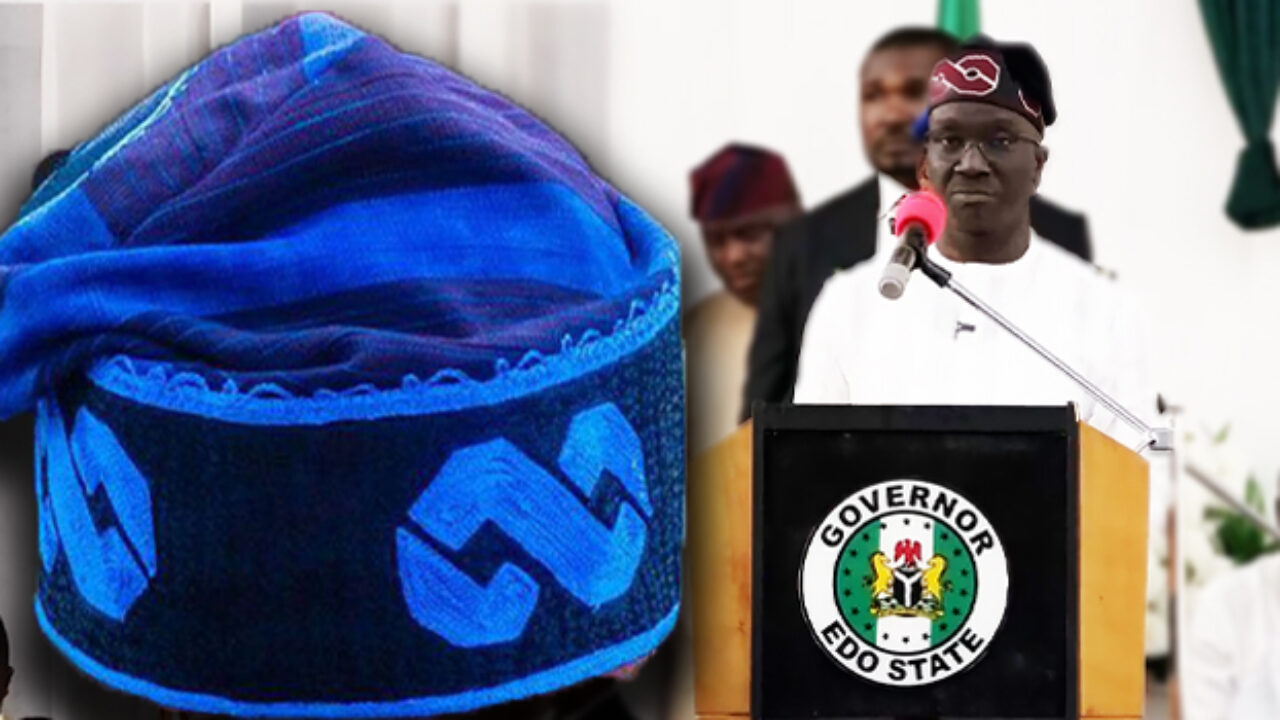
In Bola Ahmed Tinubu’s Nigeria, or at least in parts of it, appearance has become a test. Take the case in Edo State. The All Progressives Congress (APC) chairman there, Jarrett Tenebe, recently declared: “any commissioner who walks into a State Executive Council meeting without wearing the “Asiwaju cap” of President Tinubu will be suspended from the party. “
In plain English: It does not matter your competence, your brief, your merit; what matters is the headgear on your head and your public show of devotion. The locus of loyalty shifts from institution or duty to party spectacle. The cap becomes a totem, wear it, or you’re out.
On the surface, this might seem merely a sartorial diktat, an afro chic for the political class; yet when you scratch below the brim, you find the hand of control, the dull echo of sycophancy in uniform. If commissioners can be suspended for not matching the colour and style of a campaign cap, what does that say about the value of dissent, the space for ethics, the respect for office beyond show?
It is not merely about the cap. It is about the message: “You must conform. You must salute. You must acquiesce.” It reminds us of the Dibia’s telling: the son repeated the father’s complaint because he never went beyond the cap. He could not see the system that made him poor.
Meanwhile, in another corner of our land, the Muhammadu Sanusi II—Emir of Kano and former CBN Governor delivered a blistering critique of the culture that the cap in Edo exemplifies. Holding court at the Oxford Global Think Tank conference in Abuja, he told ministers and presidential aides: “stop being praise-singers; speak truth to power.”
He decried how our leaders “listen only to those who tell them what they want to hear” and warned that those who speak truth are now branded “enemies of the state”.
In simpler terms: the cap-wearers are singing sweet songs; the nation is crying for sound counsel.
The two stories: the cap in Edo and the Emir’s rebuke in Abuja flank a single theme: uniformity enforced, truth marginalised.
We live in a moment where appearance trumps argument, where compliance is rewarded more than challenge, where a cap can signal loyalty more than performance. When a commissioner can be suspended for not wearing a cap, and ministers applaud rather than challenge, we are in danger of mistaking ceremony for substance.
The young man’s story tells us that poverty was inherited not simply by circumstance but by attitude. Likewise, our governance inherits the poverty of counsel when we insist on caps and compliance rather than character and courage.
Imagine: A State Executive Council meeting. The governor sits at the head. All around are commissioners, aides, chiefs. The first thing many do is check the cap. Not the papers. Not the agenda. They salute the totem and hope for favour. Somewhere in the corner sits a commissioner without the cap. He asks a tough question about budget overruns. He is sent out. Suspended.
It is almost farcical. But farce becomes tragedy when the nation pays the bill.
Because this is not just about hats and flattery. It is about the health of our democracy, the quality of our institutions, the honour of public service. When advisers become cheer-leaders and cap-wearers, the leader hears only applause, not warning bells.
Dibia asked: “if you are not ready to lose, how do you expect to gain?” The leader unwilling to hear dissent gains nothing, just stagnation.
A system that demands caps demands subservience. It prioritises persona over purpose. Citizens see the spectacle and wonder: are we being served or entertained? Are our public servants caps or custodians?
It is cultural and systemic. The young man’s story speaks to inherited identity: he got his father’s poverty because he carried his father’s patterns. Likewise, our leadership dynamics inherit the patterns of power: uniformity, showmanship, fealty. We cling to symbols (caps, handshakes, selfies) because they feel tangible; but we lose substance.
Sycophancy is like slow poison. It seeps into decision-making. It quiets the voice of the Dibia when the Dibia has truth to tell. It demands that the boy repeat the father’s answer rather than ask a deeper question.
So here is the appeal to our leaders, party chairmen, commissioners, ministers and aides: Take off the cap. Literally and metaphorically. If you must wear a cap, fine—just make sure the brain under it is active. Want loyalty? Show it by results, not headgear.
Encourage dissenting voices. Ask a second opinion. Don’t suspend a commissioner because his cap doesn’t match, ask him why he raised a concern. Beware the chorus of cheerleaders. If every event begins with your name, your greatness, your wisdom—stop and ask: who is telling me what I need to hear, not what I want to hear?
Listen like you might be wrong. That is how learning begins. That is how poverty of counsel is ended. If you’re not ready to lose your ego, you’ll never gain your nation. Convert appearances into service. The cap is fine as campaign branding, but once you’re in governance, the badge should read “responsibility” not “obedience”.
And to our citizens: do not be fooled by the brim. Don’t applaud the cap more than the content. Ask: did that commissioner with the matching cap deliver? Did the minister who gave thanks even ask why?
Remember our young man at the Dibia’s shrine. He wanted a spell to end his lineage’s poverty. What he got was a mirror. The cap may be bright, but if you wear it without purpose, you’ll look foolish in the sun. The commissioner may sit inside the meeting, cap in place, but if he cannot speak truth or act bold, the result will be the same: suspension of performance, suspension of progress.
And perhaps Nigeria’s greatest poverty is the poverty of counsel—leaders surrounded by yes-men and caps, citizens ruled by uniforms rather than accountability.
So, yes: wear your cap. Smile for the camera. But please—make sure the message under the cap is louder than the symbol above it.
For if you are not ready to lose your ego, how do you expect to gain? And if you are not ready to hear the truth, how do you expect your country to heal?
In the end, let our leaders ask not: “Is my cap correct?” but rather: “Is my conscience clear? Is my service real? Are the people better than before?” Until then, the cap is just fabric and the nation pays the bill.
May those who lead wear the cap of service, not subservience. May those who counsel speak the truth, not the tune. And may Nigeria rise not because we nod and wear symbols—but because we act, challenge, reform, and deliver.
And yes, if you see me without a matching cap at my next event, don’t send for suspension—just bring me truth, not applause. May Nigeria win!
Prince Charles Dickson PhD
Team Lead
The Tattaaunawa Roundtable Initiative (TRICentre)
https://tattaaunawa.org/
Development & Media Practitioner|
Researcher|Policy Analyst|Public Intellect|Teacher
234 803 331 1301, 234 805 715 2301
Alternate Mail: pcdbooks@yahoo.com
Skype ID: princecharlesdickson