
Africa
The Unheard Voices of Maiduguri’s Teachers: Holding the Chalk in the Shadow of Recovery -By Adamu Ali Abdullah
As Alhaji Dan Danladi Dan Azumi noted: “The heart of Borno’s education still beats weakly in the North. We have pupils who have never seen a proper classroom since 2014. Teachers are willing to go, but security and infrastructure must come first.”

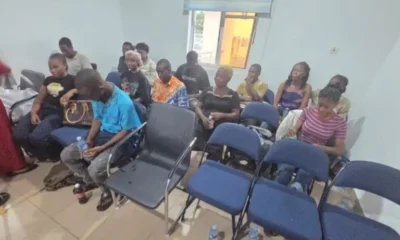
Under a faded canopy in a temporary classroom in Maiduguri, dozens of children sit on creaking benches. Their teachers, gripping pieces of chalk, stand before them as if holding torches in the dark. “We learn,” one teacher says softly, “because tomorrow must be better than yesterday.”
That quiet statement captures the courage of hundreds of teachers across Maiduguri — men and women who have turned damaged classrooms into sanctuaries of hope. Their names seldom make headlines, yet without them, there would be no real recovery in Borno State.
The Boko Haram insurgency, which once silenced the city, also shattered its education system. According to UNICEF, more than 1,400 schools were destroyed or damaged across the Northeast between 2009 and 2018. Many teachers fled, while others were displaced, demoralized, or killed.
But when the violence eased, it was the teachers who returned first — not because it was safe, but because it was necessary. They knew that without education, peace would remain fragile.
Today, schools in Maiduguri have come back to life. Many have been renovated, and in some areas lessons once took place under trees immediately after the insurgency. Yet learning continues, driven by teachers who believe that knowledge is the strongest fortress.
“Some pupils still panic at the sound of thunder,” said one teacher at Mafoni Galtimari Jiddari Primary School. “They think the fighting has returned. So before we teach alphabets, we teach calm.”
According to Alhaji Dan Danladi Dan Azumi, former Head of School Services at the Local Education Authority, Maiduguri Metropolitan Council, the roots of the Boko Haram insurgency can be traced to a confrontation between the group and military personnel.
“The crisis began when some members of Boko Haram refused a military order to wear helmets while riding motorcycles,” he explained. “The soldiers opened fire, killing some of them. In retaliation, Boko Haram struck at Custom Bridge — that was the beginning of the insurgency in Maiduguri.”
From that moment, education became a target. “They started attacking teachers, police officers, clerics — even our local scholars, the Malaman Zaure and Malaman Tsangaya,” he said. “They destroyed everything related to education, even burning certificates. Some of them were educated, with diplomas and degrees, yet they turned against learning itself.”
Alhaji Danladi recalled a tragic incident around May 2013: “That day, three of my children were getting married, and many headmasters attended. One of them, Alhaji Modu, assistant headmaster of Yerwa Central Primary School, left the event with some certificates I had signed for distribution. Sadly, Boko Haram attacked his school that same day, killed him and other teachers, and burnt his car.”
He also recounted the murder of a respected Qur’an teacher, Sheikh Iliyasu Zakariya, at Ali Askari Primary School near the LEA office: “He was teaching Qur’an when the insurgents stormed in and shot him along with other teachers,” he said. “Those who escaped ran to our office, and we hid with them. Later, the police recovered the bodies and took them to the State Specialist Hospital.”
Many other teachers were killed — some even by mistake during military patrols. The headmaster of Bulabulin Diabe Primary School, Mustapha Adam, was shot at Budum Roundabout. Another teacher, Abba, was killed at home, and one called Bura at Gamboru Police Station. “We lost so many teachers in Maiduguri and its surrounding areas,” he said.
He recalled a major attack at Mafoni Secondary School, where Boko Haram killed two female teachers and one male teacher.
“The principal, Ibrahim Judge (popularly known as Daushe), wasn’t in school that day. Students and staff fled through windows and over the walls.”
Schools such as Kulo Gumna, Lamisula, Yerwa Central, and Budum Primary Schools were burned to ashes. Afterward, the government began reconstruction efforts and appealed to teachers to return.
“The youth then formed the Civilian Joint Task Force (CJTF),” Danladi added. “They played a crucial role in restoring security and encouraging students to return to class. Their bravery helped rebuild confidence and gradually brought education back to life in Maiduguri.”
Despite visible recovery, the scars remain deep. Teachers continue to work with limited resources, low pay, and overcrowded classrooms. According to the Universal Basic Education Commission (UBEC), Borno still faces a shortage of more than 5,000 qualified teachers.
“We are rebuilding a generation,” said Halima Mohammed, former volunteer teacher at an IDP camp in Muna. “Even if my salary is small, my purpose is big.”
Faith keeps them going — faith in God, in the power of education, and in their students’ futures. In a city once divided by conflict, teachers have become the quiet architects of peace.
Borno State’s ongoing education recovery programme, which includes rebuilding over 200 schools and retraining teachers, shows progress. But true rebuilding must also come from recognition — honoring the educators who carry the emotional and intellectual weight of recovery.
As one education officer put it, “If you want to heal a society, start with its teachers. They are the first responders of the mind.” Every chalk mark made in Maiduguri today is not just teaching — it is rewriting the city’s future.
While Maiduguri city now breathes a cautious sigh of recovery, the story in Northern Borno remains one of unfinished struggle.
From Kukawa to Guzamala, Abadam, Marte, Mobbar, Nganzai, and Kala-Balge, many schools still lie in ruins — silent, roofless, and overgrown with weeds. In these local government areas, education has yet to regain its footing.
Thousands of children are out of school, and most teachers who once served in those communities now live in Maiduguri or Monguno, unable to return because of lingering insecurity and displacement.
Local government education authorities operate at minimal capacity, and temporary learning centres serve as substitutes for schools that no longer stand.
As Alhaji Dan Danladi Dan Azumi noted: “The heart of Borno’s education still beats weakly in the North. We have pupils who have never seen a proper classroom since 2014. Teachers are willing to go, but security and infrastructure must come first.”
Even as state efforts focus on rebuilding and recruitment, the gap between the centre and the periphery is widening. For every school reopened in Maiduguri, there are three more in Northern Borno that remain ghostly memories of what education used to be.
Until the classrooms of Northern Borno are revived, Borno State’s education cannot truly claim recovery — because a wounded limb cannot be declared healed while it still bleeds.
They may not wear uniforms, but they fight ignorance. They may not hold weapons, but they disarm fear.
As Nigeria debates education reforms and national recovery, it must remember that in the far corners of the Northeast, recovery already has a face — tired but smiling, uncelebrated but unwavering.
For in their daily struggle lies the real story of national resilience — one written not in policy papers, but in chalk dust.
Adamu Ali Abdullah is a 300-level Mass Communication student at Kashim Ibrahim University, Maiduguri.




















You must be logged in to post a comment Login