Africa
Olukoyede’s Challenge, Fasan’s Concerns, and Nigeria’s Reality: A Psychologist’s Take on Corruption -By John Egbeazien Oshodi
You argue that Olukoyede is ignoring the root causes of corruption. But his actions show otherwise. He has called for economic and social policies to address poverty and youth unemployment—two major drivers of corruption. He has sacked, transferred, and disciplined corrupt EFCC officers, acknowledging that corruption also exists within his own agency. He has engaged religious leaders, traditional rulers, and civil society organizations, urging them to stop endorsing corrupt politicians. He has linked corruption to Nigeria’s failing economy, stating that procurement fraud and contract inflation are among the biggest enablers of looting.

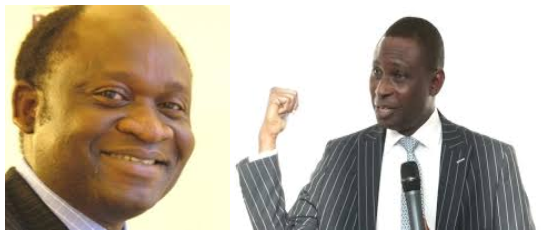
Hello Mr. Olu Fasan,
In the Vanguard Newspaper, published on February 13, 2025, you wrote an article titled “EFCC’s Failure: Olukoyede’s Blame-Shifting is Mere Shadow-Boxing.” Like you, I wish Olukoyede could march into the offices of senators, ministers, and even those within the presidency and arrest them immediately. I bet he fantasizes about that too—but we both know that Nigeria is a place where anti-social personality leaders thrive without shame. However, while your critique is valid in many respects, I believe that to truly understand Olukoyede’s position, we need a deeper psychological and institutional analysis.
A Nation Addicted to Corruption: The Battlefield Olukoyede Faces
Mr. Fasan, you are right to argue that corruption in Nigeria remains entrenched and intractable, but let us ask ourselves: What exactly is corruption in Nigeria? It is not just bribery. It is not just looted funds. It is a fully developed cultural, political, and institutional disease. It is a way of life. Nigeria has developed what I call “Structuralized Corruption Disorder” (SCD)—a condition where corruption is no longer just an individual act but is ingrained into the very fabric of governance, institutions, and society. It is the lawmaker who allocates funds to ghost projects. It is the government contractor who delivers substandard infrastructure to siphon money. It is the judge who delays cases indefinitely because he has been paid off. It is the religious leader who takes donations from corrupt politicians in exchange for silence. It is the civil servant who expects bribes to do the job they are already paid for.
The Subconscious Contradictions of Nigerians on Corruption
Let’s examine the cognitive dissonance of Nigerians when it comes to corruption. Nigerians demand an anti-corruption war, but many defend corrupt politicians who share stolen wealth. They criticize bribery, yet often see it as the only way to get services from public officials. They want justice, but also want their ethnic or religious leaders protected from prosecution. So when Olukoyede says Nigerians condemn corruption but defend corrupt leaders, he is not wrong. He is simply describing the psychological contradiction that fuels Nigeria’s dysfunction.
The Senate Hearing: A Freudian Slip That Exposed the Truth
During his confirmation hearing, Olukoyede made what I call a Freudian slip—a moment where the subconscious truth surfaced before the very people responsible for confirming him. He subtly reminded the senators that many of them have active or lingering cases with the EFCC. The Senate President’s response was swift and defensive: “Don’t use me as an example.” This was not just a joke. It was a subconscious admission of guilt. This moment revealed the deepest truth about corruption in Nigeria:
How do you expect an EFCC chairman to prosecute the very people who confirmed him? Can he truly be independent when the most corrupt individuals are the ones who approved his position? This is a paradox that no EFCC chairman has ever been able to escape.
The Illusion of Absolute Power: Can the EFCC Truly Prosecute the Powerful?
You argue that Olukoyede should go after the powerful. But let’s be honest. Has any EFCC chairman in Nigerian history been able to arrest and convict top government officials while they are in power? The answer is no.
Because the EFCC, despite its legal mandate, does not control the system. It is ultimately a tool within the political structure, rather than above it. A past EFCC chairman tried to go after high-profile figures—he was removed. Another took on powerful interests—he was disgraced and taken down. Even one of the agency’s former leaders was dismissed when they became inconvenient. This pattern reveals a fundamental truth: any EFCC chairman who challenges the wrong people risks being neutralized. The system is designed to resist true accountability, ensuring that corruption remains deeply entrenched at the highest levels.
The Psychological Game of Political Survival in Nigeria
Any EFCC chairman who tries to act too aggressively without the backing of the political establishment will be removed or neutralized. If Olukoyede were to arrest a sitting minister today without approval from above, what would happen? The National Assembly would summon him for questioning. His budget could be slashed. His investigations would be blocked by the judiciary. His political enemies would manufacture corruption allegations against him. This is the institutional trap that limits any EFCC chairman’s ability to act decisively against the powerful. So yes, Mr. Fasan, Olukoyede’s hands are tied—not because he is weak, but because the system is designed to resist accountability.
Addressing the Root Causes of Corruption: More Than Just Arrests
You argue that Olukoyede is ignoring the root causes of corruption. But his actions show otherwise. He has called for economic and social policies to address poverty and youth unemployment—two major drivers of corruption. He has sacked, transferred, and disciplined corrupt EFCC officers, acknowledging that corruption also exists within his own agency. He has engaged religious leaders, traditional rulers, and civil society organizations, urging them to stop endorsing corrupt politicians. He has linked corruption to Nigeria’s failing economy, stating that procurement fraud and contract inflation are among the biggest enablers of looting.
Is Nigeria Ready for True Reform?
Does this sound like a man who is only shadowboxing? Or is he someone trying to fight an impossible battle within an entrenched system? Olukoyede is not a saint, and he is not an angel. But let us analyze the psychology of power in Nigeria. Every public official operates within a system that forces them to “play the game” in order to survive. If you push too hard, you are removed. If you do nothing, you are criticized. If you act against one political faction, the other faction sees you as biased. This is why even the best-intentioned officials become compromised or limited.
Conclusion: The Bigger Question Is Not About Olukoyede, But About Nigeria
Mr. Fasan, your critique of Olukoyede is strong, but I ask: Would any EFCC chairman—no matter how competent, fearless, or determined—be able to dismantle corruption under Nigeria’s current system? The reality we must confront is that corruption in Nigeria is not merely an individual act; it is a self-replicating system, a deeply entrenched ecosystem that has woven itself into the very structure of governance, the judiciary, the economy, and even societal norms. It is not about one man. It is about a country where corruption is so institutionalized that it has become an expectation rather than an exception.
We speak of anti-corruption efforts as if the primary challenge is finding the right person to lead them. But history has shown that no matter who takes the helm, the system resists change with brutal efficiency. The real enemy is not just the corrupt politicians whose faces we recognize—it is the faceless machinery that enables them, protects them, and recycles them into new positions of power. The same people investigated today are often rehabilitated tomorrow, rewarded with new offices, recycled into political appointments, and celebrated within their ethnic or religious enclaves. This is not the failure of an individual. It is the failure of a nation’s conscience.
How can the EFCC truly fight corruption when its lifeline—its budget, its leadership approval, its operational independence—is controlled by the very individuals it is meant to investigate? How do you combat a disease when the medicine itself is poisoned? Until Nigeria undergoes a fundamental political, legal, and structural transformation—one that removes the immunity of the powerful, dismantles patronage networks, and builds an independent, unshackled justice system—the EFCC will remain a caged tiger—majestic in name, formidable in appearance, but unable to attack where it truly matters.
As a psychologist, I find myself reflecting deeply on the psychological conditioning of the Nigerian person. I wish I could discover some type of therapy or locate some form of medicine to treat this conditioned acceptance of corruption, dishonesty, and impunity. Not all Nigerians are bad, but the culture, the environment, and the deeply planted seeds within Nigeria’s societal fabric have shaped a reality where corruption is no longer just an action—it is an expectation, a coping mechanism, and, in many cases, a survival strategy. How do you heal a nation where the disease has become its way of life?
And that, Mr. Fasan, is the real issue. Not Olukoyede, not the face of any single EFCC chairman, but a nation locked in a cycle where corruption is both the disease and the survival mechanism. Until that cycle is broken, no anti-corruption leader, no matter how willing, can truly prevail.
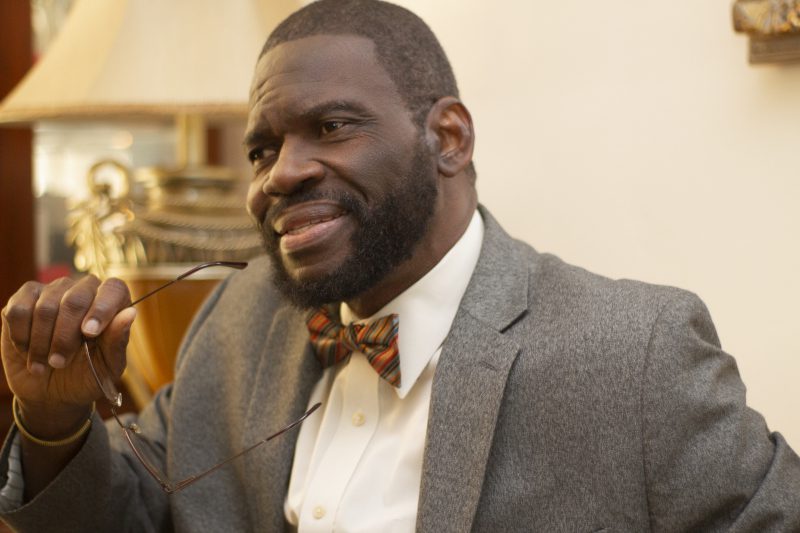
John Egbeazien Oshodi
Oshodi Open Door, also known as Oshodi Open Door Public Training (OOPDT, pronounced opidt), is a public awareness initiative promoting transparency, accountability, and integrity in Africa through educational articles and resources at jos5930458@aol.com, and offers specialized Timely Response Solutions (TRS) training at minimal or no cost.
John Egbeazien Oshodi is an American psychologist, educator, and author. Born in Uromi, Edo State, Nigeria, he is the son of a 37-year veteran of the Nigeria Police Force. Professor Oshodi is an expert in cross-cultural psychology, forensic/clinical psychology, police and prison science, and social justice.
He has made significant contributions to forensic psychology, introducing it to Nigeria in 2011 through the National Universities Commission (NUC) and Nasarawa State University. Professor Oshodi has taught at several institutions, including Florida Memorial University, Florida International University, and Nova Southeastern University.
Currently, he serves as a government consultant for forensic-clinical psychological services in the USA and practices as a clinical and forensic psychologist. He also holds virtual faculty roles at Walden University and other institutions. Professor Oshodi has authored numerous publications and founded the Psychoafricalysis theory in psychology.