Africa
Probing Ibas Is Not a Fool’s Errand, It’s Democracy At Work -By Isaac Asabor
Far from being a fool’s errand, probing Ibas is democracy at its finest, flexing its muscle, affirming its essence, and putting accountability where it belongs: at the heart of governance. To dismiss it is to trivialize the very ethos of democracy, which thrives on scrutiny, transparency, and responsibility. At the end of the day, probing leaders is not an act of malice but a necessary ritual of democracy, a reminder that power is never above the people but always answerable to them.

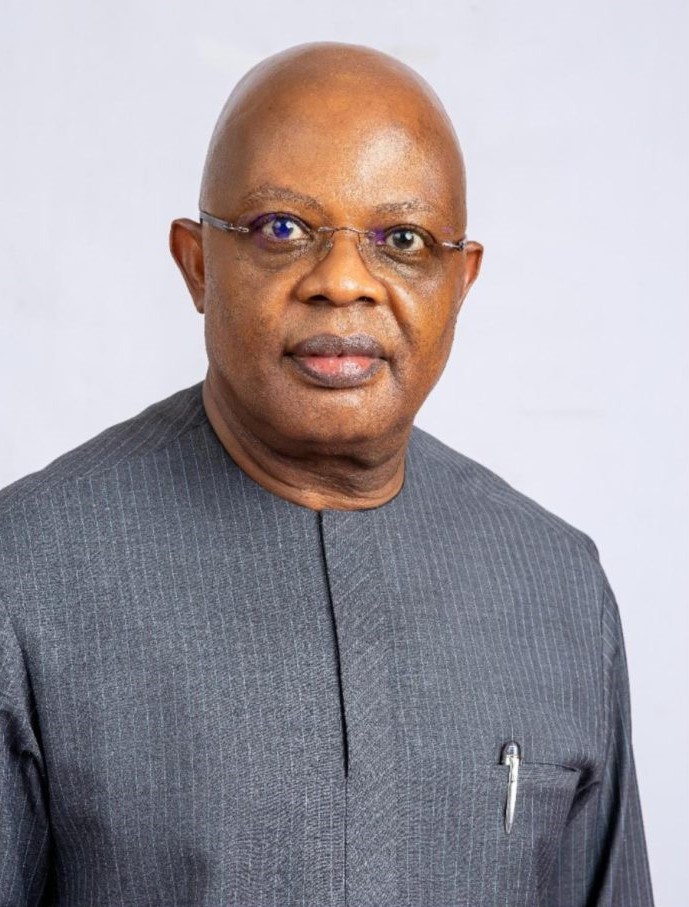
When a public officer dismisses calls for accountability as “a fool’s errand,” it is not just flippant; it is insulting to the very people in whose name governance is carried out. That was the response of Vice Admiral Ibok-Ete Ibas (rtd), who only last week bowed out as Rivers State Administrator, following the lifting of emergency rule by President Bola Ahmed Tinubu. Rather than treat the probe of his six-month tenure with the seriousness it deserves, Ibas chose mockery, arrogantly dismissing the Rivers State House of Assembly’s decision as a fruitless venture.
Let us call things by their right names: such a remark is a direct assault on democracy. Accountability is not a favour granted by those in power. It is a duty they owe the people. Dismissing oversight as foolishness smacks of arrogance and a disturbing sense of impunity, one that has long been the bane of Nigeria’s political and administrative culture.
According to figures from the Federation Account Allocation Committee (FAAC) and the National Bureau of Statistics, the Rivers State administration under Ibas received more than ₦254 billion between March and August 2025. That is an astronomical sum for just half a year of governance. To put it in perspective, that amount is larger than the annual budgets of some entire states. It is enough to rehabilitate decaying infrastructure, overhaul health and education systems, and stimulate local economies.
Yet, instead of welcoming the opportunity to demonstrate prudence and transparency, Ibas has chosen to trivialize the probe. Through his media aide, Mr. Hector Igbikiowubo, he argued that because he was appointed by the President and supervised by the National Assembly, probing him was akin to probing Tinubu and the legislature. This reasoning is, at best, lazy, and at worst, dangerous.
To interrogate his argument, which is no doubt the fallacy of “I-Was-Appointed-by-the-President”, it is germane to opine that Ibas’ primary line of defence, that the Rivers Assembly cannot probe him because they did not appoint him, does not hold water. Democracy does not operate on the logic of personal loyalty but on institutional accountability. Whether he was appointed by the President or by a village council, the fact remains that he exercised executive powers in Rivers State, managed state resources, and signed off on expenditures that directly affect the people of that state.
The ₦254 billion that entered Rivers coffers was not Tinubu’s personal largesse. It was public money, belonging to Rivers people, generated from oil revenues and shared through the federal allocation process. By law, the Rivers State House of Assembly has a responsibility to scrutinize how funds accruing to the state were spent. The source of Ibas’ appointment does not shield him from legislative oversight.
If his argument were accepted, then every appointee of the President across the federation could claim immunity from state-level checks. That would be the death of federalism and the triumph of authoritarianism. Nigeria’s democracy is already fragile; we cannot allow such warped logic to take root.
At this juncture, it is expedient to enlighten Ibas and his likes in politics that oversight is not harassment. In fact, it is an outright misleading claim that oversight by the National Assembly renders state oversight unnecessary. This is simply false. Both state and federal legislatures have concurrent powers to scrutinize public spending within their jurisdictions. Oversight is not a one-stop shop; it is multi-layered for a reason.
At the federal level, lawmakers are concerned with broad compliance and national interest. At the state level, however, legislators are closer to the people and better positioned to ask detailed, localized questions: Did the administration fix Port Harcourt’s crumbling roads? Were teachers and healthcare workers paid promptly? Were contracts inflated or awarded to cronies? These are issues that federal lawmakers, by distance and scope, may not pursue with the same depth. That is why state assemblies exist.
To describe such a legitimate process as a “fool’s errand” is, in fact, an insult to the people of Rivers State, who elected their representatives to serve as watchdogs.
Ibas’ dismissive posture reflects a wider Nigerian malaise: the culture of impunity. Too often, those who occupy public office see accountability as persecution. Instead of embracing transparency, they hide behind technicalities, political godfathers, or institutional ambiguities.
This culture has crippled Nigeria for decades. Billions disappear annually into thin air, while public officers feign innocence. Probes are waved aside as political witch-hunts. Reports are ignored. Meanwhile, ordinary Nigerians pay the price in poor roads, dilapidated schools, overstretched hospitals, and widespread unemployment.
The truth is that if probes had been consistently pursued and enforced over the years, Nigeria would not be swimming in corruption scandals today. Accountability deters abuse. When leaders know they will be asked to give account, they think twice before squandering public funds. That is why dismissing probes as foolishness is not only reckless but also subversive.
For Rivers State, the stakes could not be higher. The oil-rich state generates massive revenues, yet it continues to struggle with deep-rooted poverty, youth unemployment, environmental degradation, and insecurity. If over ₦254 billion entered the state’s purse in just six months, Rivers people deserve to know: How much went into infrastructure? How much was spent on education and healthcare? How were contracts awarded, and to whom? Were procurement laws followed? And mostly, were there expenditures that benefitted only a few at the expense of the majority?
These are not idle questions. They are at the heart of whether governance during the emergency period served the people or merely serviced vested interests.
Be that as it may, Ibas should be told that no one is above scrutiny, and that the phrase, “Fool’s errand” is not only insulting, but implies that even if he is found wanting, nothing will happen. It is no doubt synonymous with the saying, “You can go to court”. This is as a fool’s errand simply means a task that is pointless, futile, or almost certain to fail, often involving a waste of time and effort. It can also refer to a practical joke where a person is sent on a nonsensical or impossible mission by a more experienced member of a group.
The suggestion that probing Ibas is equivalent to probing the President or the National Assembly is a red herring. Even the President can be probed. That is why there are institutions like the National Assembly, the Auditor-General’s Office, and anti-corruption agencies. No democracy thrives where individuals place themselves above scrutiny.
Public officers are custodians, not owners, of power. They hold office in trust for the people. That trust demands accountability. To shield Ibas from a probe simply because he was “appointed by Tinubu” is to elevate loyalty over responsibility and personality over institution, a recipe for dictatorship.
This probe is bigger than Ibas. It is about whether Nigerian institutions are ready to assert themselves in the face of executive arrogance. If the Rivers Assembly succumbs to pressure and abandons its investigation, it will set a dangerous precedent: that appointees of the President, no matter how much they control, are untouchable at the state level.
On the other hand, if the Assembly presses forward, demanding documents, calling witnesses, scrutinizing expenditures, it will send a strong signal that Rivers State is not a playground for unaccountable governance. It will strengthen democracy by affirming that public money is sacrosanct, and that those who manage it must answer to the people.
In the final analysis, Vice Admiral Ibok-Ete Ibas’ dismissive remark betrays a mindset resistant to accountability. But accountability is the very lifeblood of democracy. Probes are not witch-hunts; they are instruments of transparency. They reassure the public, deter future abuse, and reinforce institutional integrity.
If Ibas is confident in the prudence of his administration, he should embrace the probe, defend his record, and allow the facts to vindicate him. To mock the process as a “fool’s errand” is to insult the people of Rivers State and to trivialize the sacred duty of stewardship.
No probe of public office can ever be foolish. What is foolish is to imagine that one can exercise power without responsibility, spend billions without scrutiny, and walk away without questions. Rivers people deserve answers, and their lawmakers must insist on nothing less.
Far from being a fool’s errand, probing Ibas is democracy at its finest, flexing its muscle, affirming its essence, and putting accountability where it belongs: at the heart of governance. To dismiss it is to trivialize the very ethos of democracy, which thrives on scrutiny, transparency, and responsibility. At the end of the day, probing leaders is not an act of malice but a necessary ritual of democracy, a reminder that power is never above the people but always answerable to them.