Connect with us

Africa

Reforms on Paper, Hardship on the Streets: The Reality of Nigeria’s Economy -By Jiret manu

But resilience should not be mistaken for comfort. The hardship is real, and it is deep. Until economic reforms bring relief to the streets and food to the tables of ordinary Nigerians, the nation’s recovery will remain nothing more than words on paper.

Published

on

Hardship-poor-poverty-insecurity-woman

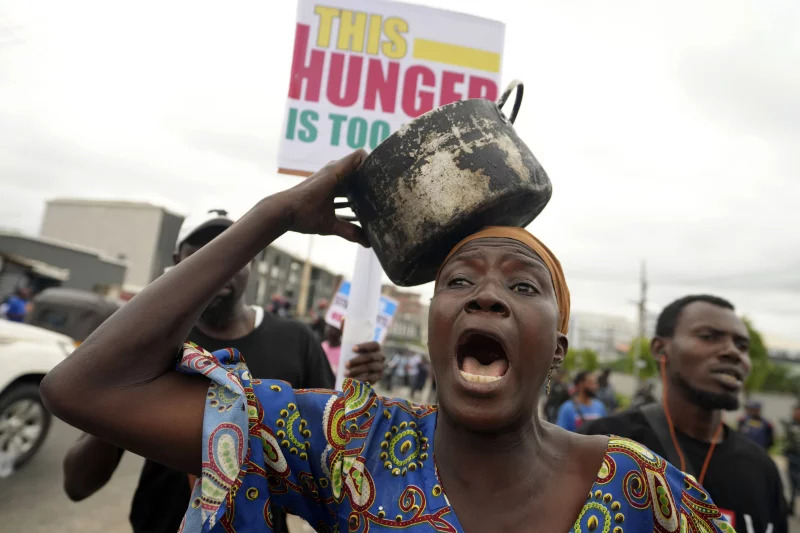
Every morning, Nigerians wake up to promises of reform. Every evening, they return home to empty kitchens and heavy hearts. While government policies speak of economic recovery, the streets tell a different story  one of hunger, exhaustion, and silent tears.

Across the country, food has become a luxury. The prices of rice, beans, garri, and cooking oil rise almost weekly, while incomes remain frozen. Transport fares drain salaries before workers reach home. Parents now measure meals, not by hunger, but by how long the food can last.

In Kashere, Gombe State, the pain wears a human face. The market that once buzzed with laughter and bargaining now echoes with sighs. Buyers move slowly, clutching small amounts of cash, afraid it may not be enough. Gabriel Stephanie, a small trader, sits behind her goods from morning till evening, hoping someone will buy. People ask for the price and just stand there,she says, fighting back tears. Some even apologize before walking away. At night, I ask myself how I will feed my children.

Fuel hikes and new taxes have tightened the noose around already struggling families. Transport costs push food prices higher, while workers take home less than ever. Policies meant to fix the economy now feel like punishment to those who did not break it.

For young people, the future feels stolen. Graduates roam the streets searching for work that does not exist. Dreams are quietly buried as survival takes their place. In Kashere, many youths now speak of leaving the country, not because they want to, but because staying feels like slow suffocation.

Advertisement

Yet, despite everything, Nigerians endure. Mothers skip meals so their children can eat. Neighbors share what little they have. Traders like Gabriel return to the market each day, clinging to hope even when hope feels foolish.

But resilience should not be mistaken for comfort. The hardship is real, and it is deep. Until economic reforms bring relief to the streets and food to the tables of ordinary Nigerians, the nation’s recovery will remain nothing more than words on paper.


Continue Reading
Advertisement
Click to comment

Leave a Reply

Your email address will not be published. Required fields are marked *

Trending Contents

Topical Issues

FUBARA AND WIKE - AMAEWHULE FUBARA AND WIKE - AMAEWHULE
Politics11 hours ago

It Is High Time Wike And His Acolytes Allowed Fubara To Drink Water And Drop The Cup -By Isaac Asabor

The choice before Rivers political actors is clear. They can respect the mandate freely given by the people; allow the...

quality-nigerian-flag-for-sale-in-lagos quality-nigerian-flag-for-sale-in-lagos
Africa12 hours ago

Nigeria’s Year of Dabush Kabash -By Prince Charles Dickson Ph.D.

While politicians posture, Nigerians are trying to understand a new tax regime, rising costs, shrinking incomes, and policy explanations that...

Africa22 hours ago

Singapore’s Leaders Built An Economy; Nigeria’s Keep Building Excuses -By Isaac Asabor

Until Nigerian leaders stop building excuses and start building institutions, the gap between both countries will remain. Singapore’s rise is...

Tinubu and Wike Tinubu and Wike
Africa23 hours ago

Nyesom Wike and falling rafters of Rivers -By Festus Adedayo

Nigerian politics has produced a number of queer politicians and their absurd politics. One was Chief S. L. Akintola, the...

Wike Wike
Africa23 hours ago

Campaigns Without Elections: How Nigeria’s Politicians Are Breaking The Law In Plain Sight -By Isaac Asabor

Nigeria cannot afford a perpetual campaign cycle. The country is grappling with economic hardship, insecurity, and institutional fatigue. This is...

Abba Dukawa Abba Dukawa
Africa1 day ago

Reciprocity in Conflict: How Covert Attacks Provoke Resistance -By Abba Dukawa

Governor Abba Kabir belongs to every Kanawa and to no one – he's the people's governor, above political affiliation. One...

JAMB and UTME JAMB and UTME
Forgotten Dairies1 day ago

The Role of Technology in Nigeria’s Education System -By Alheri Una

To fully maximize technology in education, government investment is crucial. Public-private partnerships can help provide internet access, digital devices, and...

Egbetokun Egbetokun
Africa1 day ago

Setting The Record Straight On The So-Called “IGP’s Boys” Narrative -By Danjuma Lamido

Nigeria deserves a Police Force that is firm, fair, and accountable, and a media ecosystem that reports responsibly. We must...

Russian-Indian Business Dialogue, December 2025 Russian-Indian Business Dialogue, December 2025
Forgotten Dairies1 day ago

Russia–India Dialogue Provides Platform for Strengthening Bilateral Entrepreneurship -By Kestér Kenn Klomegâh

Participants noted the development of Russia–India cooperation and implementation of joint business projects will continue at major international platforms, including...

David Sydney David Sydney
Africa1 day ago

The Importance of Proper Legal Documentation in Business -By David Sydney

Where a business relationship is undocumented or poorly documented, even a legitimate claim may fail for lack of proof. Oral...