National Issues
Reviving Kano’s Textile Industry: A Call to Action for Federal and State Governments, by Abdulrahman Liman Muhammad

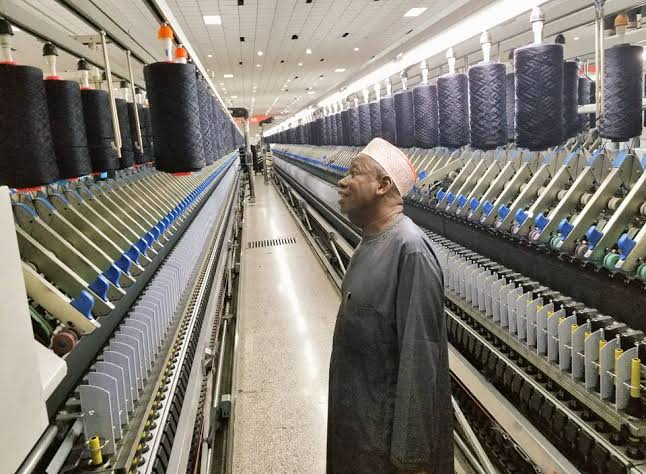
The once-vibrant textile industry of Kano, a cornerstone of Nigeria’s economic history, now sits in near ruins, a shadow of its former self. Once employing hundreds of thousands of people and contributing significantly to the national economy, the sector now struggles for survival. For many in Kano, the textile industry was not just a source of livelihood but a symbol of the city’s prominence in Africa’s industrial landscape. However, the decline of this vital industry has left many jobless and the economy of Kano, and by extension Nigeria, weakened. It’s time for the federal and Kano state governments to take decisive action.
At its height, Kano’s textile industry was a major player in the Nigerian economy, producing high-quality fabrics for local consumption and export. The iconic companies that once dominated the city’s skyline—names like Bagauda Textiles and Kano Textile Mill—stood as emblems of local enterprise and economic success. However, due to neglect, lack of modernization, and poor government policies, these industries have slowly declined, leaving a trail of unemployment and poverty in their wake.
A Rich History Wasted
Kano’s textile industry has roots dating back to the pre-colonial era when it was a hub of trans-Saharan trade. As the center of commerce for the northern region, its textiles were highly sought after across Africa and beyond. The introduction of modern textile mills in the 1950s and 60s only bolstered Kano’s standing, making it a key player in the Nigerian economy.
By the 1980s, Kano’s textile mills were thriving, employing over 300,000 workers and contributing massively to Nigeria’s GDP. Today, however, only a handful of these mills remain operational, and the number of employees has dwindled to less than 30,000. The collapse of the industry has resulted in an economic downturn for Kano, increased poverty levels, and a growing number of unemployed youths.
Challenges Plaguing the Sector
The decline of Kano’s textile industry can be attributed to several factors, including a lack of investment in infrastructure, outdated equipment, and inconsistent government policies. Power supply remains a significant challenge, with factories having to rely heavily on costly diesel generators due to the unreliable national grid. This has made production expensive, diminishing the competitiveness of locally produced textiles against cheaper imports from China and other Asian countries.
Another major issue is the influx of smuggled and counterfeit textiles into the Nigerian market. Despite bans and restrictions, smugglers have found ways to flood the market with substandard products, undercutting local manufacturers and forcing many to close their doors. Additionally, high import duties on raw materials have crippled the sector’s ability to source essential inputs, further driving up the cost of production.
The Role of Government
While the federal government has made some attempts to revive the textile sector—such as introducing policies to encourage local production and banning textile imports—these efforts have largely fallen short due to poor implementation and corruption. The Central Bank of Nigeria’s (CBN) Cotton, Textile, and Garment (CTG) intervention fund, designed to boost the industry, has had limited impact due to mismanagement and the failure of many textile mills to access these funds.
Moreover, the Kano state government has not done enough to protect the industry. Lack of local government incentives, poor infrastructure, and a failure to promote Kano as a hub for textile production have contributed to the industry’s collapse. It is clear that both federal and state governments need to work together to address these systemic challenges.
A Path to Recovery
Reviving the textile industry in Kano will require a multi-faceted approach. First, both federal and state governments must prioritize investment in infrastructure, particularly in power supply. The introduction of dedicated industrial power plants or special economic zones with reliable electricity would significantly reduce the cost of production for textile companies.
Second, the government must enforce stricter measures to curb smuggling and protect local manufacturers. Strengthening border security and imposing higher penalties for smuggling would help level the playing field for local industries. Additionally, reducing import duties on essential raw materials would lower production costs and increase the competitiveness of local textiles.
Furthermore, the government should consider providing tax incentives and subsidies to encourage investment in modern textile machinery. This would help mills upgrade their equipment and become more efficient, making them better able to compete in the global market.
Boosting Cotton Production
The textile industry relies heavily on the availability of high-quality cotton, and this is another area where government intervention is crucial. Nigeria has the potential to become one of the world’s largest cotton producers, but poor farming techniques and lack of investment have limited the sector’s growth. The federal government, in collaboration with Kano state, should invest in modernizing cotton farming by providing farmers with better seeds, fertilizers, and irrigation systems.
Increased cotton production would not only benefit the textile industry but also create jobs in agriculture and related sectors. By supporting the entire value chain—from cotton farming to fabric production—the government can ensure that the benefits of a revived textile industry are felt across multiple sectors.
Skills Development and Job Creation
Reviving the textile industry also presents an opportunity to address the high unemployment rates in Kano, particularly among the youth. The government should invest in vocational training programs to equip young people with the skills needed to work in the textile sector. By creating a skilled workforce, Kano’s textile industry can attract foreign and local investors, generating jobs and boosting the economy.
Additionally, establishing partnerships with international organizations and textile companies could bring in much-needed expertise and technology to modernize the industry. With the right policies and support, Kano could once again become a global player in textile production.
Sustainable Practices
In the 21st century, the global textile industry is increasingly moving towards sustainability. Kano has the potential to become a leader in this area by adopting environmentally friendly practices such as water recycling, reducing chemical waste, and using organic cotton. By positioning itself as a sustainable textile producer, Kano can tap into new markets that prioritize eco-friendly products, giving the industry a competitive edge.
A Shared Responsibility
The textile industry’s revival is not only an economic imperative but also a social one. For the people of Kano, the industry represents hope for a better future, one where jobs are plentiful, poverty is reduced, and the city regains its former glory. However, this vision can only be realized if both the federal and Kano state governments take swift and decisive action.
The path to recovery may be long and challenging, but with the right policies, investments, and commitment, Kano’s textile industry can rise again. It is time for the government to listen to the cries of its people and make the necessary interventions to breathe new life into one of Nigeria’s most important industries. The future of Kano, and indeed Nigeria’s industrial sector, depends on it.
Abdulrahman Liman Muhammad a 300 level student from Mass Communication Department Borno State University, Maiduguri Borno State.