Africa
Schoolgirls in Peril, A Nation in Agony: Tinubu’s Priorities Lie Not in Security But in 2027 Power Play -By Jeff Okoroafor
The world watched after Chibok. It is watching again now. The question is whether Nigeria has a leader who is watching too, or if his gaze is fixed solely on the political chessboard of 2027, while the nation around him burns. The rescue of the Kebbi schoolgirls is an urgent imperative, but the rescue of Nigeria from a failing state requires a leadership that finally, and fully, accepts its “solemn responsibility.” That leadership is nowhere to be found.


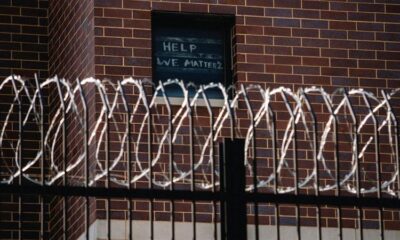
Another school. Another pre-dawn attack. Another cohort of terrified children dragged into the wilderness by gunmen. The news from Government Girls Secondary School, Maga, in Kebbi State, is a grim ritual Nigeria knows too well. Twenty-five girls are gone; a vice-principal, Hassan Makuku, is dead. And from the corridors of power in Abuja, the response is a familiar, tired script: condemnation, directives, and empty assurances.
President Bola Tinubu, through his information minister, has “reiterated that protecting every Nigerian, especially schoolchildren, remains a solemn responsibility of the State.” This statement, meant to project control, is instead a damning indictment of his administration. For it is a responsibility his government has utterly and catastrophically failed to uphold.
The Kebbi abduction is not a security lapse; it is the logical conclusion of a presidency that has prioritized political survival over national survival. While terrorists run rampant, President Tinubu’s primary focus appears to be the consolidation of a one-party state, ensuring a smooth re-election in 2027 by co-opting opposition figures, rather than confronting the existential threat that is consuming the nation.
The Ghost of Chibok and the Corpse of the Safe Schools Initiative
The echoes of Chibok are deafening. It has been a decade since the world first heard the hashtag #BringBackOurGirls. The international outrage that followed in 2014 spurred the creation of the “Safe Schools Initiative,” a multi-million-dollar programme designed to fortify schools in vulnerable regions. It was a promise etched in the tears of grieving parents.
That promise is now a corpse, rotting in plain sight. The initiative, plagued by corruption and bureaucratic neglect, was never fully or effectively implemented. Successive administrations, including Muhammadu Buhari’s and now Tinubu’s, have treated it as a public relations exercise rather than a critical national project. The result is schools like the one in Maga, left as soft, undefended targets, their students mere commodities for terrorists to harvest at will. The blood of Vice Principal Makuku is on the hands of a political class that has consistently failed to convert policy into protection.
The Anatomy of a Collapsing Security Architecture
To view Kebbi in isolation is to misunderstand the scale of the collapse. Nigeria is besieged on all fronts, and the security situation has markedly deteriorated under President Tinubu.
The Northwest & Northcentral: What was once labeled as “banditry” has evolved into a full-blown insurgency. Terrorist factions, often mistakenly called bandits, control vast swathes of territory, imposing taxes, and operating with impunity. The attack in Kebbi, a state once considered relatively safe, shows the metastatic spread of this violence.
The Northeast: The recent abduction and murder of Brigadier General Musa Uba by ISWAP in Borno State is a seismic event. A senior army officer, who was leading his men and members of the Civilian Joint Task Force (CJTF) when the insurgents ambushed them along the Damboa-Biu axis, killing four operatives—two soldiers and two CJTF officials. It is a sophisticated intelligence operation that points to one chilling conclusion: the terrorists have deeply embedded sympathizers and informants within the security apparatus and society. They are not just in the bush; they are among us, enabled by a corrupt system that leaks information like a sieve.
The Southeast: Sit-at-home orders by separatist groups grind life to a halt, enforced by violence and intimidation.
The South-South: Oil theft on an industrial scale continues to bleed the nation dry, often with alleged collusion from powerful political and military figures.
The Tinubu Doctrine: Politics First, Security Second
In the face of this multi-headed hydra, what has been the Tinubu administration’s defining security strategy? The answer appears to be a relentless focus on the 2027 election.
While schools are being attacked and generals are being murdered, President Tinubu and his party have been engaged in a cynical and aggressive project of political consolidation. The recent high-profile defection of the entire leadership of the opposition Peoples Democratic Party (PDP) in the House of Representatives to the ruling All Progressives Congress (APC) is a case in point.
The President’s energy is not consumed by chairing emergency security meetings or overhauling a failing strategy. It is invested in ensuring that every potential rival is absorbed into the APC, creating a bloated, one-party monolith designed to guarantee a “smooth sail” in 2027. The message is clear: defeating political opponents takes precedence over defeating terrorists. The “recalibrating” of security capabilities, as mentioned by the minister, is a hollow phrase when the commander-in-chief’s political calendar seems to be the primary battle plan.
This is not governance; it is a grand bargain for power, negotiated with the currency of national security. Every resource, every political favour, every moment of attention spent on this project is a resource, favour, and moment stolen from the front lines where Nigerians are dying.
Conclusion: A Nation Held Hostage
The 25 girls from Maga are more than victims; they are symbols of a nation held hostage twice over. First, by the terrorists who wield the guns, and second, by a political leadership that lacks the will, the focus, and the moral courage to save them.
President Tinubu’s directives to security agencies are meaningless if the underlying architecture is compromised by corruption, poor intelligence, and a lack of political will. His assurances are empty when his actions reveal a priority for the ballot box over the safety of the citizenry.
The world watched after Chibok. It is watching again now. The question is whether Nigeria has a leader who is watching too, or if his gaze is fixed solely on the political chessboard of 2027, while the nation around him burns. The rescue of the Kebbi schoolgirls is an urgent imperative, but the rescue of Nigeria from a failing state requires a leadership that finally, and fully, accepts its “solemn responsibility.” That leadership is nowhere to be found.
Jeff Okoroafor is a social accountability advocate and a political commentator focused on governance, accountability, and social justice in West Africa.