Africa
Secularism and Interfaith Harmony in South Asia: Report from Singapore, by Leo Igwe

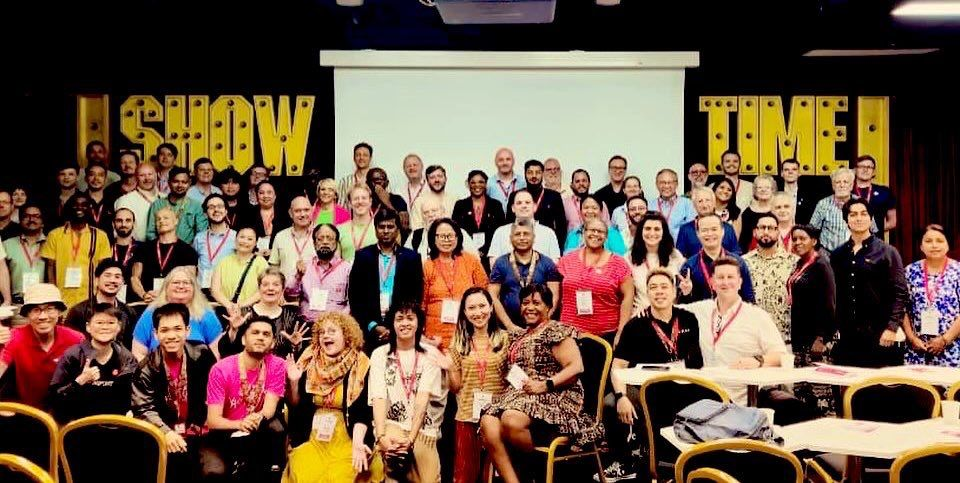
As Pope Francis landed in Indonesia for a 12-day visit to four countries in Southeast Asia and the South Pacific, Humanists from different parts of the world were leaving the region after a historic General Assembly of Humanists International, the umbrella group of humanists, atheists, and agnostics worldwide. The event took place in Singapore from August 30 to September 1, 2024. The humanist meeting and pope’s visit focused on interfaith harmony, one from a secular and the other from a religious perspective.
I attended the humanist event in Singapore. It was my second visit to South Asia. My first visit was in 1999 when I participated in the World Humanist Congress in India. I looked forward to returning to the region for another humanist event. The delay in the issuance of visas by the embassy of Singapore almost marred the trip. I got my visa approved and my flight booked less than a week before my travel. Something is wrong with the Singaporean visa policy and process in Nigeria. And it has to be fixed. My colleague’s visa application was never approved.
I arrived in Singapore on August 29 after a 17-hour flight with a short transit in Doha, feeling tired, and overwhelmed but also excited. It was my first visit to Singapore, a country, that I have heard about so much. In less than 24 hours, it was obvious to me that it was a worthwhile trip. I was greatly pleased by what I saw, and how things worked. I was happy that Singapore had a humanist society that was robust enough to organize a General Assembly. Kudos to the organisers.
The second day I joined a tour that focused on harmony in diversity. We visited buildings, streets, and places that told stories of how Singapore had managed to maintain harmony despite its diverse racial, ethnic, and religious heritage. I was surprised to know that about 20 percent of the population identified as having no religion. Some friends from the region told us not to interpret the no-religion category the same way it is done in the West. Muslims who felt they were not fulfilling their religious obligations could identify as having no religion. Whatever the case, that no religion category offered some hope for freedom and humanity.
An attendee from Malaysia noted something interesting during the tour. He stated that, if by any chance a public presentation was made in Malaysia indicating that about 20 percent of the population identified as having no religion, some riot would break out. Thank goodness, it was in Singapore!
On the second day, there was a conference on secularism and interfaith harmony. Humanists, some ‘liberal’ Muslims, and other stakeholders in interfaith relations discussed the challenge of forging interfaith harmony in Singapore. It was encouraging to hear how some brave individuals were pushing boundaries and navigating risky religious terrain in the country that seemed committed to being a shining example of religious tolerance and interfaith harmony in the region. There is still a lot of work to be done in furtherance of freedom of religion or belief and in combating extreme religious ideas. I heard about the country’s religious rehabilitation project and was concerned. I wondered about its impact on religious and belief freedoms.
From all I witnessed at this event, there is hope for humanity in Singapore. The country could one day become a regional hub for humanism and freethought. There is a bright future for secularism in South Asia/Pacific. The international humanist movement should help local humanists realize this future. In a region where some countries regard atheists as terrorists, and people who renounce their religion, Islam in particular, risk being attacked, killed, or imprisoned, humanism could become a force for good, and Singapore a symbol of hope and progress.
Leo Igwe is a board member of Humanists International, UK