
Opinion
AfCFTA and the Role of FinTech and MSMEs: A Pathway to Africa’s Economic Transformation, by John Owen E. Adimike

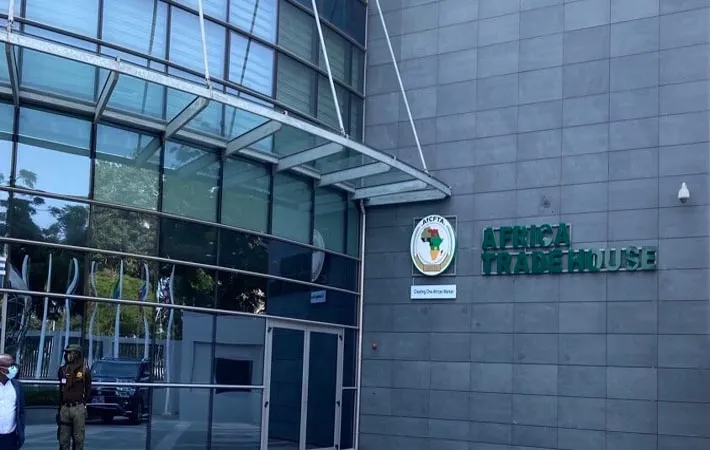
The African Continental Free Trade Area (AfCFTA) represents a monumental step towards economic integration in Africa, creating one of the world’s largest free trade areas by the number of participating countries. It offers the promise of significant economic transformation across the continent by establishing a single market for goods and services, facilitating the movement of capital and people, and ultimately, fostering the economic development of African states. However, to fully realize this potential, the role of financial technology (FinTech) and Micro, Small, and Medium Enterprises (MSMEs) must be emphasized and strategically integrated into the operational framework of AfCFTA.

The Pivotal Role of MSMEs in AfCFTA
Micro, Small, and Medium Enterprises (MSMEs) are vital to the economic fabric of Africa, contributing significantly to job creation, poverty alleviation, and income generation. MSMEs are the backbone of African economies, contributing significantly to employment, income generation, and poverty reduction. Across the continent, MSMEs represent over 80% of businesses and are responsible for more than 60% of employment . Despite their central role in African economies, MSMEs face numerous challenges, including limited access to finance, technology, and markets. These constraints often limit their capacity to scale operations, innovate, and compete effectively, particularly in the global market.
The AfCFTA presents a significant opportunity to address these challenges by creating a larger, more integrated market. With the reduction of tariffs and non-tariff barriers, MSMEs can access new markets across the continent, allowing them to expand their customer base and increase revenue. For instance, a small agricultural enterprise in Kenya could now more easily export its products to Nigeria, Ghana, or South Africa, benefiting from the lower trade barriers under AfCFTA. The expected outcome is a boost in sales, which in turn could lead to increased production, job creation, and overall economic growth.
Moreover, AfCFTA’s trade facilitation measures, such as the harmonization of standards and simplification of customs procedures, are particularly beneficial for MSMEs. These measures reduce the time and cost of moving goods across borders, making it easier for small businesses to participate in cross-border trade. The removal of these barriers is essential for MSMEs that often operate on thin margins and cannot afford the high costs associated with traditional international trade .
However, the ability of MSMEs to fully leverage AfCFTA depends on their capacity to meet the demands of larger, more competitive markets. Many African MSMEs are informal, lack formal management structures, and may struggle to comply with the regulatory and quality standards required for cross-border trade. Without the necessary support, there is a risk that MSMEs could be overshadowed by larger, more established enterprises, both African and international. This is where FinTech emerges to the foreground.
FinTech as a Catalyst for MSME Growth and Integration
Financial technology, or FinTech, offers innovative solutions that can address many of the challenges faced by MSMEs in Africa. By leveraging digital platforms, FinTech can provide MSMEs with greater access to financial services, including payments, credit, insurance, and savings. These services are often more accessible, affordable, and tailored to the needs of small businesses compared to traditional banking services.
One of the most significant contributions of FinTech is in improving access to finance. African MSMEs frequently struggle to secure financing due to the high-risk perception by traditional lenders, compounded by a lack of credit history or collateral. FinTech companies, through the use of alternative credit scoring models and peer-to-peer lending platforms, can offer MSMEs the necessary capital to grow their businesses and participate in cross-border trade under AfCFTA.
Moreover, FinTech can facilitate smoother and more secure cross-border transactions. Digital payment platforms, for instance, can reduce the costs and time associated with international transactions, making it easier for MSMEs to trade across Africa. Mobile money platforms, which have seen widespread adoption across the continent, can also be pivotal in this regard, enabling MSMEs to engage in e-commerce and reach customers in remote areas where traditional banking infrastructure is limited.
The Synergy Between FinTech, MSMEs, and AfCFTA
For AfCFTA to achieve its full potential, there must be a concerted effort to integrate FinTech solutions into the fabric of MSME operations across Africa. Governments, financial institutions, and technology companies should collaborate to create an enabling environment for FinTech innovation, focusing on areas such as regulatory frameworks, digital infrastructure, and financial literacy. FinTech plays a critical role in enabling MSMEs to overcome the barriers to participating effectively in the AfCFTA market. By providing innovative financial services that are more accessible, affordable, and tailored to the needs of small businesses, FinTech can empower MSMEs to grow and scale their operations, thereby enhancing their competitiveness in the new continental market.
One of the primary contributions of FinTech to MSMEs is in improving access to finance. Traditional banks often perceive small businesses as high-risk, particularly in Africa, where many MSMEs operate informally and lack the necessary documentation to secure loans. FinTech companies, through the use of alternative data and credit scoring models, offer solutions that enable MSMEs to access the capital they need to grow. For instance, mobile money platforms and peer-to-peer lending networks have been instrumental in providing microloans to small businesses in rural and underserved areas, where access to traditional banking services is limited .
Furthermore, FinTech facilitates easier and more secure cross-border transactions, a critical aspect of trade under AfCFTA. Digital payment platforms reduce the cost and time associated with international transactions, enabling MSMEs to engage in cross-border trade more efficiently. This is particularly important given the fragmented nature of Africa’s financial infrastructure, where high transaction costs and currency exchange risks can be significant barriers to trade. Mobile money services, which are widely used across Africa, offer a reliable and accessible means for MSMEs to conduct transactions, even in regions with limited banking infrastructure .
The synergy between FinTech, MSMEs, and AfCFTA is essential for driving economic growth across the continent. For example, an interoperable payment system that allows seamless transactions across African countries could dramatically reduce the cost and complexity of cross-border trade. This would empower MSMEs to expand their operations and compete more effectively in the AfCFTA market. In addition, policies that promote the adoption of digital financial services among MSMEs, such as tax incentives or subsidies for digital payments, could further accelerate this integration, ensuring that MSMEs are not left behind in the AfCFTA-driven economic transformation.
However, realizing this synergy requires addressing several challenges. The digital divide remains a significant barrier, with issues such as limited internet connectivity, low levels of digital literacy, and inadequate digital infrastructure prevalent across many parts of Africa. Without concerted efforts to bridge this divide, the benefits of FinTech may be unevenly distributed, with MSMEs in urban areas reaping more benefits than those in rural or underserved regions. Governments, therefore, need to invest in digital infrastructure and education to ensure that all MSMEs, regardless of their location, can leverage FinTech solutions to thrive in the AfCFTA environment.
Conclusion
AfCFTA is a landmark initiative that has the potential to transform Africa’s economic landscape. However, its success will largely depend on the ability of MSMEs to capitalize on the opportunities it presents. FinTech, with its capacity to enhance access to finance, reduce transaction costs, and facilitate cross-border trade, is crucial to empowering MSMEs in this new economic environment. Therefore, a strategic focus on integrating FinTech solutions with the operations of MSMEs will not only bolster the success of AfCFTA but also drive sustainable economic growth and development across the continent.
In conclusion, the synergistic relationship between AfCFTA, FinTech, and MSMEs holds the key to unlocking Africa’s economic potential. By fostering this relationship through supportive policies and infrastructure, African nations can ensure that the benefits of AfCFTA are widely shared, leading to a more prosperous and integrated continent.
References:
– African Union. “African Continental Free Trade Area (AfCFTA).” Available at: [https://au.int/en/cfta](https://au.int/en/cfta).
– International Trade Centre (ITC). “SME Competitiveness Outlook 2020: COVID-19: The Great Lockdown and Its Impact on Small Business.” Available at: [https://intracen.org](https://intracen.org).
– United Nations Economic Commission for Africa (UNECA). “Economic Report on Africa 2020: Innovative Finance for Private Sector Development in Africa.” Available at: [https://www.uneca.org](https://www.uneca.org).

























You must be logged in to post a comment Login