Africa
Terrorists And Bandits: They Know Them — Why Is It Still A Challenge? -By Isaac Asabor
Bluntly put at this juncture, the country is bleeding, and too many hands are in the cookie jar. Given the foregoing, Let us stop pretending as it is embarrassing to see banditry flourishing at this scale, and signaling the danger that someone in power must be benefiting. To opinionate from the context of the foregoing view, it can be deduced that corrupt officers are benefit ting from prolonged deployment of soldiers.

There is no denying the fact that Nigeria is trapped in a security crisis that has humiliated the state, mocked its institutions, and exposed the glaring rot in its political and military architecture. Every week, the headlines read like a national obituary as villages were torched, schoolchildren snatched, farmers slaughtered, buses hijacked, soldiers ambushed, whole communities turned into tributaries of terror. Yet one truth stands firm: these terrorists and bandits are not ghosts. They are known.
So why is Nigeria acting like it is battling shadows? Why does the government behave as if the criminals are invisible spirits roaming the forests? Why has the Nigerian state, once one of the fiercest military forces in Africa, suddenly become a timid observer in its own territory?
There is only one honest explanation: Nigeria’s insecurity persists not because the terrorists are unknown, but because too many powerful people benefit from pretending not to know them.
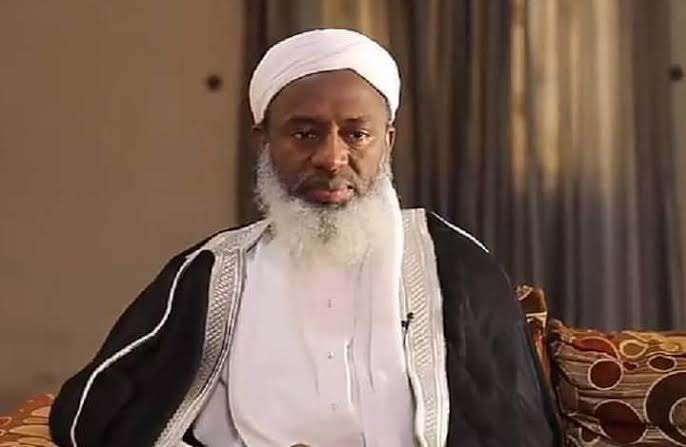
If anybody embodies the absurdity of Nigeria’s fight against terrorism, it is Sheikh Ahmad Gumi. While security agencies claim that locating bandits is a strategic challenge, Gumi casually strolls into their camps with cameras, journalists, and commentary. He emerges unscathed. Always! His visits are not covert missions. They are televised. Publicized. Discussed nationwide.
Yet, somehow, the same country that pretends not to know the location of these terrorists allows a cleric to maintain friendly relations with them. And the state nods silently.
Let us put it plainly: When a private citizen has more access to terrorists than the Nigerian military, something is fundamentally rotten. Gumi’s activities have raised questions the government does not dare answer: Who grants him these safe passages?, How does he guarantee his own safety among “dangerous criminals”?, and Why does the military suddenly lose its nerves whenever he heads into the bush?
The brutal truth is that Gumi is not an anomaly; he is a symptom of a security structure that has outsourced its spine.
For years, the Nigerian government has treated terrorists like wayward cousins who simply need talking-to. Officials deny it publicly, but everyone knows negotiations have happened, behind closed doors, through “middle men,” and through community leaders coerced into diplomacy.
We have heard about ransom payments being disguised as “security logistics”, even as prisoner swaps that strengthened enemy ranks, and bandits granted unofficial amnesty as if they were rebel freedom fighters.
Yet, every negotiation only fertilized the soil for more bloodshed. Terrorists who should be hunted down have become political stakeholders, calculating their next ransom the way a businessman drafts a quarterly budget.
This is why they grow bolder. This is why the kidnappers of today are richer than the civil servants who pay taxes to fund the military. This is why Nigeria has become a playground for criminals who know the state will never truly confront them. Surprisingly, farmers pay taxes to terrorists, the ultimate insult.
In fact, in the North-West today, farmers do not fear drought, pests, or poor harvests. They fear terrorists. To avoid being killed, kidnapped, or raped, they pay bandits “levies”, gate fees to access their own ancestral lands. Communities negotiate prices like they are bargaining in a market. Terrorists issue receipts in bullets and death.
Everyone in these local communities knows who the leaders are. They know the boys who collect the payments. They know their names, their families, their camps. Yet the Nigerian government claims it cannot find them. This is not ignorance. This is complicity.
The Nigerian military has a glorious record. It has restored governments in neighboring countries. It has crushed well-organized rebel armies. It has fought in global peacekeeping missions with distinction. So why is it suddenly helpless before ragtag criminals armed with AK-47s and stolen motorcycles?
Because when the political class lacks backbone, the military cannot grow one. Nigeria’s leaders want peace without confrontation, victory without sacrifice, and security without accountability. They want to arrest insecurity while protecting the people who profit from it.
Bluntly put at this juncture, the country is bleeding, and too many hands are in the cookie jar. Given the foregoing, Let us stop pretending as it is embarrassing to see banditry flourishing at this scale, and signaling the danger that someone in power must be benefiting. To opinionate from the context of the foregoing view, it can be deduced that corrupt officers are benefit ting from prolonged deployment of soldiers. This is as it is factual that politicians benefit from fear that shapes elections, informants benefit from feeding criminals intelligence, middlemen benefit from ransom transactions and some northern elites benefit from the chaos that gives them power over desperate communities.
It is annoying to watch and understand that Insecurity is now an industry; a billion-naira marketplace of death and protection rackets.
This is why Nigeria cannot win. Too many people at the top do not want this war to end.