Forgotten Dairies
The Children We Hide: Why Society Must Stop Shaming Special Needs Children -By Bello Humulkhair
Parents cannot carry this burden alone, society must step in with empathy and support. Schools should create inclusive classrooms where children with special needs are valued and supported. Religious communities must stop associating disability with punishment or spiritual failure. Neighbors and communities should treat these children as equals, not as threats or burdens.

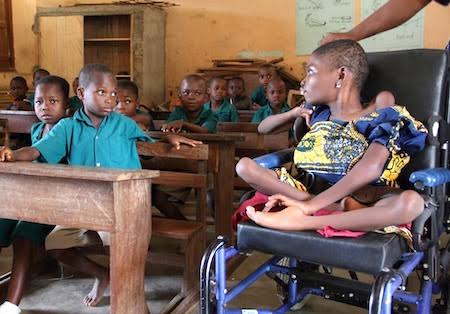
There is a silent cruelty growing in our society, one that we rarely speak about, yet thousands of families live with every day. It is wrapped in whispers, shame, and avoidance, directed at the children who least deserve it: children with special needs. For years, society has labeled these children as burdens, curses, or mistakes. We treat them as shadows rather than lives, as if their existence is something to be hidden behind closed doors.
It is long overdue that we examine this mindset and ask ourselves: how did we become a society that shames a child simply because life shaped them differently?
Who Are Special Needs Children?
Before we go further, it is important to understand who we are talking about. A child with special needs is a child who has one or more physical, developmental, behavioral, or learning challenges that require additional support. These challenges can include conditions like autism, cerebral palsy, Down syndrome, learning disabilities, speech and communication delays, or mobility limitations.
Having a disability does not make them less human, less capable of love, or less deserving of care. What it does mean is that they might need extra support, patience, and understanding from the people around them.
A Scene That Mirrors Reality
I recently watched a film that reflected this painful reality. It wasn’t the dramatic scenes that broke me, it was the subtle ones. The ones that exist in our streets, classrooms, and families every day.
One scene stayed with me:
A small boy sits at the corner of his classroom not because he cannot play, not because he does not understand joy, but because the world has told his mother that his difference is an embarrassment. His classmates avoid him. His teacher barely notices him. His mother hides her tears as she picks him up after school.
That boy could be in any of our communities. And that mother could be any one of us.
Understanding Special Needs
This is the reality for many children with special needs. None of these children created themselves, yet society treats them as if they chose their limitations intentionally.
We do not just stigmatize the children; we attack the parents too. We whisper about them. We assume their child is a punishment for some hidden wrongdoing. We avoid them in public. We refuse to let our children play with theirs, as if disability were contagious. Slowly, painfully, these parents begin to carry a shame that was never theirs to begin with.
The Weight of Shame
The shame becomes internal. The guilt becomes chronic. The isolation becomes normal.
Some parents hide their children indoors for years, hoping no one will notice. Others pretend the child “will grow out of it” or deny the diagnosis entirely.
Some parents, battered by public judgment, secretly wish they had abandoned the child early proof of how brutal societal pressure can be.
But here is the truth: a child with special needs is not a disgrace. What is disgraceful is how society treats them.
Humanity Over Stigma
These children are not broken. They are not mistakes. They are not problems to be solved or embarrassments to be covered.
• Brilliance in difference: Their abilities may not match societal norms, but they often display unique creativity, emotional sensitivity, and loyalty.
• Humanity remains: Their humanity is not diminished by disability. Their worth is not reduced by diagnosis. Their potential is not erased by limitations.
Every child, regardless of ability, deserves visibility, dignity, love, and opportunity.
How Parents Can Support Their Children
Parents hold the power to create nurturing environments where their children can thrive.
a. Acceptance
Stop grieving the child you imagined. Acceptance is not giving up,it is the first step in helping the child grow confidently.
b. Education and Support
Parents can empower their children by seeking guidance and building knowledge. Consult medical professionals and therapists, explore behavioral or speech interventions, and consider educational support tailored to your child’s needs. This knowledge equips both parent and child with tools to navigate life successfully and provides a foundation for growth and confidence.
c. Communication and Routine
Equally important is how parents interact with their children daily. Children with special needs respond strongly to patience, calm communication, and consistent routines. Praise and encouragement foster self-esteem, help them understand their world, and reinforce the skills and progress gained through education and support.
d. Avoiding Comparison
Comparison to other children deepens frustration for both parent and child. Celebrate every milestone; every new sound, gesture, step, or interaction counts.
e. Acknowledging Parental Struggles
Fear of the future, financial pressure, and exhaustion are real challenges. Parents are not failing for feeling overwhelmed, they are human. Courage lies in continuing to show love and care despite these pressures.
Society’s Role in Inclusion
Parents cannot carry this burden alone, society must step in with empathy and support. Schools should create inclusive classrooms where children with special needs are valued and supported. Religious communities must stop associating disability with punishment or spiritual failure. Neighbors and communities should treat these children as equals, not as threats or burdens.
Supporting children with special needs is not charity, it is a matter of fairness and human dignity.
A compassionate society calls difference “diversity,” treating uniqueness with acceptance rather than fear, and embracing what it once sought to hide.
Parents cannot carry this burden alone. Society must learn empathy.
A Call to Action
A child with special needs is not a burden, they are a different kind of brilliance.
When you embrace them, you rewrite their future.
When you stand with them, you teach society how to treat them.
When you raise them with pride, you show that love is stronger than stigma.
These children do not need pity. They need a society that chooses compassion over ignorance, parents who choose acceptance over shame, and all of us to finally open our eyes.
The children we hide are the ones who need us the most. It is time we stopped hiding them and started honoring them.