Africa
Trump’s Tariffs, Russia and Africa Trade Partnership -By Kestér Kenn Klomegâh
With geopolitical situation heightening, trade wars are also becoming increasingly prominent. The 47th United States President Donald Trump has introduced trade tariffs, splashed it over the world. China, an Asian trade giant and an emerging economic superpower, has its highest shared. South Africa, struggling with its fragile foreign alliances, is seriously navigating the new United States economic policy and trade measures, at least to maintain its membership in the African Growth and Opportunities Act (AGOA) which is going to expire in September 2025. It is a well-known fact that AGOA waived duties on most commodities from Africa in order to boost trade in American market. The AGOA also offers many African countries trade preferences in the American market, earning huge revenues for their budgets. Financial remittances back to Africa also play mighty roles across the continent from the United States. In its report released in June 2024, the World Bank indicated that, despite the geopolitical uncertainties, instability and challenges, sub-Saharan Africa’s remittance flow reached US$54 billion in 2023.
That however, the shifting geopolitical situation combined with Trump’s new trade policies and Russia’s rising interest in Africa, the overarching message for African leaders and business corporate executives is to review the level of degree how to appreciably approach and strengthen trade partnership between Africa and Russia. The notion of a new global order and frequently phrased multipolar world, indicating the construction of a fairer architecture of interaction, in practical terms, has become like a relic and just as a monumental pillar. Even as we watch the full-blown recalibration of power, the geopolitical reshuffling undoubtedly creates the conditions for new forms of cooperation.
In this current era of contradictions and complexities we are witnessing today, we must rather reshape and redefine rules and regulations to facilitate bilateral and multilateral relations between African countries and Russia, if really Russia seeks to forge post-Soviet strategic economic cooperation with Africa. In fact, post-Soviet in the sense that trade is not concentrate on state-to-state but also private – including, at least, medium scale businesses. The new policy dealing with realities of the geopolitical world, distinctively different from Soviet-era slogans and rhetorics of ‘international friendship and solidarity’ of those days. Bridging Africa and Russia, at least in the literal sense of the word, necessitates partial departure from theoretical approach to implementing several bilateral and multilateral decisions, better still agreements reached at previous summits and conferences during the past decade.
Understandably Africa has a stage, Russia termed ‘the struggle against neo-colonial tendencies’ and mounting the metal walls against the ‘scrambling of resources’ across Africa. Some experts argued that Africa, at the current stage, has to develop its regions, modernize most the post-independence-era industries to produce exportable goods, not only for domestic consumption. Now the emphasis is on pushing for prospects of a single continental market, the African Continental Free Trade Agreement (AfCFTA).
This initiative, however, must be strategically and well-coordinated well, and here I suggest integration and cooperation starting at country-wide basis to regional level before it broadly goes to the entire continent, consisting 54 independent states. These are coordinated together as African Union (AU), which in January 2021 initiated the African Continental Free Trade Agreement (AfCFTA). With this trading goals in mind, Africa as a continent has to integrate, promote trade and economic cooperation, engage in investment and development. In that direction, genuine foreign partners are indiscriminately required, foreign investment capital in essential for collaboration as well as their entrepreneurial skills and technical expertise. For instance, developing relations with Asian giants such China and India, the European Union and the United States. A number of African countries are shifting to the BRICS orbit, in search for feasible alternative opportunities, for the theatrical trade drama. In the Eurasian region and the former Soviet space, Kazakhstan and Russia stand out, as potential partners, for Africa.
Foreign Affairs Minister Sergey Lavrov has said, at the podium before the staff and students at Moscow State Institute of International Affairs in September, that trade between Russia and Africa would grow further as more and more African partners continued to show interest in having Russians in the economic sectors in Africa. This provides greater competition between the companies from Western countries, China, and Russia. With competition for developing mineral resources in Africa, it is easier and cheaper for African colleagues to choose partners.
As far back in October 2010, Russian Foreign Affairs Ministry posted an official report on its website that traditional products from least developed countries (including Africa) would be exempted from import tariffs. The legislation stipulated that the traditional goods are eligible for preferential customs and tariffs treatment. Thereafter, Minister Sergey Lavrov has reiterated, in speeches, trade preferences for African exporters, but terribly failed to honour these thunderous promises. Notwithstanding the above granting trade preferences, there prevailing multitude of questions relating to the pathways of improving trade transactions, and removing obstacles including those Soviet-era rules and regulations. Logistics is another torny hurdle. Further to this, Russian financial institutions can offer credit support that will allow to localize Russian production in Africa’s industrial zones, especially southern and eastern African regions that show some stability and have good investment and business incentives. In order to operate more effectively, Russians have to risk by investing, recognize the importance of cooperation on key investment issues and to work closely on the challenges and opportunities on the continent. On one hand, analyzing the present landscape of Africa, Russia can export its technology and compete on equal terms with China, India and other prominent players. On the other hand, Russia lacks the competitive advantage in terms of finished industrial (manufactured) products that African consumers obtain from Asian countries such as China, India, Japan and South Korea.
Compared to the United States and Europe, Russia did very little after the Cold War and it is doing little even today in Africa. On 27th–28th July 2023, St Petersburg hosted the second Russia-Africa summit. At the plenary session, President Vladimir Putin underscored the fact that there was, prior to the collapse of the Soviet, there were over 330 large infrastructure and industrial facilities in Africa, but most were lost. Regarding trade, Putin, regrettably, noted Russia’s trade turnover with the African countries increased in 2022 and reached almost US$18 billion, (of course, that was 2022).
Arguably, Russia’s economic presence is invisible across Africa. It currently has insignificant trade statistics. Until the end of the first quarter of 2025, Russia still has a little over US$20 billion trade volume with Africa. Statistics on Africa’s trade with foreign countries vary largely. For example, the total United States two-way trade in Africa has actually fallen off in recent years, to about US$60 billion, far eclipsed by the European Union with over US$240 billion, and China more than US$280 billion, according to a website post by the Brookings Institution.
According to the African Development Bank, Africa’s economy is growing faster than those of any other regions. Nearly half of Africa is now classified as middle income countries, the numbers of Africans living below the poverty line fell to 39 percent as compared to 51 percent in 2023, and around 380 million of Africa’s 1.4 billion people are now earning good incomes – rising consumerism – that makes trade profitable.
Nevertheless, there is great potential, as African leaders and entrepreneurial community are turing to Russia for multifaceted cooperation due to the imperialist approach of the United States and its hegemonic stand triggered over the years, and now with Trump new trade tariffs and Washington’s entire African policy. China has done its part, Russia has to change and adopt new rules and regulations, pragmatic approach devoid of mere frequent rhetorics. It is important discussing these points, and to shamelessly repeat that both Russia and Africa have to make consistent efforts to look for new ways, practical efforts at removing existing obstacles that have impeded trade over the years.
Sprawling from the Baltic Sea to the Pacific Ocean, Russia is a major great power and has the potential to become a superpower. Russia can regain part of its Soviet-era economic power and political influence in present-day Africa. Certainly, the expected superpower status has to be attained by practical multifaceted sustainable development and by maintaining an appreciably positive relations with Africa. We have come a long way, especially after the resonating first summit (October 2019) and highly-praised second summit (July 2023), several bilateral agreements are yet to be implemented. The forthcoming Russia – Africa Partnership summit is slated for 2026, inside Africa and preferably in Addis Ababa, Ethiopia.
*Kestér Kenn Klomegâh is a frequent and passionate contributor. During his professional career as a researcher specialising in Russia-Africa policy, he has been detained and questioned several times by Russian federal security services for reporting facts. Most of his well-resourced articles are reprinted in a number of reputable foreign media.

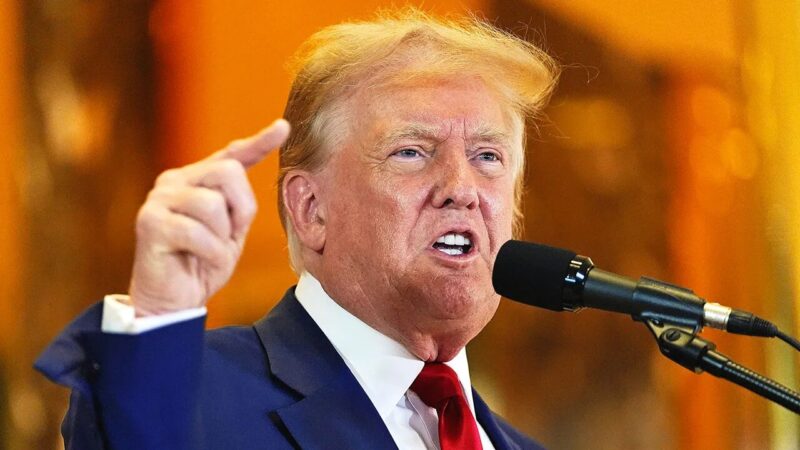
With geopolitical situation heightening, trade wars are also becoming increasingly prominent. The 47th United States President Donald Trump has introduced trade tariffs, splashed it over the world. China, an Asian trade giant and an emerging economic superpower, has its highest shared. South Africa, struggling with its fragile foreign alliances, is seriously navigating the new United States economic policy and trade measures, at least to maintain its membership in the African Growth and Opportunities Act (AGOA) which is going to expire in September 2025. It is a well-known fact that AGOA waived duties on most commodities from Africa in order to boost trade in American market. The AGOA also offers many African countries trade preferences in the American market, earning huge revenues for their budgets. Financial remittances back to Africa also play mighty roles across the continent from the United States. In its report released in June 2024, the World Bank indicated that, despite the geopolitical uncertainties, instability and challenges, sub-Saharan Africa’s remittance flow reached US$54 billion in 2023.
That however, the shifting geopolitical situation combined with Trump’s new trade policies and Russia’s rising interest in Africa, the overarching message for African leaders and business corporate executives is to review the level of degree how to appreciably approach and strengthen trade partnership between Africa and Russia. The notion of a new global order and frequently phrased multipolar world, indicating the construction of a fairer architecture of interaction, in practical terms, has become like a relic and just as a monumental pillar. Even as we watch the full-blown recalibration of power, the geopolitical reshuffling undoubtedly creates the conditions for new forms of cooperation.
In this current era of contradictions and complexities we are witnessing today, we must rather reshape and redefine rules and regulations to facilitate bilateral and multilateral relations between African countries and Russia, if really Russia seeks to forge post-Soviet strategic economic cooperation with Africa. In fact, post-Soviet in the sense that trade is not concentrate on state-to-state but also private – including, at least, medium scale businesses. The new policy dealing with realities of the geopolitical world, distinctively different from Soviet-era slogans and rhetorics of ‘international friendship and solidarity’ of those days. Bridging Africa and Russia, at least in the literal sense of the word, necessitates partial departure from theoretical approach to implementing several bilateral and multilateral decisions, better still agreements reached at previous summits and conferences during the past decade.
Understandably Africa has a stage, Russia termed ‘the struggle against neo-colonial tendencies’ and mounting the metal walls against the ‘scrambling of resources’ across Africa. Some experts argued that Africa, at the current stage, has to develop its regions, modernize most the post-independence-era industries to produce exportable goods, not only for domestic consumption. Now the emphasis is on pushing for prospects of a single continental market, the African Continental Free Trade Agreement (AfCFTA).
This initiative, however, must be strategically and well-coordinated well, and here I suggest integration and cooperation starting at country-wide basis to regional level before it broadly goes to the entire continent, consisting 54 independent states. These are coordinated together as African Union (AU), which in January 2021 initiated the African Continental Free Trade Agreement (AfCFTA). With this trading goals in mind, Africa as a continent has to integrate, promote trade and economic cooperation, engage in investment and development. In that direction, genuine foreign partners are indiscriminately required, foreign investment capital in essential for collaboration as well as their entrepreneurial skills and technical expertise. For instance, developing relations with Asian giants such China and India, the European Union and the United States. A number of African countries are shifting to the BRICS orbit, in search for feasible alternative opportunities, for the theatrical trade drama. In the Eurasian region and the former Soviet space, Kazakhstan and Russia stand out, as potential partners, for Africa.
Foreign Affairs Minister Sergey Lavrov has said, at the podium before the staff and students at Moscow State Institute of International Affairs in September, that trade between Russia and Africa would grow further as more and more African partners continued to show interest in having Russians in the economic sectors in Africa. This provides greater competition between the companies from Western countries, China, and Russia. With competition for developing mineral resources in Africa, it is easier and cheaper for African colleagues to choose partners.
As far back in October 2010, Russian Foreign Affairs Ministry posted an official report on its website that traditional products from least developed countries (including Africa) would be exempted from import tariffs. The legislation stipulated that the traditional goods are eligible for preferential customs and tariffs treatment. Thereafter, Minister Sergey Lavrov has reiterated, in speeches, trade preferences for African exporters, but terribly failed to honour these thunderous promises. Notwithstanding the above granting trade preferences, there prevailing multitude of questions relating to the pathways of improving trade transactions, and removing obstacles including those Soviet-era rules and regulations. Logistics is another torny hurdle. Further to this, Russian financial institutions can offer credit support that will allow to localize Russian production in Africa’s industrial zones, especially southern and eastern African regions that show some stability and have good investment and business incentives. In order to operate more effectively, Russians have to risk by investing, recognize the importance of cooperation on key investment issues and to work closely on the challenges and opportunities on the continent. On one hand, analyzing the present landscape of Africa, Russia can export its technology and compete on equal terms with China, India and other prominent players. On the other hand, Russia lacks the competitive advantage in terms of finished industrial (manufactured) products that African consumers obtain from Asian countries such as China, India, Japan and South Korea.
Compared to the United States and Europe, Russia did very little after the Cold War and it is doing little even today in Africa. On 27th–28th July 2023, St Petersburg hosted the second Russia-Africa summit. At the plenary session, President Vladimir Putin underscored the fact that there was, prior to the collapse of the Soviet, there were over 330 large infrastructure and industrial facilities in Africa, but most were lost. Regarding trade, Putin, regrettably, noted Russia’s trade turnover with the African countries increased in 2022 and reached almost US$18 billion, (of course, that was 2022).
Arguably, Russia’s economic presence is invisible across Africa. It currently has insignificant trade statistics. Until the end of the first quarter of 2025, Russia still has a little over US$20 billion trade volume with Africa. Statistics on Africa’s trade with foreign countries vary largely. For example, the total United States two-way trade in Africa has actually fallen off in recent years, to about US$60 billion, far eclipsed by the European Union with over US$240 billion, and China more than US$280 billion, according to a website post by the Brookings Institution.
According to the African Development Bank, Africa’s economy is growing faster than those of any other regions. Nearly half of Africa is now classified as middle income countries, the numbers of Africans living below the poverty line fell to 39 percent as compared to 51 percent in 2023, and around 380 million of Africa’s 1.4 billion people are now earning good incomes – rising consumerism – that makes trade profitable.
Nevertheless, there is great potential, as African leaders and entrepreneurial community are turing to Russia for multifaceted cooperation due to the imperialist approach of the United States and its hegemonic stand triggered over the years, and now with Trump new trade tariffs and Washington’s entire African policy. China has done its part, Russia has to change and adopt new rules and regulations, pragmatic approach devoid of mere frequent rhetorics. It is important discussing these points, and to shamelessly repeat that both Russia and Africa have to make consistent efforts to look for new ways, practical efforts at removing existing obstacles that have impeded trade over the years.
Sprawling from the Baltic Sea to the Pacific Ocean, Russia is a major great power and has the potential to become a superpower. Russia can regain part of its Soviet-era economic power and political influence in present-day Africa. Certainly, the expected superpower status has to be attained by practical multifaceted sustainable development and by maintaining an appreciably positive relations with Africa. We have come a long way, especially after the resonating first summit (October 2019) and highly-praised second summit (July 2023), several bilateral agreements are yet to be implemented. The forthcoming Russia – Africa Partnership summit is slated for 2026, inside Africa and preferably in Addis Ababa, Ethiopia.
*Kestér Kenn Klomegâh is a frequent and passionate contributor. During his professional career as a researcher specialising in Russia-Africa policy, he has been detained and questioned several times by Russian federal security services for reporting facts. Most of his well-resourced articles are reprinted in a number of reputable foreign media.