Africa
Urging Tinubu’s Media Appointees To Collaborate, Not Compete, by Isaac Asabor

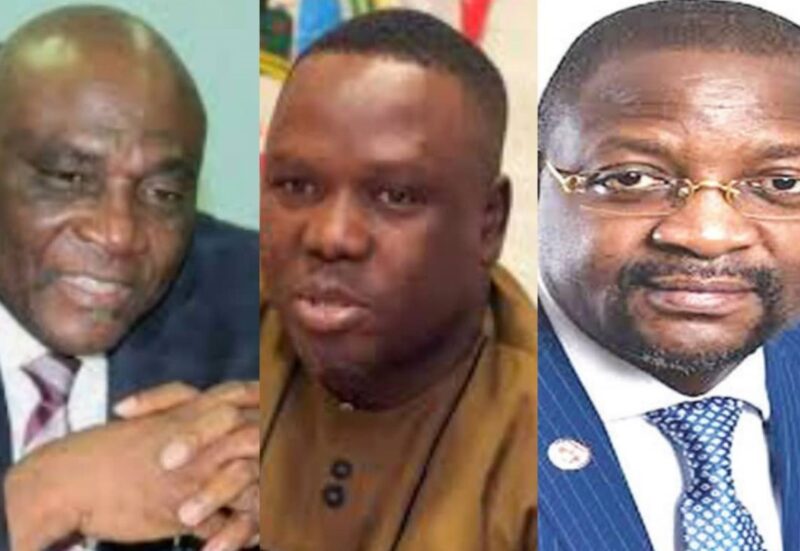
Since President Bola Tinubu announced the restructuring of the State House media and communications team, speculation has been rife among Nigerians that potential overlaps in responsibilities could lead to clashes among the appointed advisers. However, a closer look at the roles and the structure reveals a collaborative framework designed to enhance communication, not breed discord.
The restructured media team consists of three Special Advisers: Sunday Dare (Special Adviser, Media and Public Communications), Daniel Bwala (Special Adviser, Policy Communication), and Bayo Onanuga (Special Adviser, Information and Strategy). Each position is uniquely tailored to handle distinct yet interconnected aspects of government communication.
This new structure not only demonstrates strategic foresight but also highlights the versatility and complexity of mass communication as a discipline.
Sunday Dare’s portfolio focuses on public communication, managing the interface between the Presidency and the public to maintain transparency and ensure timely dissemination of government actions.
Daniel Bwala’s expertise in policy communication positions him as the voice explaining and promoting the administration’s policies and their implications for Nigerians.
Bayo Onanuga retains his strategic role, overseeing the broader framework of information dissemination and crafting narratives to align with the administration’s vision.
Rather than clashing, these advisers are expected to operate as a synchronized team, drawing on their unique strengths to project a unified government voice. The Presidency’s decision to introduce this collaborative model marks a progressive shift from the traditional single-spokesperson approach, allowing for diverse perspectives and expertise to meet the demands of modern governance.
Mass communication, as a field of study, is uniquely suited to such a collaborative arrangement due to its multiple branches and specialties. These include public relations, media strategy, policy communication, journalism, and advertising.
Added to the foregoing is the social media which has significantly expanded the branches of mass communication by introducing an interactive, user-driven platform that transcends traditional media boundaries. Unlike traditional media such as newspapers, radio, and television, social media facilitates real-time engagement, allow individuals to both consume and disseminate information. It integrates multimedia content, blending text, images, video, and audio in dynamic ways that appeal to diverse audiences. Moreover, its algorithms and data analytics enable tailored messaging and direct interaction, making communication more personalized and participatory. As a result, social media has become a powerful extension of mass communication, reshaping how information is created, shared, and perceived globally.
Without a doubt, each of these branches has its own distinct focus yet contributes to the overarching goal of effective information dissemination. For instance, public communication emphasizes direct engagement with audiences, as seen in Dare’s role. Policy communication translates complex government policies into relatable narratives, aligning with Bwala’s portfolio. Onanuga’s strategic role underscores the importance of crafting comprehensive communication plans, drawing from both media theory and practice.
This multidimensional nature of mass communication ensures that no one individual can effectively manage all aspects alone, reinforcing the value of collaboration among professionals with specialized expertise.
The insinuations of potential clashes stem from a misunderstanding of the complementary nature of these appointments. This structure is not about creating redundancies but about leveraging specialized expertise in different aspects of communication. Nigerians should view this as a strategy to ensure the government speaks effectively to various audiences through tailored messaging.
The Presidency’s collaborative model also reflects a recognition that the demands of modern communication are too vast for any single individual to address comprehensively. This approach ensures that each message, whether strategic, public-facing, or policy-driven, is handled with precision and expertise.
By appointing these advisers with well-defined roles, the Tinubu administration underscores its commitment to efficient and coherent communication. Collaboration, not competition, is the hallmark of this approach. The three appointees will work in tandem, ensuring that the administration’s messages are clear, impactful, and consistent across all platforms.
This restructuring also serves as a case study of mass communication principles in action. It showcases the value of specialization within a cohesive team framework. The Tinubu administration’s embrace of this model is not just a modernization of communication strategies but a testament to the evolving demands of governance in an increasingly complex media environment.
For instance, the restructuring is a positive development. It not only reflects the strategic deployment of mass communication’s many branches but also assures Nigerians of an administration that values collective effort over individual grandstanding. The Presidency’s collaborative model is a step forward, ensuring robust and transparent communication that benefits all.