Africa
What Went Wrong With Nigeria’s Power Sector Despite Decades Of Efforts? -By Isaac Asabor
The path forward is not shrouded in mystery. It lies in sustained, consistent policies, genuine political will, an empowered and independent regulatory framework, decentralization, and disciplined private sector participation. Until these are firmly in place, the average Nigerian will continue to pay for darkness, live on fumes, and wait for light at the end of a tunnel that seems endlessly long.

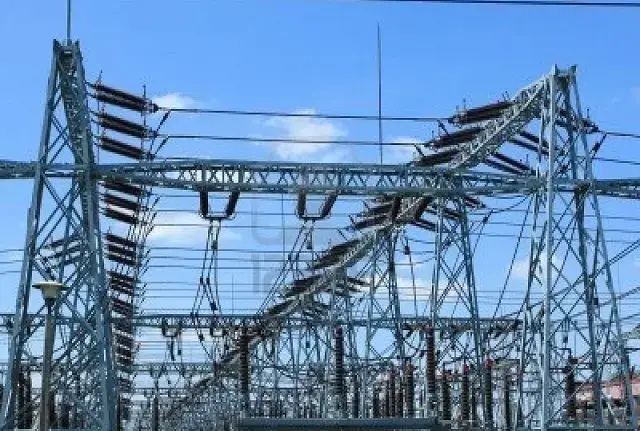
Electricity is the engine of modern development, the invisible force that powers industries, fuels innovation, and touches every aspect of daily life. Yet, for more than six decades, Nigerians have endured a frustrating paradox: living in an oil-rich country yet plagued by chronic power outages. From ceaseless blackouts to an overwhelming reliance on fuel-guzzling generators, Nigeria’s power problem has become a national embarrassment.
Between 1999 and 2023, successive administrations made repeated attempts to tackle the crisis. Billions of dollars were pumped into the power sector, and a variety of reforms were rolled out. Still, for the average Nigerian, electricity remains more of a luxury than a guaranteed right. The only constant in this saga has been the failure of the system.
When President Olusegun Obasanjo took office in 1999, he inherited a severely broken power sector, with national generation at just 1,500 megawatts for a population exceeding 100 million. His administration launched the National Integrated Power Projects (NIPP) in 2004, promising to revamp infrastructure and add over 10,000MW to the grid. In 2005, the Power Sector Reform Act was introduced, creating the Nigerian Electricity Regulatory Commission (NERC) and laying the groundwork for deregulation.
Despite these promising moves, outcomes fell far short. Over $16 billion was reportedly invested in the sector under Obasanjo, yet power generation only improved marginally to about 3,000MW. Many NIPP projects were abandoned or poorly executed. A subsequent House of Representatives probe in 2008 exposed massive mismanagement, but as is common in Nigeria, no one was held accountable.
President Umaru Musa Yar’Adua, who succeeded Obasanjo in 2007, also made electricity a top priority. He declared a state of emergency in the sector as part of his Seven-Point Agenda, aiming to expand generation, modernize infrastructure, and attract private investment. Yet again, bureaucratic red tape, corruption, and underfunding crippled the plan. His administration’s noble intentions met the same brick wall of inefficiency.
Then came President Goodluck Jonathan, whose administration took perhaps the boldest step, privatizing the power sector. In 2013, the Power Holding Company of Nigeria (PHCN) was unbundled into 18 companies: six generation companies (GENCOs), 11 distribution companies (DISCOs), and one transmission company (TCN). The hope was that the private sector would deliver what the government could not.
Over $2.5 billion was raised through asset sales, and ₦404 billion in stabilization funds were pumped in to support the transition. Power Purchase Agreements and tariff reforms were introduced to encourage private capital. However, even with a slight uptick in generation to around 4,500MW, consumers saw little relief. Persistent blackouts, estimated billing, and poor customer service continued. Investors lamented low returns, gas shortages, and poor infrastructure, while the government still had to intervene financially, showing the sector’s heavy dependence on public funds.
President Muhammadu Buhari’s administration (2015–2023) also promised a turnaround. Initiatives such as the Presidential Power Initiative (a partnership with Germany’s Siemens AG) and the National Mass Metering Programme were introduced. Over ₦1.7 trillion in bailouts and subsidies were injected into the sector, alongside a $2 billion Siemens deal and $486 million World Bank loan.
But despite these efforts, Nigeria recorded over 100 grid collapses between 2015 and 2022, with average generation fluctuating below 4,000MW. Reforms were rolled out, including the Eligible Customer Regulation (2017), which allowed direct bulk purchases of electricity, bypassing inefficient DISCOs. Still, the average Nigerian remained trapped in darkness, frustration mounting with each policy pronouncement that failed to deliver change.
Under President Bola Ahmed Tinubu, whose administration is still in its early stages, bold steps are being taken. Most notable is the Electricity Act 2023, which decentralizes power generation and regulation, giving states, corporations, and even individuals the autonomy to develop and manage their electricity supply. States like Lagos, Edo, and Kaduna have already begun acting on this mandate.
The 2024 federal budget allocated ₦344 billion to the power sector, including ₦100 billion for rural electrification and solar energy. However, a major tariff hike in April 2024, from ₦66/kWh to ₦225/kWh for Band A customers, sparked public outrage. Many consumers in Bands B–E still receive irregular power and lack prepaid meters, compounding the burden of high electricity costs.
Despite these efforts, the grim reality remains: Nigeria’s generator economy, valued at over ₦10 billion annually, is the largest in Africa. For millions of homes, hospitals, and businesses, generators are the primary source of electricity, not backup. Until government reforms begin to produce stable, affordable electricity, Nigerians will continue to bear the double burden of soaring tariffs and fuel costs.
So, what went wrong? The answer lies in a mix of corruption, policy inconsistency, lack of political will, regulatory weakness, and a gas-dependent energy mix that is constantly disrupted by supply issues. Despite over $30 billion in investments since 1999, Nigeria struggles to generate even 6,000MW for a population of over 200 million. Each administration has either failed to sustain the initiatives of its predecessor or allowed politics to derail progress.
The path forward is not shrouded in mystery. It lies in sustained, consistent policies, genuine political will, an empowered and independent regulatory framework, decentralization, and disciplined private sector participation. Until these are firmly in place, the average Nigerian will continue to pay for darkness, live on fumes, and wait for light at the end of a tunnel that seems endlessly long.