Africa
When Shepherds Become Predators And The Flock Wanders Aimlessly -By Isaac Asabor
If urgent steps are not taken to fill this leadership void with men and women of integrity, vision, and empathy, we may soon find ourselves in a full-blown anarchy where institutions collapse under the weight of their own betrayal. History will not be kind to a generation that watched silently while its moral compasses rusted and its leaders danced on the graves of accountability.

In a nation where leadership was once sacred, drawn either from the ballot box or ancient stools of ancestry, the people now roam like sheep without shepherds. They wander through a valley darkened not just by economic hardship, but also by a breakdown in leadership from both the political and traditional strongholds that once served as pillars of societal structure. What we are witnessing today in Nigeria is not just a crisis of governance but a moral erosion that has swept through our leadership corridors, leaving a vacuum that has emboldened lawlessness, confusion, and despair.
The metaphor of a shepherd and his sheep is not just biblical; it is practical. A shepherd leads, guides, protects, and takes responsibility for the well-being of his flock. When the shepherd is absent, careless, or worse still. Predatory, the sheep are exposed to danger from within and without. Nigeria is now in such a state.
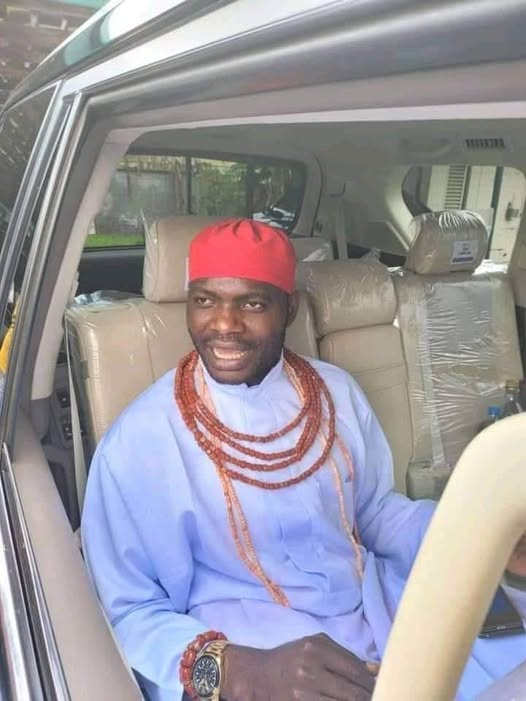
The recent arrest of the deposed Chief Priest of Okhoromi, Igbinovia Kelvin, and four others for alleged possession of human skulls, arms, and ammunition, is not only horrifying, it is symbolic. Kelvin, who was until May 15, 2025, a recognized traditional spiritual leader, now stands accused of crimes that would make even hardened criminals shudder. This development is deeply disturbing, not only because of the gravity of the alleged crimes, but because it is a stark representation of how deeply our traditional leadership institutions have fallen.
Traditionally, figures like the Ohen (Chief Priest) are seen as custodians of spirituality, morality, and culture. They are expected to embody discipline and wisdom, to be impartial adjudicators in community disputes, and moral exemplars to the youth. But what happens when such individuals become agents of terror? What happens when a man of the shrine becomes the merchant of violence and intimidation? The people lose faith, not just in that individual, but in the very institution they represent.
Chief Igbinovia was deposed after protests from his community over allegations of land grabbing, indiscriminate demolition of homes, and intimidation of locals. These allegations were confirmed in part by the Oba of Benin’s swift action to remove him from office. But what is troubling is how long this menace had persisted under the radar before the public outcry finally triggered intervention. It exposes the gaps and failures in our traditional governance mechanisms, and more critically, the erosion of accountability in the sacred institutions that once stood as the moral backbone of society.
In fact, if the traditional class is guilty of moral failure, the political class has long since thrown away the compass of leadership. Politicians now behave more like transactional opportunists than visionary stewards of the people’s mandate. Nigeria’s streets are filled with beggars, while the corridors of power are bloated with officials living like royalty. The disconnect between leaders and the led has reached a dangerous crescendo.
Rather than act as shepherds, many in the political elite have turned into predators, feeding fat on the people’s poverty. Palliatives meant for the poor disappear into private warehouses, budgets for infrastructure are looted before execution, and youth unemployment skyrockets while public office holders commission white-elephant projects with fanfare.
When the people cry out, the politicians feign deafness, or worse, respond with arrogant rhetoric that adds salt to festering wounds. One cannot forget the infamous statement by Vice President Shettima, suggesting that N8, 000 can change the life of a youth who knows what he is doing. Such utterances are not only tone-deaf but indicative of how little the political class understands, or cares, about the suffering masses.
In fact, what Nigerians are witnessing today is nothing short of a leadership crisis that goes beyond institutions.
Nigeria’s leadership crisis is no longer about a few bad eggs in isolated institutions. It is now systemic. From the throne to the podium, from government houses to palace chambers, those entrusted with leadership are either sleeping on duty or abusing their powers. The consequence is a disoriented populace increasingly taking matters into their own hands, often in ways that are counterproductive or even violent.
A society without credible leadership becomes a breeding ground for chaos. This is evident in the rise of cultism, ritual killings, and land disputes turning bloody, and increasing distrust in law enforcement. The absence of strong and moral leadership has allowed jungle justice, religious extremism, and community clashes to thrive. The sheep, finding no shepherd, begin to follow wolves who promise protection but deliver destruction.
The only silver lining in the sordid tale of the deposed Chief Priest is the decisive response of the Oba of Benin, Oba Ewuare II. His prompt action in stripping Igbinovia of his title sends a clear message: there is still some semblance of accountability left in the traditional system, at least in Edo State. However, one good example is not enough. Other traditional rulers must take a cue. Titles must not be conferred on individuals of questionable character, and when the rot is discovered, action must be swift and uncompromising.
Our palaces must cease being sanctuaries for criminality and resume their roles as moral beacons. Traditional rulers must rise above petty politics and ethnic favoritism and instead act as custodians of justice, peace, and integrity.
To salvage what is left, Nigeria needs a rebirth in leadership, both political and traditional. There is an urgent need for critical steps to be taken.
Given the backdrop of the foregoing suggestion, leaders must be held accountable, no matter their title or influence. The same laws that bind the common man must also bind the elite.
In a similar vein, leadership training, formal and informal, must emphasize ethics and service. Our religious bodies, schools, and families must begin to groom future leaders with strong moral foundations.
Also in a similar vein, traditional institutions must have internal checks and balances. Political institutions must be restructured to serve the people, not the elite.
Again, the people must become more engaged. Communities must speak out, just as Okhoromi did. Silence emboldens bad leadership.
In fact, the press must remain relentless in exposing rot in high and low places alike. Journalism must continue to shine a light on the dark corridors of power.
Given the putrefying rots in Nigeria’s leadership landscape, it is not out of place to opine that leadership in Nigeria is standing at a precarious crossroads. The shepherds have strayed. Some are asleep. Others have turned into predators. And the sheep? They are wandering in search of guidance, in search of justice, in search of hope.
If urgent steps are not taken to fill this leadership void with men and women of integrity, vision, and empathy, we may soon find ourselves in a full-blown anarchy where institutions collapse under the weight of their own betrayal. History will not be kind to a generation that watched silently while its moral compasses rusted and its leaders danced on the graves of accountability.
Indeed, this is no longer just a leadership failure, it is a humanitarian crisis, for a people without direction are a people heading for disaster.
Let the Obas, Emirs, Igwes, Obis, Presidents, Governors, and lawmakers be reminded: the sheep are watching, and they are tired. Either the shepherds rise to their sacred duty, or history will remember them as the ones who led a nation into ruin.