Africa
When Silence Weakens a Nation: The Presidency, the Economy, the Naira, and Nigeria’s Diminishing Global Voice -By John Egbeazien Oshodi
This moment will not be judged by whether Wike is innocent or guilty. It will be judged by whether the state had the courage to ask the question. If no one acts—if no one knocks—then history will not say Wike was defended. It will say the presidency chose silence, and the Naira fell while the world looked on.

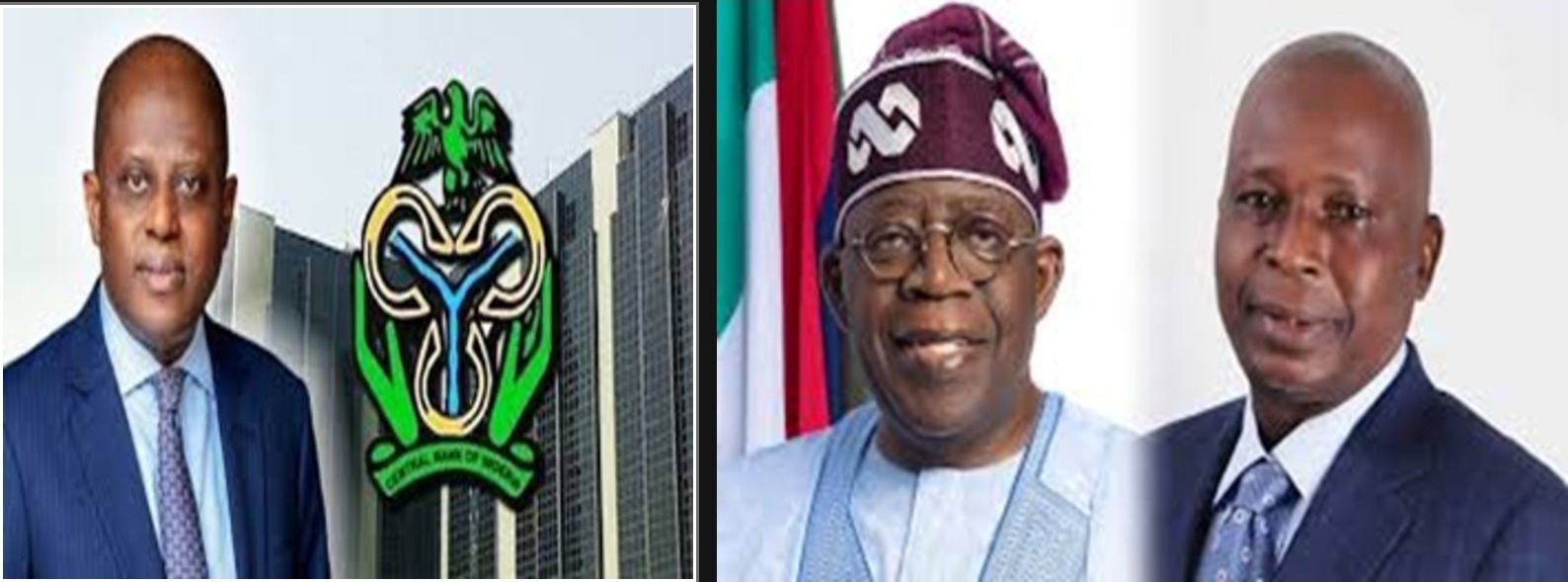
The Nigerian public has been left stunned by recent revelations that Nyesom Wike, the Minister of the Federal Capital Territory, has approved large plots of high-value Abuja land for his sons, brothers, cousins, and even his 90-year-old father. These allegations—documented with file numbers, insider accounts, and leaked approval records—paint a disturbing picture: public land, worth billions, handed out as if it were a family trust, not a national resource. What makes this more alarming is not just the act itself, but the backdrop against which it occurred: not a whisper of resistance from the seat of power.
The alleged quote attributed to Wike—“The president can’t touch me. No judge in Nigeria would convict me of any stupid corruption”—has not been denied. It echoes like a quiet challenge to authority. But so far, the presidency has responded with silence. That silence is not neutral—it is consequential. It grants permission. It redefines who is truly in charge. And it raises the question millions of Nigerians are now asking aloud: is political loyalty now more powerful than the law itself?
Institutional Inertia and the Illusion of Anti-Corruption
Where are the EFCC and ICPC? These agencies, created by law to serve the people and guard the state, have not issued even a basic invitation for questioning. Despite the magnitude of the claims and the clarity of the evidence, both agencies remain publicly motionless. This is not normal. In any functional democracy, an inquiry would be initiated as a matter of routine—not guilt, not punishment, just basic due process.
What makes the stillness worse is the perception—now widespread—that these agencies are waiting on a presidential nod. That anti-corruption, in our country, does not begin with the law, but with a signal. If true, it means our entire accountability structure is frozen until the very person in power allows it to breathe. In that arrangement, democracy is no longer working. It is simply performing.
The Naira Cannot Withstand the Weight of Political Corruption
This is not just a governance issue—it is an economic one. When public land in Nigeria’s capital is distributed like inheritance, it shakes investor confidence to the core. Land is not just real estate—it is currency. It is infrastructure. It is collateral. When land planning is hijacked by political families, the economic system begins to wobble.
The result? Capital flight. Stalled development. Investor withdrawals. And pressure on the Naira. Nigeria’s currency already stands on fragile ground, battered by inflation and limited foreign exchange inflow. The perception of high-level corruption accelerates these economic pressures. When public officials accumulate land through nepotistic processes, while foreign investors watch headlines about uninvestigated wrongdoing, they quietly pull back. The Naira does not fall because of Wike alone. It falls because corruption kills confidence—and confidence is the spine of currency stability.
Foreign Investors Read Headlines Too
We sometimes assume domestic scandals remain internal. But they do not. In today’s world, international investors, diplomats, and institutions track governance news with clinical precision. When they read that a top government official in Nigeria is distributing public land to his family, without a word from the presidency or a knock from any agency, they see risk. And risk drives money away.
Development partners watch not just policy documents—but how nations respond to controversy. A country that fails to even inquire into such high-profile abuse cannot, in good faith, be trusted to protect contracts, defend due process, or honor regulatory fairness. Over time, this diminishes Nigeria’s credibility in trade deals, aid discussions, and even security cooperation. Nigeria’s silence today may be the reason another nation is chosen for investment tomorrow.
Diplomatic Decay: What the World Now Thinks
Nigeria’s global voice is shaped not just by our policies, but by our principles. When the leadership fails to show that rule of law matters at home, our diplomatic capital shrinks abroad. We cannot demand accountability from foreign regimes if we allow impunity within our own. We cannot lead on regional justice issues if we refuse to investigate those closest to our own executive branch.
The damage is subtle, but real: delayed invitations to high-level meetings, lowered trust in bilateral commitments, increased visa restrictions for Nigerian officials. When credibility erodes, relationships strain. And over time, a respected regional voice becomes a muted observer on the global stage.
The Psychological Cost: A Nation Slowly Giving Up
There is another danger—less visible, but perhaps more lasting. It is the psychological cost of watching institutions fail repeatedly. Nigerians are not just disappointed—they are exhausted. We are being conditioned, generation after generation, to expect that accountability does not apply to the powerful. This isn’t just frustrating—it’s dangerous. It normalizes the belief that democracy is a game for elites, and that the rest of us must simply adjust.
When young people see no consequences for blatant enrichment through public office, they disengage. They stop voting. They stop believing. And soon, they stop hoping. The collapse of accountability leads, inevitably, to the collapse of civic spirit.
Mr. President: Permit the Law to Knock on the Door
Mr. President, you are not being asked to condemn Wike. You are not being asked to sacrifice political alliances. You are simply being asked to allow the Constitution to do what it was written to do. An invitation. A review. A signal that anti-corruption institutions do not require your silence to exist
That single gesture—allowing EFCC or ICPC to question a sitting minister—would not harm your presidency. It would strengthen it. It would show the Nigerian people that you are not afraid of transparency. That you do not need silence to survive. That justice still breathes, even under pressure.
A Final Word: What Will Be Remembered
This moment will not be judged by whether Wike is innocent or guilty. It will be judged by whether the state had the courage to ask the question. If no one acts—if no one knocks—then history will not say Wike was defended. It will say the presidency chose silence, and the Naira fell while the world looked on.
Because in matters of justice, silence is not neutrality.
It is participation.
This writer does not know any of the individuals involved; the focus is solely on upholding democracy, truth, and justice.
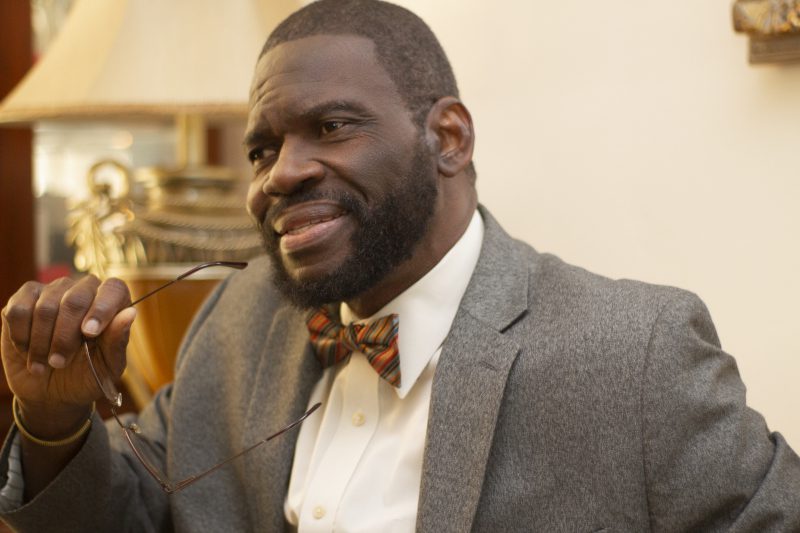
Psychologist John Egbeazien Oshodi
Professor John Egbeazien Oshodi is an American psychologist, educator, and author with deep expertise in forensic, legal, and clinical psychology, cross-cultural psychology, and police and prison science. Born in Uromi, Edo State, Nigeria, and the son of a 37-year veteran of the Nigeria Police Force, his early immersion in law enforcement laid the foundation for a lifelong commitment to justice, institutional transformation, and psychological empowerment.
In 2011, he introduced state-of-the-art forensic psychology to Nigeria through the National Universities Commission and Nasarawa State University, where he served as Associate Professor of Psychology. Over the decades, he has taught at Florida Memorial University, Florida International University, Broward College (as Assistant Professor and Interim Associate Dean), Nova Southeastern University, and Lynn University. He currently teaches at Walden University and holds virtual academic roles with Weldios University and ISCOM University.
In the U.S., Prof. Oshodi serves as a government consultant in forensic-clinical psychology and leads professional and research initiatives through the Oshodi Foundation, the Center for Psychological and Forensic Services. He is the originator of Psychoafricalysis, a culturally anchored psychological model that integrates African sociocultural realities, historical memory, and symbolic-spiritual consciousness—offering a transformative alternative to dominant Western psychological paradigms.
A proud Black Republican, Professor Oshodi is a strong advocate for ethical leadership, institutional accountability, and renewed bonds between Africa and its global diaspora—working across borders to inspire psychological resilience, systemic reform, and forward-looking public dialogue.