Africa
Where a Protester is Declared Wanted and Terrorists are Invited for Dialogue -By Ajiboye Amos Olakunle

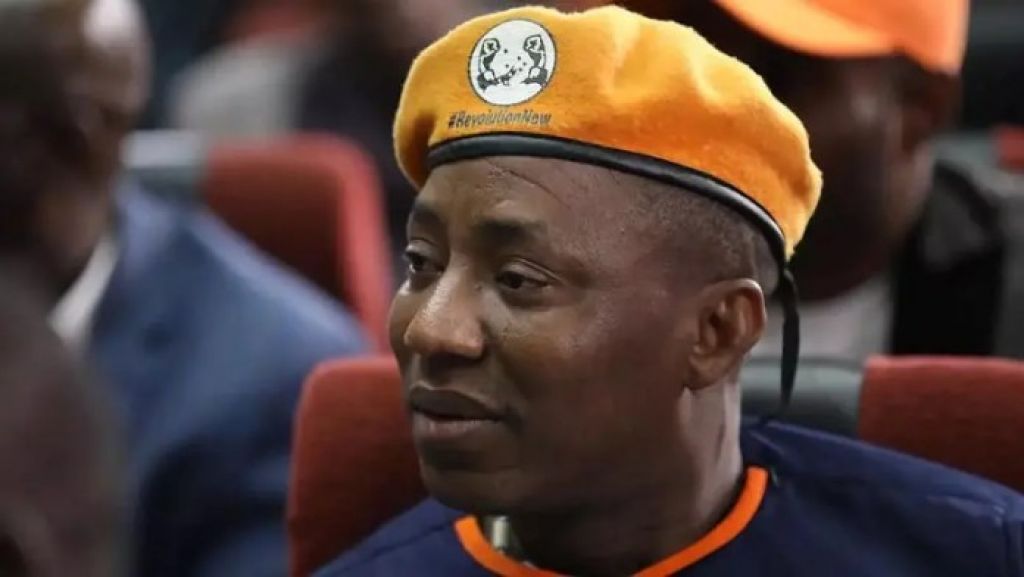
In the intricate and often tragic theatre of Nigerian governance, a stark and disquieting narrative continues to unfold, one that lays bare the profound contradictions at the heart of the state. The recent declaration of the activist Omoyele Sowore as wanted by the Lagos State Commissioner of Police for participating in a protest against the demolition of houses in Oworoshoki stands as a poignant symbol of this paradox. This event, isolated yet symptomatic, gains a deeper, more global resonance when juxtaposed with the spectacle of a beleaguered government receiving unsolicited commentary on its domestic insecurity from a figure like former U.S. President Donald Trump. Together, these episodes crystallize a disturbing reality: a nation where the machinery of state is deployed with alacrity against its own citizens while being wielded with perplexing timidity against those who truly threaten its fabric.
The protest in Oworoshoki was, at its core, an expression of a fundamental social contract in distress. It was the collective voice of a community witnessing the physical manifestation of their powerlessness—the bulldozer that flattens not just bricks and mortar, but dreams, heritage, and livelihoods. To protest such an action is not merely a right; it is the last resort of a populace that feels unheard and unrepresented. The Nigerian Constitution, in its Section 40, explicitly guarantees the right to peaceful assembly and association. Yet, the state’s response to this constitutional exercise is to brand a prominent participant a wanted man. This act sends an unequivocal and chilling message: dissent, no matter how legitimate, is viewed not as dialogue but as defiance, a crime to be met with the full force of the state’s coercive apparatus.
This vigorous pursuit of protesters exists in a parallel universe to the state’s approach to profound national security threats. While Sowore is hunted for raising his voice, the architects of violence who have turned vast swathes of the country into killing fields are often met with a startlingly different strategy: the invitation to dialogue. The same government that mobilizes police and intelligence resources to track a civilian for attending a rally frequently announces, with a troubling sense of normalcy, that it is negotiating with bandits and terrorists. These are individuals and groups whose portfolios include the mass abduction of schoolchildren, the massacre of farmers in their fields, and the extortion of entire communities. The state thus creates a perverse hierarchy of criminality where the terrorist with a rifle is a stakeholder to be negotiated with, while the protester with a placard is an enemy to be neutralized.
This dichotomy is not a symptom of mere administrative failure but a fundamental flouting of the constitutional order and the rule of law. The foundational document of the nation, the 1999 Constitution, places the security and welfare of the people as the primary purpose of government. This sacred duty is being abdicated daily as citizens are left to the mercy of non-state actors, a failure so stark that it draws commentary from international figures, highlighting the government’s helplessness on a global stage. Furthermore, the government’s propensity for selective legality erodes the very pillars of justice. Court orders are treated as mere suggestions, routinely disregarded when they inconvenience the executive, rendering the judiciary a toothless bulldog and fostering a culture of impunity that starts at the very top.
The cumulative effect of these actions is the cultivation of a climate of profound vulnerability. The citizen learns a dangerous lesson: that the state is not a protector but a predator, efficient only in asserting its power against the powerless. It reveals a leadership that is, at best, clueless in its prioritization and, at worst, cynically complicit in the chaos. A government that fears the voice of its educated youth more than the bullets of merciless insurgents has fundamentally lost its moral compass and its claim to legitimacy. The declaration of a protester as wanted is therefore more than a news item; it is a metaphor for a nation in crisis, a desperate act by a fragile state that confuses strength with tyranny and mistakes peace for silence. Until this paradigm is upended, until the state redirects its vigour towards protecting the innocent from the truly wicked, Nigeria will remain a land where the price of courage is a wanted poster, and the reward for terror is a seat at the table.