Africa
Who Will Tell Our Leaders That Patience Kills? -By Isaac Asabor
The time has come for our leaders to be told, in clear and unambiguous terms: patience kills. It kills the soul of a nation. And Nigeria, for all her resilience, is bleeding. The patience of the people has become the noose around their necks, tightened daily by the incompetence and indifference of those in power.

In the annals of Nigerian leadership, a familiar and maddening refrain keeps echoing like a broken record: “Be patient.” It is a phrase we have heard so often that it is now synonymous with hopelessness. Each new administration comes into power with promises laced in optimism and often garnished with attacks on its predecessor’s mismanagement. Yet, when the dust settles, Nigerians are left clutching empty wallets, thinner dreams, and that same tired word “patience”, dangling before them like a carrot on a stick.
When former President Muhammadu Buhari assumed office in 2015, his regime rode on the populist wave of “Change.” He and his handlers did not mince words in blaming the previous administration, led by Dr. Goodluck Jonathan, for wrecking the economy. The story was that Jonathan and his cabinet were irresponsible, corrupt, and wasteful, and that Nigeria needed time, “patience”for Buhari to “fix things.” Nigerians, battered by corruption scandals and terrorist attacks under Jonathan, swallowed the pill. They waited. And waited. And waited.
But after eight long years, what did Nigerians get in return for their patience? Inflation went through the roof. Unemployment surged. Insecurity festered. The naira collapsed. Debts mounted like a termite-infested woodpile. And by the time Buhari’s presidency ended, even his most ardent supporters were forced to concede that he left the economy in a far more pitiful state than he met it. His administration’s legacy is now etched in economic regression, ethno-religious division, and unprecedented insecurity. Patience, it turned out, was not a virtue, it was a national coffin.
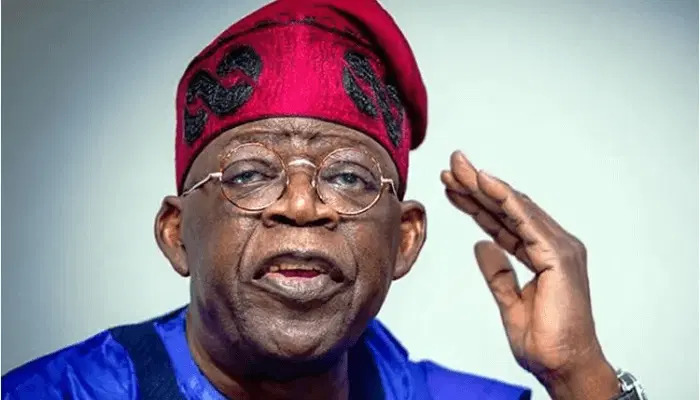
Now enter President Bola Ahmed Tinubu. Sworn in on May 29, 2023, his administration wasted no time in adopting the same template. Within days, he yanked off the fuel subsidy without a concrete alternative in place. He floated the naira, claiming it would allow market forces to determine the exchange rate. He introduced a raft of economic reforms supposedly aimed at “resetting the economy.” The people were assured that these bitter pills would ultimately cure the country’s economic maladies. Once again, Nigerians were told to be patient.
But the question is: “How long must the people wait before the reset becomes regret?” Two years down the line, the economic indicators are glaringly grim. The price of food staples has tripled. Transportation costs have become a nightmare. Electricity tariffs have been increased even when power supply remains epileptic. Diesel and petrol prices have become unaffordable, choking businesses, inflating production costs, and forcing many SMEs to shut down. The middle class is being erased, and the poor are sinking deeper into destitution. One of the president’s apologists was on TV blabbing that the president should not be rushed as it would take time for him to “reset” the economy since he met it in a mess. Therefore, we are told to be patient after been patient for the 8 years Buhari served, and as political permutation indicates, Tinubu is already aspiring and gearing up for second term; which would make his administration to last for 8 years. Sadly, we have just witnessed 2 years out of the projected 8 years, and personally to this writer, it is like he is in a hell. “But who will tell our leaders that patience kills?”
Let us put things in proper context: patience, in the face of visionless leadership, is not a virtue, it is a slow, painful death. It kills hope. It kills innovation. It kills ambition. It kills dignity. Worst of all, it kills lives.
For a country with one of the highest poverty rates in the world, being told to “wait for things to get better” is an insult, not encouragement. You do not ask a man who has not eaten in two days to “exercise patience.” You feed him. You do not ask a mother whose baby is malnourished to wait for economic reforms to trickle down. You provide immediate relief. You do not expect an unemployed graduate who has roamed the streets for years without opportunities to keep calm. You create jobs. You deliver results.
It is also important to understand that the patience being demanded is always one-sided. The masses are told to be patient, but our political leaders are in a mad rush to loot, plunder, and enrich themselves. While the poor are told to endure austerity, politicians buy fleets of exotic cars, allocate bloated budgets to themselves, travel abroad for medical treatment, and live in obscene luxury. They legislate hardship for the people and legislate comfort for themselves. The contrast is not only criminal, it is demonic.
The hypocrisy is even more galling when one recalls that before getting into office, Tinubu and his team marketed themselves as the economic geniuses who could fix Nigeria. His famed “Lagos model” was touted as evidence of his administrative competence. His campaign machinery boasted of his deep understanding of policy, finance, and governance. Nigerians were told that a vote for Tinubu was a vote for efficiency, growth, and development.
Now, suddenly, he is pleading for time. He wants us to be patient. If I may ask, at what point will Nigerians realize that they are stuck in an abusive cycle, constantly gas lighted by the same class of political manipulators? When will we stop believing that these leaders have our interests at heart when, time after time, they have proven otherwise?
This is not to suggest that a national economy can be turned around overnight. Sensible people understand that reforms take time. But the question is not about timing, it is about intent, transparency, and direction. Nigerians are not blind. They can endure temporary suffering if there is a clear path to relief. What they resent is being lied to while being made to suffer. What they despise is leadership that offers no hope, no empathy, and no accountability.
If President Tinubu and his administration are sincere about economic recovery, they must go beyond lip service. Nigerians need to see measurable progress. Prices need to start falling, not rising. Jobs need to be created, not lost. Security needs to improve, not worsen. The naira needs to regain value, not tumble. Infrastructure must be built, not abandoned. In fact, performance indices being reeled out by APC members and the presidency should buttress extant realities across markets and lived life. This is as Nigerians are tire of rhetoric and orchestrated propaganda being adopted to explain every situation of life.
And if the presidency must ask Nigerians for more time, then it must lead by example. Cut the cost of governance. Slash lawmakers’ jumbo salaries. Cancel frivolous international trips. Invest in local healthcare. Fix the education system. If sacrifices must be made, let them start from Aso Rock, not from Ajegunle.
The reason for the melancholic tone of this piece cannot be farfetched as it is a brutal truth, and patience is running out.
You cannot starve a nation and ask it to clap. You cannot inflict pain without relief and expect praise. You cannot govern a hungry, jobless, insecure people with arrogance and expect peace. History has shown, from the Arab Spring to the #EndSARS protests, that when people get tired of waiting, they revolt. And when they do, no amount of security architecture can stop them.
The time has come for our leaders to be told, in clear and unambiguous terms: patience kills. It kills the soul of a nation. And Nigeria, for all her resilience, is bleeding. The patience of the people has become the noose around their necks, tightened daily by the incompetence and indifference of those in power.
If we truly desire change, real, impactful, inclusive change, then leadership must stop asking the people to be patient. Instead, it must start producing results. Now. Not in another four years. Not in another ten-point agenda. Not in another “reset.”