Forgotten Dairies
Why AI Won’t Replace Journalists, But Will Make Them Stronger -By Isaac Asabor
Artificial intelligence will undoubtedly reshape journalism. It will eliminate some repetitive tasks and demand new skills. But it will not, and cannot, replace the journalist. Because at its heart, journalism is not merely about processing information. It is about bearing witness, asking uncomfortable questions, and holding power accountable. Those are, and will remain, profoundly human acts.

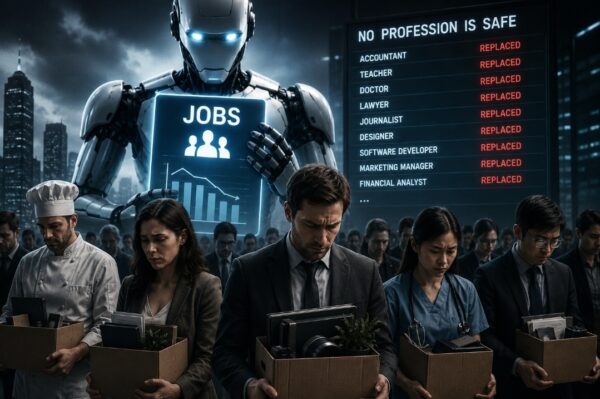
The rapid ascent of artificial intelligence has sent tremors through newsrooms worldwide. Headlines blare warnings of algorithms overtaking reporting desks, automating editing suites, and even encroaching on the sacred ground of investigative journalism. From seasoned editors to young beat reporters, a palpable anxiety lingers: is the machine coming for my job?
This fear, while understandable, fundamentally misreads both the soul of journalism and the genuine limitations of AI. To believe that artificial intelligence will replace human journalists is to confuse information processing with the profound, deeply human act of bearing witness. Journalism is not merely a transfer of data; it is a craft rooted in presence, ethics, and judgment, qualities that no algorithm, however sophisticated, can truly replicate.
At its core, journalism is far more than information gathering. It is about showing up. Reporters do not simply collect facts from a database; they physically sit in courtrooms, inhale the tension of a protest, and look into the eyes of a grieving mother. They feel the weight of a community’s silence after a tragedy and sense when a politician’s rehearsed answer conceals a deeper truth.
Consider a whistleblower deciding whether to trust a journalist with explosive documents. That decision does not hinge on data processing speed. It rests on human connection, tone of voice, a handshake, the unspoken assurance of discretion. AI can analyze millions of leaked emails, but it cannot earn a source’s confidence. It cannot reassure a frightened witness that their story will be handled with care. Journalism thrives on context, nuance, and emotional intelligence, realms where algorithms remain blind.
Furthermore, the act of witnessing carries legal and ethical weight. A reporter present at a scene can describe not just what happened, but the atmosphere: the crackle of a police scanner, the murmur of a crowd, the sudden silence before a verdict. These sensory details transform raw facts into narrative truth. AI, lacking a body and senses, can only aggregate what others have already recorded. It cannot experience an event in real time, and therefore cannot truly witness it.
In a similar vein, editing cannot be reduced to a checklist of grammatical corrections or sentence truncations. Professional editing is a deeply ethical and strategic exercise. It involves deciding what matters, what angle best serves the public interest, and which voices deserve amplification. Editors weigh cultural sensitivities, political implications, and the moral responsibility of publishing a story that could alter lives or topple institutions.
AI can certainly suggest cleaner phrasing, flag passive voice, or detect potential factual inconsistencies. But it cannot shoulder the burden of accountability when a story shakes society. Imagine a front-page investigation into police brutality. An editor must ask: Is every source protected? Could this photograph incite violence? Does the headline unfairly prejudice a fair trial? These are not technical questions; they are moral judgments shaped by experience, empathy, and a deep understanding of a community’s fragility. No machine can answer them with integrity.
Moreover, editing involves mentorship. Senior editors nurture young reporters, challenging their assumptions and sharpening their instincts. That relationship, often tense, always human, is the crucible in which great journalism is forged. AI cannot mentor. It cannot look a junior writer in the eye and say, “You missed the real story. Let’s find it together.”
In fact, many professionals across various fields fear AI precisely because they do not fully grasp its underlying algorithms. This lack of clarity breeds exaggerated dread. Therefore, let us clearly delineate what AI can reasonably accomplish in a newsroom, and where it inevitably falls short.
First, what AI does well: It excels at assistance. It can scan thousands of documents in seconds, identifying patterns that might take a human week s to uncover. For example, an investigative reporter covering financial corruption can use AI to flag suspicious transactions across a decade of spreadsheets. Similarly, AI rapidly generates drafts of routine reports, quarterly earnings summaries, sports recaps, weather updates, freeing journalists for more complex work. It also provides invaluable support through transcription, translation, and preliminary fact‑checking. A reporter returning from a lengthy political meeting powered by speeches by various politicians can feed the audio into an AI tool and receive a searchable transcript within minutes. These are genuine productivity gains.
However, what AI cannot do is far more revealing. Despite its computational power, AI cannot replicate the human instinct to chase a lead. A reporter hears a throwaway comment from a source, something that does not fit the data, and feels a tingle of suspicion. That intuition, born of experience and curiosity, drives breakthrough stories. AI has no curiosity. It does not wonder why someone hesitated before answering. It does not sense a cover‑up hidden between spreadsheets.
Likewise, AI cannot understand the emotional weight of a survivor’s testimony. It can transcribe every word, but it cannot feel the tremor in their voice or decide whether a particular detail might traumatize them. Most critically, AI cannot determine whether publishing a story could endanger lives. That decision requires weighing human vulnerability against public necessity; a calculation that demands empathy, not algorithms.
Against the backdrop of the foregoing arguments, it is germane to opine that the real future is collaboration, not replacement. Having established these boundaries let me be unequivocal: the real future of journalism lies in collaboration, not replacement. Rather than eliminating journalists, AI is rapidly becoming their most powerful tool. It is the digital equivalent of a hydraulic lift, not a substitute for the mechanic’s skill, but an amplifier of their strength.
Imagine a newsroom where reporters no longer waste hours on rote transcription or chasing down basic public records. AI handles those tasks, delivering clean, structured data to the journalist’s desktop. The reporter then walks out the door, notebook in hand, to knock on doors, attend community meetings, and build relationships. AI provides speed and scale; the human provides curiosity, ethics, and narrative craft.
This partnership extends to investigative reporting as well. A team probing a dangerous factory’s safety violations can use AI to analyze years of maintenance logs and injury reports. The algorithm identifies anomalies. Then the journalists do what only humans can: they interview workers who fear losing their jobs, confront executives in parking lots, and decide how to frame the story for maximum public safety without destroying livelihoods. The machine finds the needle; the human decides whether to sew or to burn the haystack.
The newsroom of tomorrow will not be staffed by machines alone. It will be a hybrid space where human curiosity and moral responsibility guide the work, while AI handles drudgery and data-crunching. The journalist who embraces this partnership will not be replaced, they will be empowered.
In conclusion, the fear that AI will “steal” jobs from journalists rests on a fundamental error: it assumes that journalism is reducible to text production. It is not. Journalism is, above all, a covenant of trust with the public. Readers and viewers do not merely want information; they want stories told by people who understand the stakes, who have seen what they describe, and who will answer for their mistakes.
Credibility is not a dataset. Lived experience is not an algorithm. The mother who lost her son to police violence does not want a machine‑generated article; she wants a reporter who will sit with her, cry with her, and then fight for justice. Likewise, the editor who decides to publish a classified document faces sleepless nights, legal threats, and moral anguish. No AI can bear that weight.
Artificial intelligence will undoubtedly reshape journalism. It will eliminate some repetitive tasks and demand new skills. But it will not, and cannot, replace the journalist. Because at its heart, journalism is not merely about processing information. It is about bearing witness, asking uncomfortable questions, and holding power accountable. Those are, and will remain, profoundly human acts.